
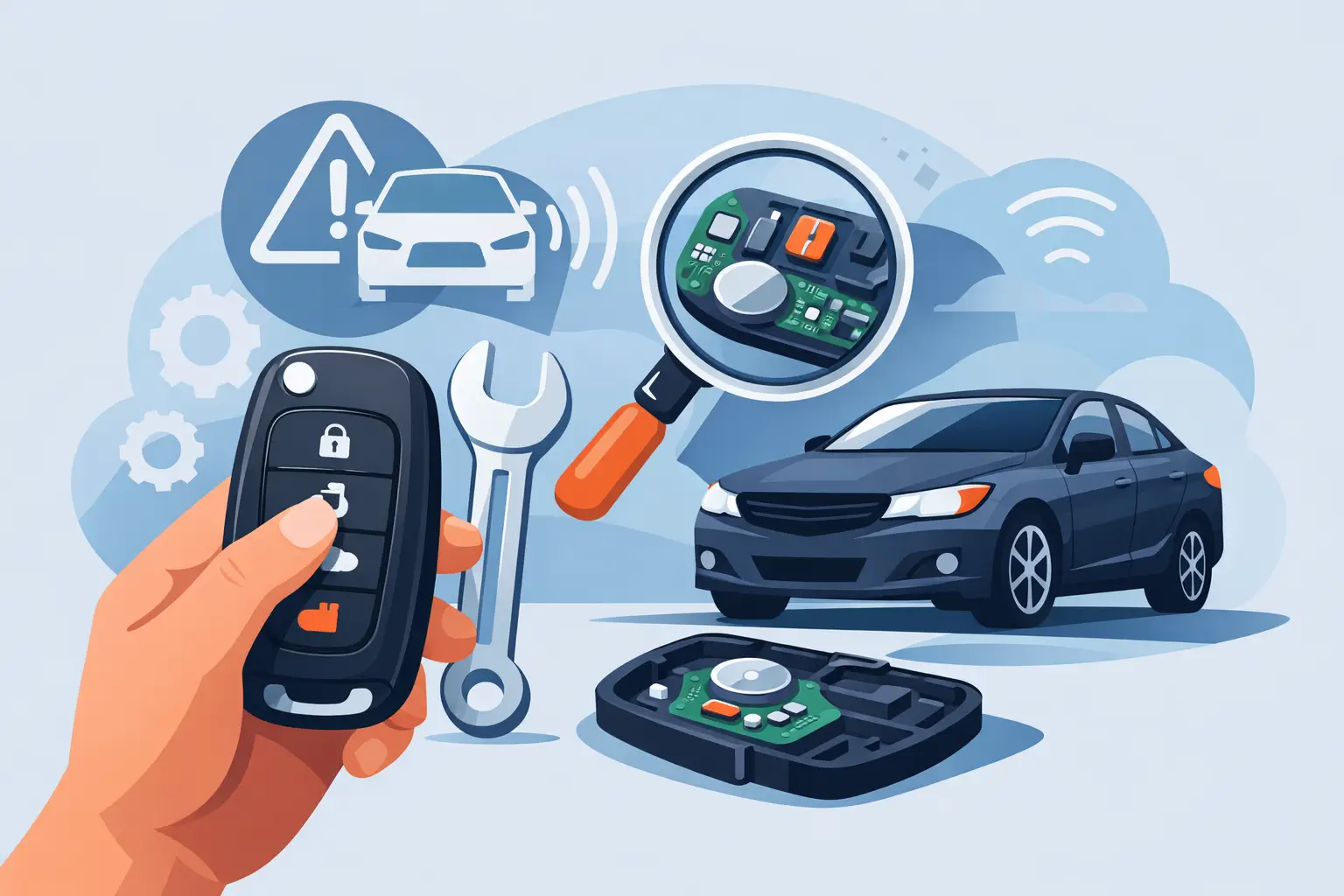
Your key fob worked yesterday, and now it barely locks the car, only opens one door, or does absolutely nothing when you’re already late. That is usually when people start searching for how to fix faulty key fob issues fast – and the right fix depends on whether the problem is the battery, the buttons, the programming, or the car itself.
The good news is that many key fob faults are simple. The bad news is that guessing can waste time, especially if the car has push-button start, an immobilizer issue, or water damage inside the remote. If you want the quickest route back into your car and back on the road, start with the easy checks first, then rule out the more serious faults.
How to fix faulty key fob without wasting time
A faulty key fob does not always mean you need a full replacement. In a lot of cases, the remote still has life left in it. The trick is spotting the signs early.
If the range has suddenly dropped and you need to stand right next to the vehicle, the battery is the most likely cause. If one button works but another does not, the issue may be wear under the rubber button pad or damage to the circuit board. If the fob seems completely dead after being dropped in water, that is a different repair path altogether.
Start by checking whether the mechanical key still works. Many modern remotes have a hidden emergency key blade inside. If that blade opens the door, the car lock is not the problem. That points you back toward the fob battery, the remote electronics, or the programming.
Next, try your spare key if you have one. This is one of the fastest ways to narrow the fault down. If the spare works normally, the original fob is the issue. If neither fob works properly, there may be a vehicle-side fault, such as a weak car battery, receiver problem, or a system programming issue.
The most common key fob faults
Dead batteries are still the number one cause. Key fob batteries fade gradually, so the warning signs are easy to miss. You may notice delayed locking, inconsistent response, or reduced range for a few days before the fob stops working completely.
Worn buttons are also common, especially on older remotes that get used several times a day. The outer button can look fine while the tiny switch beneath it has broken loose or stopped making contact.
Water damage is more serious. Rain usually is not the issue. A fob dropped in a puddle, put through the wash, or left in a soaked jacket pocket can corrode quickly inside. Sometimes it fails immediately. Other times it keeps working for a day or two and then dies once the corrosion spreads.
There is also the possibility of lost programming. This can happen after battery changes, electrical faults, jump-starts, or internal remote failure. Some vehicles are forgiving. Others need proper diagnostic equipment to pair the key back to the car.
Change the battery first
If you are trying to figure out how to fix faulty key fob problems at home, this is the first job worth doing. It is quick, cheap, and often solves the issue.
Open the fob carefully using the release tab or the seam in the casing. Do not force it with a kitchen knife if the housing feels tight, because it is easy to crack the shell or damage the board inside. Once open, remove the old battery and check the battery code, usually something like CR2032 or CR2025.
Fit the new battery in the same direction as the old one. That matters more than people think. If it is upside down, the fob will still appear dead. Before snapping the case back together, check for dirt, green corrosion, or bent battery contacts.
After replacing the battery, test all buttons near the car. If the fob works normally again, the job is done. If it improves only slightly or still works intermittently, the problem may be with the button contacts or the internal board.
If the buttons feel loose or only work sometimes
A key fob that locks the car only after several presses usually has a worn internal switch or damaged contact points. Sometimes the outer rubber button has split, so the press no longer reaches the tiny switch underneath properly.
You can inspect the casing for wear and look for obvious damage, but internal board repairs are not always DIY-friendly. Some remotes can be cleaned and rebuilt. Others are sealed, brittle, or too badly worn to make repair worthwhile.
This is where the trade-off matters. A cheap casing replacement can make sense if the board is still healthy. But if the circuit board is damaged, spending money on a shell alone will not solve the problem. A proper locksmith can test whether the remote is transmitting at all before you pay for the wrong fix.
What to do after water damage
If the fob has gotten wet, remove the battery immediately. Do not keep pressing the buttons to “see if it still works” because that can make the damage worse.
Drying the outside is not enough. Moisture inside the fob can start corroding the board and battery terminals very quickly. In mild cases, careful disassembly and cleaning can save it. In worse cases, the remote may need repair or replacement, and if the chip inside has failed, the car may not recognize the key at all.
Rice is not a serious fix. It might absorb some surface moisture, but it does not clean corrosion from the board. If the key is valuable, especially a smart key or proximity fob, getting it inspected quickly gives you a better chance of saving it.
When the fob is not the only problem
Sometimes the remote is blamed when the real issue is the vehicle. If the car battery is weak, the locking system may behave unpredictably. If the car has receiver faults or immobilizer issues, a healthy key fob can still fail to communicate properly.
A common example is when the remote buttons stop working but the car still starts if you hold the fob close to the start button or steering column. That can point to low fob battery power or a signal issue rather than a fully dead key.
On some vehicles, repeated failed starts, warning lights, or a “key not detected” message suggest a programming or transponder fault. At that point, random battery changes and button pressing will not fix it. The key and vehicle need proper diagnosis.
How to fix faulty key fob programming issues
Programming problems are where many DIY attempts go wrong. Online instructions can be hit or miss because the process varies by make, model, and year. What works on one car may do nothing on another.
Some older vehicles allow simple onboard syncing steps. Newer vehicles usually require specialist tools to program the remote and transponder securely. If the key has lost sync after a battery change, you may be able to restore it with a manual procedure. But if the immobilizer data is corrupted or the remote board has failed, no amount of re-syncing will help.
If you have one working key and one faulty one, the repair is often easier. If all keys have failed or been lost, it becomes more urgent because the car may be fully immobilized. In those cases, a mobile auto locksmith is usually faster and more practical than waiting on a dealership appointment.
When to stop troubleshooting and call a locksmith
If you have changed the battery, checked the spare, and ruled out obvious casing damage, but the key still does not work properly, it is time to stop guessing. That is especially true if you are locked out, the car will not start, or the only working key is becoming unreliable.
A proper automotive locksmith can test the remote signal, inspect the board, confirm whether the transponder is reading correctly, and program or replace the key on-site if needed. That saves a lot of wasted money on batteries, online shells, and generic remotes that may never match your vehicle.
For drivers dealing with this in the West Midlands or Warwickshire, a mobile specialist like Car Key Maker can often sort the issue the same day without the hassle of towing the vehicle anywhere. That matters when the car is stuck at home, at work, or in a parking lot and you need a real fix, not a guess.
A faulty key fob is annoying when it starts and a full-day problem when it gets ignored. If the remote is showing early signs of failure, deal with it before it leaves you locked out or stranded somewhere inconvenient.