
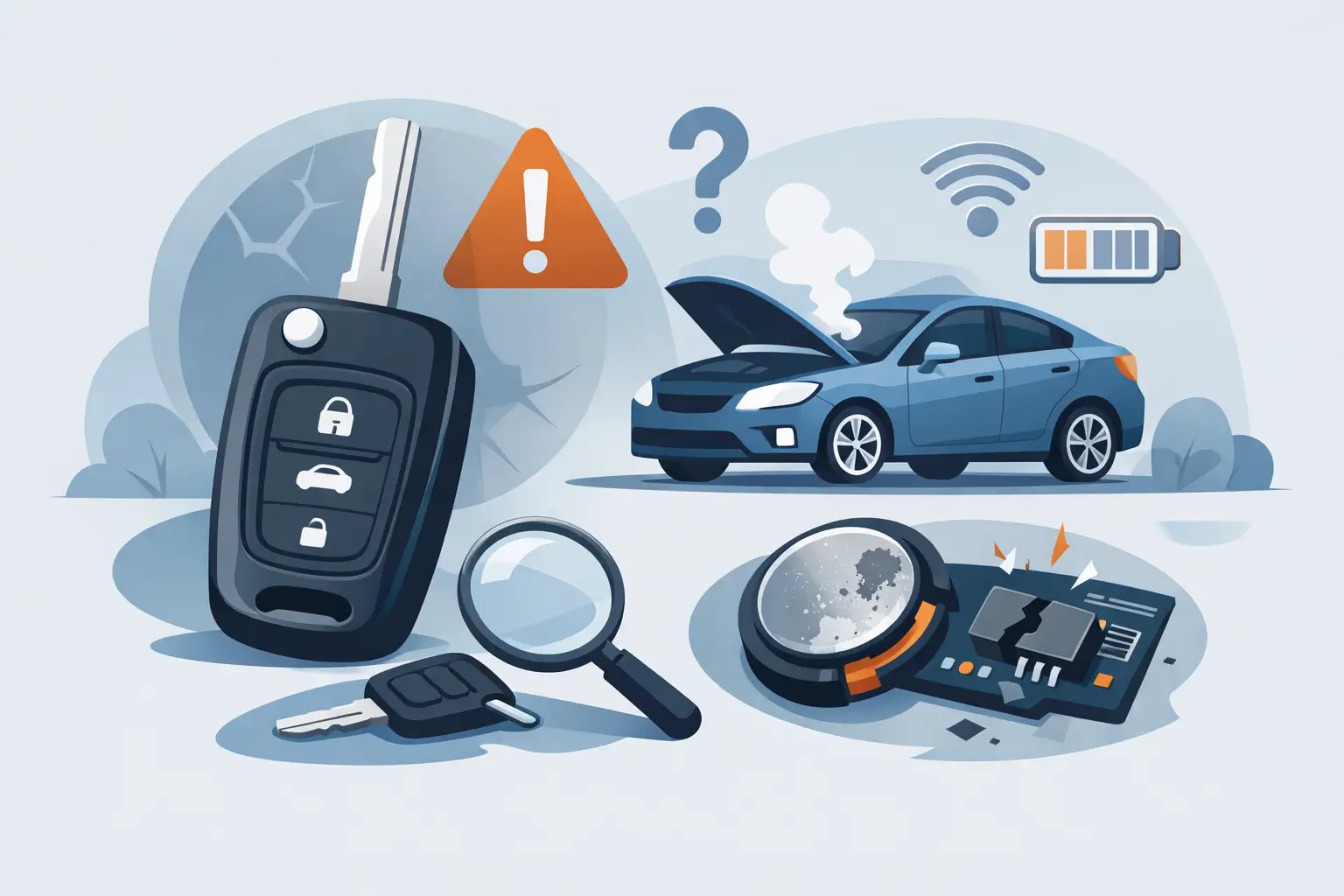
A key can look perfectly normal in your hand and still leave you stranded in a supermarket car park, outside work or on your own driveway. If you are asking what causes car key failure, the answer is rarely just one thing. Modern vehicle keys combine a cut metal blade, electronic transponder, remote-control circuit and battery, so several separate faults can stop the car unlocking or starting.
The good news is that most key problems give warning signs before total failure. Acting when the key starts sticking, the remote range drops, or the engine only starts after several attempts can save you the stress and cost of an all-keys-lost situation.
What causes car key failure most often?
The most common cause is simple wear. Every time a traditional key blade enters the door or ignition, its edges rub against the lock components. Over years of use, the blade can become rounded or slightly misshapen. It may still turn the ignition occasionally, but eventually it will not lift the lock wafers accurately enough to work.
Wear can affect the ignition itself too. A healthy key may feel loose, catch as it turns or refuse to rotate in a worn ignition barrel. This is why it is important not to assume the key is at fault just because the car will not start. The key and ignition work as a pair, and either part can cause the same symptoms.
Electronic faults are just as common on newer vehicles. A remote key may unlock the car but fail to start it, or the engine may start while the buttons stop working. These are different systems, so the fault needs checking properly rather than guessing and replacing parts unnecessarily.
A flat or weak remote battery
A weak battery is the easiest fault to fix, but it is often overlooked. Remote range usually becomes shorter first. You may need to stand close to the car, press the button repeatedly, or aim the fob directly at the vehicle before it responds.
If the remote stops working after a battery change, the battery may be fitted the wrong way round, the contacts may be bent or dirty, or the fob may need testing for a separate internal fault. Some vehicles can still be opened with the emergency blade when the remote battery is flat, but the method varies by make and model.
Damaged buttons, casing or circuit board
Key fobs spend a hard life in pockets, bags, cup holders and toolboxes. They get dropped, sat on, exposed to rain and occasionally put through a washing machine. A cracked case can allow moisture inside, while a damaged button can stop making contact with the circuit board.
Water damage is particularly unpredictable. A fob may work for a few days after getting wet, then fail once corrosion develops around the battery terminals or electronic components. Drying it on a radiator is not a reliable repair and excessive heat can damage the board further. A locksmith can assess whether the remote can be repaired, rebuilt into a new case or needs replacing and programming.
A failed transponder or immobiliser recognition issue
Most cars use an immobiliser chip, often called a transponder, to confirm that the correct key is present. It may be hidden inside the fob or moulded into the key head. If the vehicle cannot read that chip, it may crank without starting, start and then cut out, or display a key or immobiliser warning light.
The transponder does not normally rely on the remote battery. That means fitting a fresh battery will not fix an immobiliser fault. Damage from a drop, previous poor repair work, moisture or a faulty key chip can all be responsible. Less commonly, the issue sits with the car’s aerial ring, wiring or immobiliser system rather than the key itself.
A proper diagnosis matters here. Repeatedly trying to start the vehicle or forcing the key will not restore communication, and attempting to bypass an immobiliser can create a bigger security and electrical problem.
A worn, bent or broken key blade
A metal blade can bend after being used to force a stiff lock or when a heavy keyring puts pressure on it in the ignition. Even a slight bend can prevent smooth operation. If a key only works when wiggled, needs lifting as you turn it, or leaves metal dust around the ignition, stop using it as your daily key if possible.
A blade can also snap inside the door lock or ignition barrel. This often happens when an already worn key meets a stiff or damaged lock. Do not push a broken piece deeper with another key, glue or improvised tools. Extraction needs care, especially in an ignition, where damage to the internal components can turn a straightforward key job into an ignition repair.
Ignition barrel wear or failure
When the key goes in but will not turn, many drivers immediately blame the key. Sometimes they are right, but a worn ignition barrel is another frequent cause. Signs include the steering lock behaving oddly, the key needing a particular angle, or the ignition turning without bringing on the dashboard lights.
Avoid forcing the key. Turning it hard can break the blade or damage the barrel further. If the steering wheel is locked, gently move the wheel side to side while applying light pressure to the key. If it still will not turn, stop there. A specialist can identify whether a replacement or repair of the ignition lock barrel is required.
Warning signs to deal with before you are stranded
Car key failure is often gradual rather than sudden. Pay attention if your remote works only intermittently, the buttons feel soft or unresponsive, the blade catches in the lock, or the engine recognition warning appears now and again. A spare key that has stopped working is also worth sorting out before the main key fails.
There are four habits that commonly make a developing fault worse:
- forcing a key that sticks in the ignition or door lock
- carrying a heavy bunch of keys from the ignition
- ignoring a cracked remote case after it has been dropped
- relying on one working key and putting off a spare
A small fault is usually quicker and more affordable to resolve before the vehicle becomes immobile. It also gives you more options. With one working key available, a new duplicate can often be produced and programmed on-site. With no keys working, the job may involve gaining entry, producing a key and programming it from scratch.
What to do when your car key stops working
Start with the symptoms. If neither the remote nor the key blade works, do not assume a flat battery is the whole answer. If the remote fails but the car starts normally, check the remote battery and fob condition. If the car unlocks but will not start, the transponder, immobiliser recognition or ignition may need testing.
Use your spare key if you have one. If the spare works, keep it safe and avoid continuing to force the faulty key. The comparison gives a locksmith useful information straight away. If both keys fail in the same way, the issue may be with the vehicle rather than the keys.
For a key stuck in the ignition, a snapped blade, a car that will not recognise its key or all keys lost, avoid DIY fixes that risk damage. Do not dismantle the steering column, spray random lubricants into electronic locks or attempt to programme a used key bought online without confirming compatibility. Many used keys cannot be reused, and incorrect programming attempts can waste time when you need the car moving again.
When mobile locksmith help is the sensible option
A dealership can be an option for some replacement keys, but it may involve booking delays, recovery costs and leaving the vehicle off the road. A mobile auto locksmith can come to the vehicle, test the existing key, cut and programme a replacement where appropriate, repair a remote or deal with an ignition fault on-site.
For drivers across the West Midlands and Warwickshire, Car Key Maker handles the practical jobs that cannot wait: lost keys, failed remotes, damaged blades, lockouts, immobiliser-related key faults and ignition barrel problems. The right repair depends on the vehicle and the exact fault, but clear diagnosis comes before unnecessary replacement.
If your key has started showing warning signs, arrange help while it still works intermittently. A replacement key in your pocket is far better than a vehicle you cannot unlock, start or move when you need it most.