
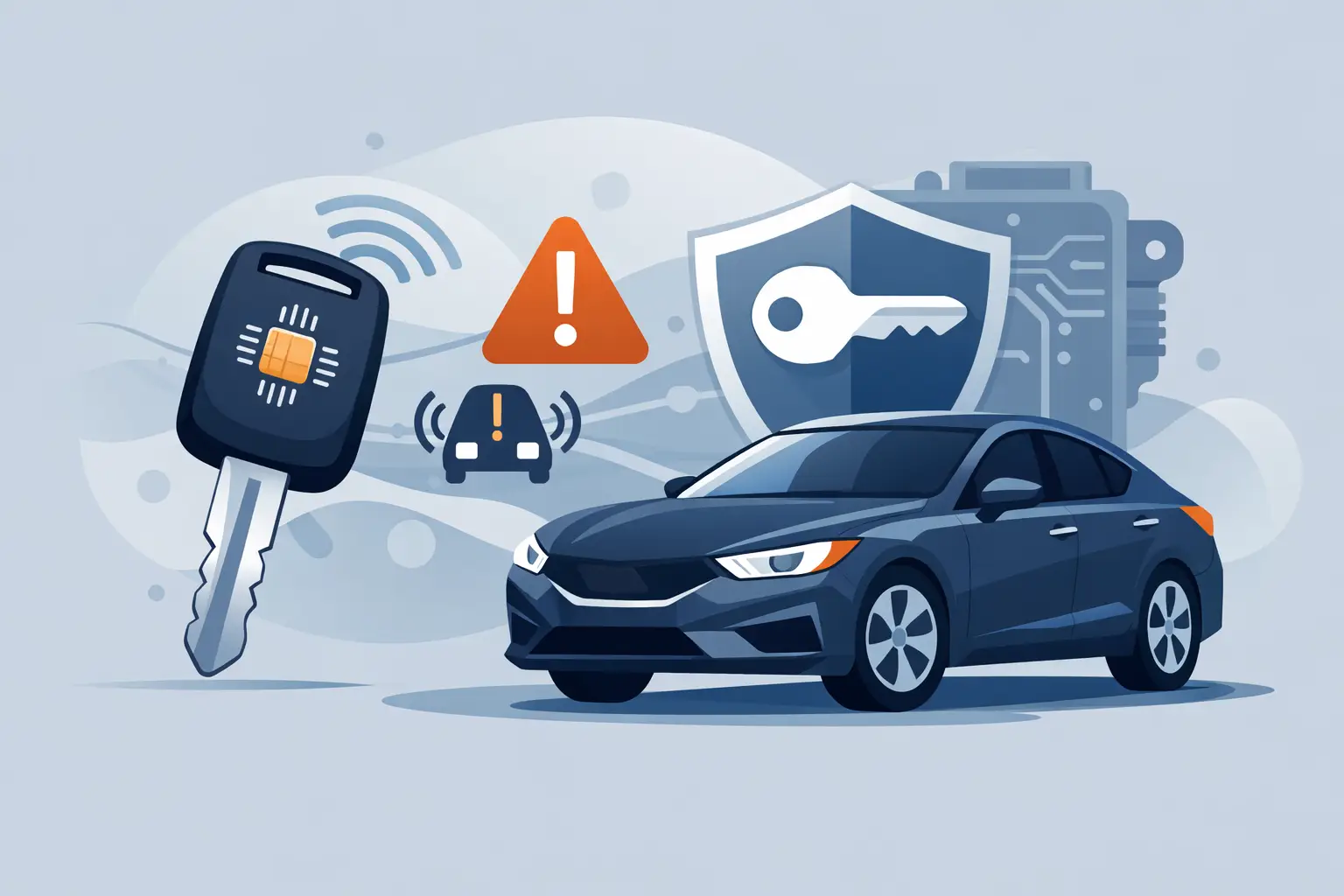
Your car cranks normally, the dashboard lights come on, but the engine starts for a second and dies – or does not start at all. That is often how immobilizer key faults start: a small communication problem between the key and the vehicle becomes a complete no-start situation. It is frustrating, especially when you are on the drive, outside work or trying to collect the children.
In the UK, this system is usually called an immobiliser. It is there to stop the engine running unless the car recognises the correct coded key. Most faults are not caused by a dramatic failure overnight. They tend to build up through key wear, damage, electrical issues or problems with the car’s reader and security system.
How immobilizer key faults start
Inside most modern car keys is a transponder chip. When you turn the key in the ignition, or place a keyless fob in the car’s detection area, the vehicle reads that chip. If the security code matches the code stored in the vehicle, the engine is allowed to run.
A fault starts when that exchange is interrupted. The key may still open the doors, and a remote may still lock and unlock the vehicle, but starting is a separate function. The remote buttons use a battery and radio signal. The immobiliser chip is commonly read by a small aerial around the ignition barrel or a dedicated reader inside the car.
That is why a new remote battery does not always solve an immobiliser warning. It may be worth trying if the fob is weak, but a flat remote battery is not the usual cause of a transponder key failing to start the car.
Wear inside the key
Keys have a hard life. They are dropped, crushed in pockets, knocked against steering columns and left in hot or cold vehicles. Over time, the chip or its connections can become damaged. On some keys, the plastic case splits and the transponder chip can loosen, crack or even fall out during a previous repair.
A worn key blade can add another problem on older vehicles. If it does not turn smoothly in the ignition, drivers often force it. This can damage the key, wear the ignition barrel or put strain on the reader components around it. What first looks like an immobiliser issue may be a key and ignition fault happening together.
Water damage and poor key repairs
Water gets into more keys than people expect. Rain, a washing machine, a spilled drink or condensation can affect the circuit board and the transponder area. A key may work for days afterwards, then fail intermittently as corrosion develops.
Cheap replacement cases can also cause trouble. Moving the electronics into a new shell is not always straightforward. If the transponder is not transferred correctly, is fitted in the wrong position or is damaged during the swap, the car will not recognise the key. The buttons may work perfectly, which makes the fault particularly confusing.
A fault in the car, not the key
The key is not always to blame. The ignition reader aerial, wiring, body control module, engine control unit or immobiliser module can all prevent a valid key from being accepted. A weak vehicle battery can also cause odd warning lights and communication errors, particularly after the battery has gone flat or been disconnected.
This is where guessing gets expensive. Ordering another key before identifying whether the car can read any key may leave you with the same no-start problem. Proper diagnosis checks both sides of the system: the key itself and the vehicle that is meant to read it.
Early warning signs worth taking seriously
Immobiliser faults often give a warning before they leave you stranded. Perhaps the car only starts on the second attempt. Perhaps one key works while the spare does not. You may see a key-shaped, padlock or security warning light stay on or flash when the ignition is switched on.
Other signs include needing to hold a key in a certain position, a key that has been dropped recently, or a car that starts and immediately cuts out. Keyless cars may display messages such as “key not detected” even though the fob is in the vehicle.
Do not ignore an intermittent fault just because the car eventually starts. Intermittent recognition can become complete failure without much notice. If you have a working spare, use it to compare the behaviour. If the spare starts the car every time, the original key is the likely issue. If neither key starts it, the vehicle-side reader or immobiliser system needs checking.
What to do when your car will not recognise the key
Start with the simple checks, but avoid making the situation worse. Check whether the vehicle battery is obviously flat, look for damage to the key case and try the spare key if you have one. On keyless vehicles, hold the fob against the marked emergency start position if your handbook specifies one. Some cars have this feature to allow a start when the fob battery is low.
Do not repeatedly force a stiff key in the ignition. Do not dismantle the key unless you know exactly where the transponder sits. And do not assume disconnecting the car battery will reset the issue. On some vehicles it changes nothing; on others, it can create additional settings or coding problems.
If the car is displaying an immobiliser warning or will crank but not run, a vehicle locksmith can test the key signal, assess the ignition reader and identify whether replacement and programming are required. For an all-keys-lost job, the work is more involved because a new key has to be created and programmed to the vehicle securely.
Why spare keys prevent a bigger bill
A spare key is not just for lockouts. It is the quickest way to separate a failing key from a vehicle fault. It also gives a locksmith a working reference where appropriate, which can make replacement more straightforward.
When only one key remains, get another made while the car is still starting. Waiting until the last key breaks, is lost or stops being recognised usually turns a simple duplicate into an urgent all-keys-lost situation. For business vehicles, that can mean missed jobs and a vehicle sitting still when it should be earning.
If a key has been stolen, replacement is about more than cutting a new blade. The lost key should be removed from the vehicle’s memory where the system allows, so it can no longer be used to start the car. That is a security decision as well as a convenience one.
The right repair depends on the real cause
There is no single fix for every immobiliser fault. A damaged transponder may mean a replacement key and programming. A broken key shell may need a careful transfer of the original electronics. A worn ignition barrel may need repair or replacement, while a reader aerial or control-module issue requires vehicle-side diagnosis.
This is also why prices vary. The make, model, year, type of key and whether any working keys remain all affect the work involved. A proper locksmith should explain what has failed before recommending the repair, rather than treating every no-start issue as a new-key job.
For drivers across the West Midlands and Warwickshire, a mobile specialist can often diagnose and complete key work at the vehicle, avoiding the time and cost of arranging a tow to a dealer. Car Key Maker deals with these faults on-site, including replacement keys, transponder programming and ignition-related problems where required.
A key that works only sometimes is asking for attention, not patience. Deal with it while you can still get home, use a spare where possible, and have the fault checked before a minor recognition issue becomes the reason your car will not start at all.