
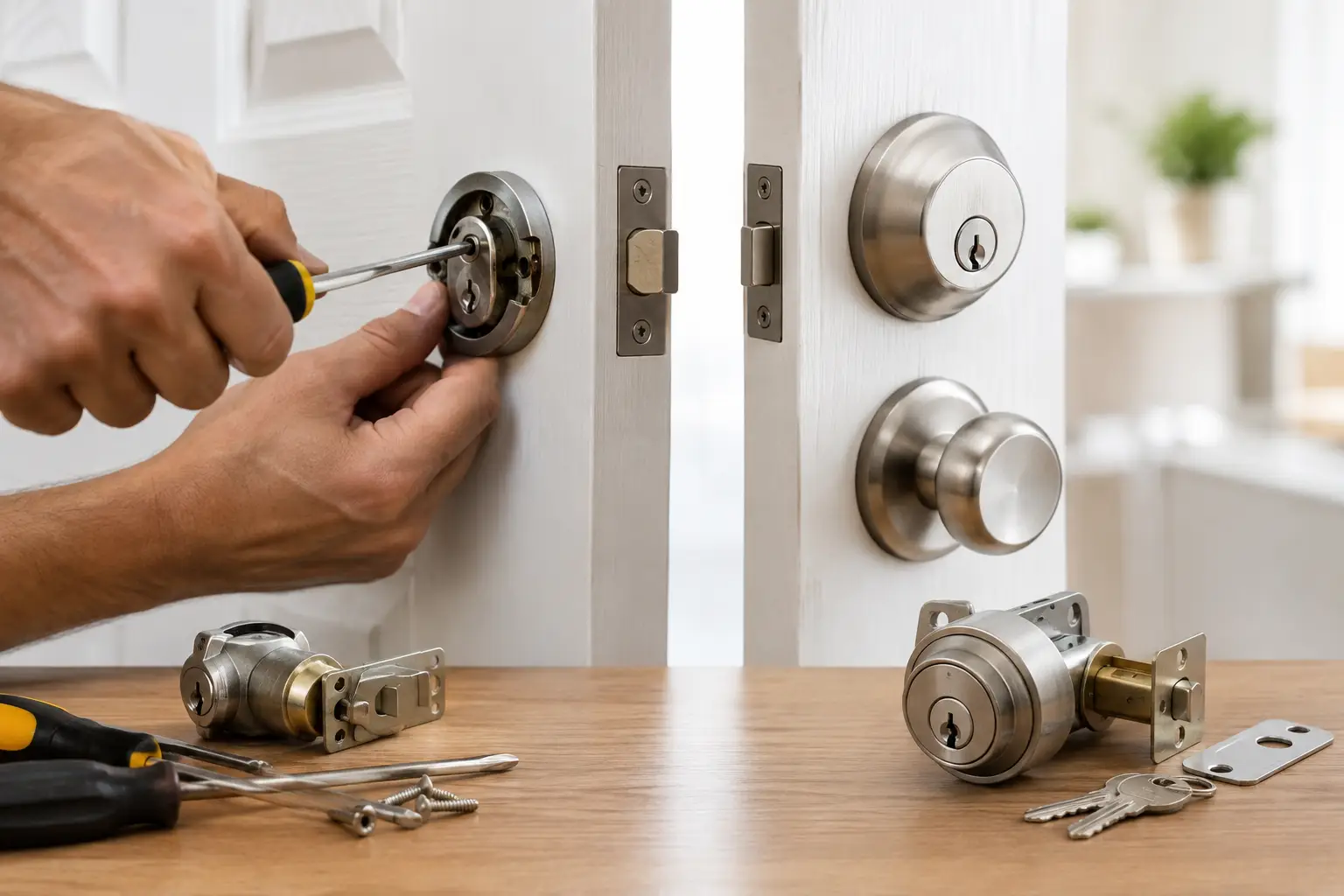
A car door that will not lock, unlock or accept the key is more than an annoyance. It can leave your vehicle insecure, delay your journey and turn a simple stop into a stressful situation. When it comes to lock repair versus replacement, the right answer depends on what has failed, why it failed and whether the vehicle can still be properly secured.
The key point is this: a stiff or faulty lock does not automatically need replacing. Equally, forcing a repair on a worn, damaged or compromised lock can lead to repeat problems. A proper on-site assessment identifies the fault first, then deals with it in the most practical way.
What Does a Car Lock Repair Involve?
Car lock repair usually means restoring the existing lock barrel or locking mechanism so it works as intended again. This may involve removing a broken key fragment, cleaning and freeing seized internal parts, repairing linkages inside the door, or addressing wear that stops the key turning smoothly.
On many vehicles, the visible key barrel in the door is only one part of the system. Behind the door card are rods, cables, clips and an actuator that work together to lock and unlock the vehicle. If the key turns but nothing happens, the issue may be in the linkage rather than the barrel itself. If the remote works but the physical key does not, the barrel could be worn or seized from lack of use.
Ignition lock barrels are different again. A key that sticks in the ignition, will not turn to the start position or has to be wiggled into place needs attention quickly. Continued use can damage the key further or leave you unable to start the car at all.
When Repair Is Often the Sensible Option
Repair is often suitable where the fault is localised and the main lock components remain in good condition. For example, a key snapped in the lock does not necessarily mean the lock is damaged. With the fragment removed carefully, the original barrel may continue to work normally.
The same applies to a mechanism affected by dirt, moisture or a minor linkage fault. Vehicles that rely almost entirely on remote central locking can develop stiff mechanical door locks simply because they are rarely used. In some cases, a specialist can free and service the barrel before permanent internal damage occurs.
A repair can also make sense when the existing lock needs to remain matched to the vehicle’s current key. Keeping that match avoids unnecessary disruption, provided the lock is secure and reliable once the work is complete.
When Car Lock Replacement Is the Better Call
Replacement becomes the better option when a lock is physically damaged, badly worn, repeatedly failing or no longer secure. A barrel that has been forced during an attempted break-in may look usable from the outside while the internal wafers are bent or broken. That can make it unreliable today and easy to defeat tomorrow.
Replacement may also be needed after a key has broken because of severe lock wear. If the key blade has been catching, turning roughly or coming out damaged, the underlying barrel may be the cause. Simply cutting another key without resolving the fault risks breaking the new one too.
If keys have been stolen, the decision is not just about whether the door opens. Someone may have access to your vehicle, so the locks and the electronic key system need to be considered together. Depending on the vehicle and circumstances, old keys can be removed from the system and the locking components changed where necessary. This restores control over who can access and start the car.
Signs You Should Not Put Off Replacement
Do not keep forcing a lock that is showing clear signs of failure. Arrange help promptly if the key turns freely without operating the lock, the barrel moves in the door, the key only works at a certain angle, or the lock has visible signs of tampering.
A door that will not lock is also a security issue, even if central locking appears to work intermittently. It is better to deal with the fault before you have to leave the vehicle unattended or find yourself locked out away from home.
The Difference Between a Lock Fault and a Key Fault
It is easy to blame the lock when the key is actually the problem. A worn key blade can lose the precise shape needed to move the pins inside a mechanical barrel. It may work occasionally, then stop altogether. Copying a badly worn key can reproduce the same fault, so the original needs checking before a replacement is made.
Modern vehicle keys bring another layer to the diagnosis. The remote buttons, transponder chip and mechanical blade all do separate jobs. Your remote may unlock the car but fail to start it because of an immobiliser issue. Or the car may start perfectly but the physical door lock will not turn. These are different faults and should not be treated as one.
A qualified auto locksmith checks the key, lock barrel, central locking response and ignition behaviour before recommending work. That avoids replacing parts that are not causing the problem.
Lock Repair Versus Replacement After a Break-In
After attempted theft or forced entry, replacement is frequently the safer choice. A damaged exterior lock can leave the door vulnerable even if it still turns. The same is true if the door handle, latch or surrounding metal has been distorted.
There are occasions where a repair is enough, particularly when the damage is limited to a door linkage or trim component and the lock itself remains intact. But security comes first. The aim is not merely to get the door opening again. It is to make sure it locks properly and cannot be easily compromised.
If a key has gone missing during the incident, ask for the vehicle’s electronic security to be checked as well. A mechanical lock replacement alone cannot prevent a missing programmed key from starting certain vehicles.
Why DIY Lock Fixes Often Make Things Worse
Spraying general-purpose lubricant into a car lock or trying to force a stiff key may seem like a quick fix. Sometimes it buys a little time, but it can also collect dirt inside the barrel, damage delicate internal components or snap the key at the point you need the car most.
Removing a door card without the right tools can break clips, damage wiring or disturb side-airbag components on some models. Attempting to pick or drill a vehicle lock creates an even bigger problem, particularly if the car has deadlocks or integrated security systems.
The sensible approach is to stop using excessive force. If the key is sticking, turning inconsistently or feels different from normal, get it checked before it becomes a lockout or no-start situation.
What a Mobile Auto Locksmith Can Do On Site
A mobile specialist can assess the problem where the vehicle is parked, whether that is at home, at work, on a driveway or at the roadside. This is especially useful when the car cannot be secured, the key is trapped in the ignition or you have no working key to drive it anywhere.
The work may involve repairing a door lock, extracting a broken key, replacing a damaged lock barrel, cutting and programming a new key, or repairing an ignition barrel. Where needed, the locksmith can also investigate whether the fault is mechanical, electronic or linked to the immobiliser.
For drivers across the West Midlands and Warwickshire, that means a direct route to getting the vehicle secure and usable again without trying to arrange transport for a car that will not lock or start.
Make the Decision Based on Security and Reliability
The best choice is rarely about the age of the vehicle or how inconvenient the fault feels on one particular day. It comes down to whether the lock can be returned to dependable working order. A minor, contained fault may be repaired effectively. A damaged, worn or compromised lock should be replaced before it creates a bigger security problem.
If your key is sticking, your door will not lock, or the ignition is becoming difficult to turn, treat it as an early warning. Getting a specialist to inspect it now can keep a manageable repair from becoming an urgent roadside problem later.