
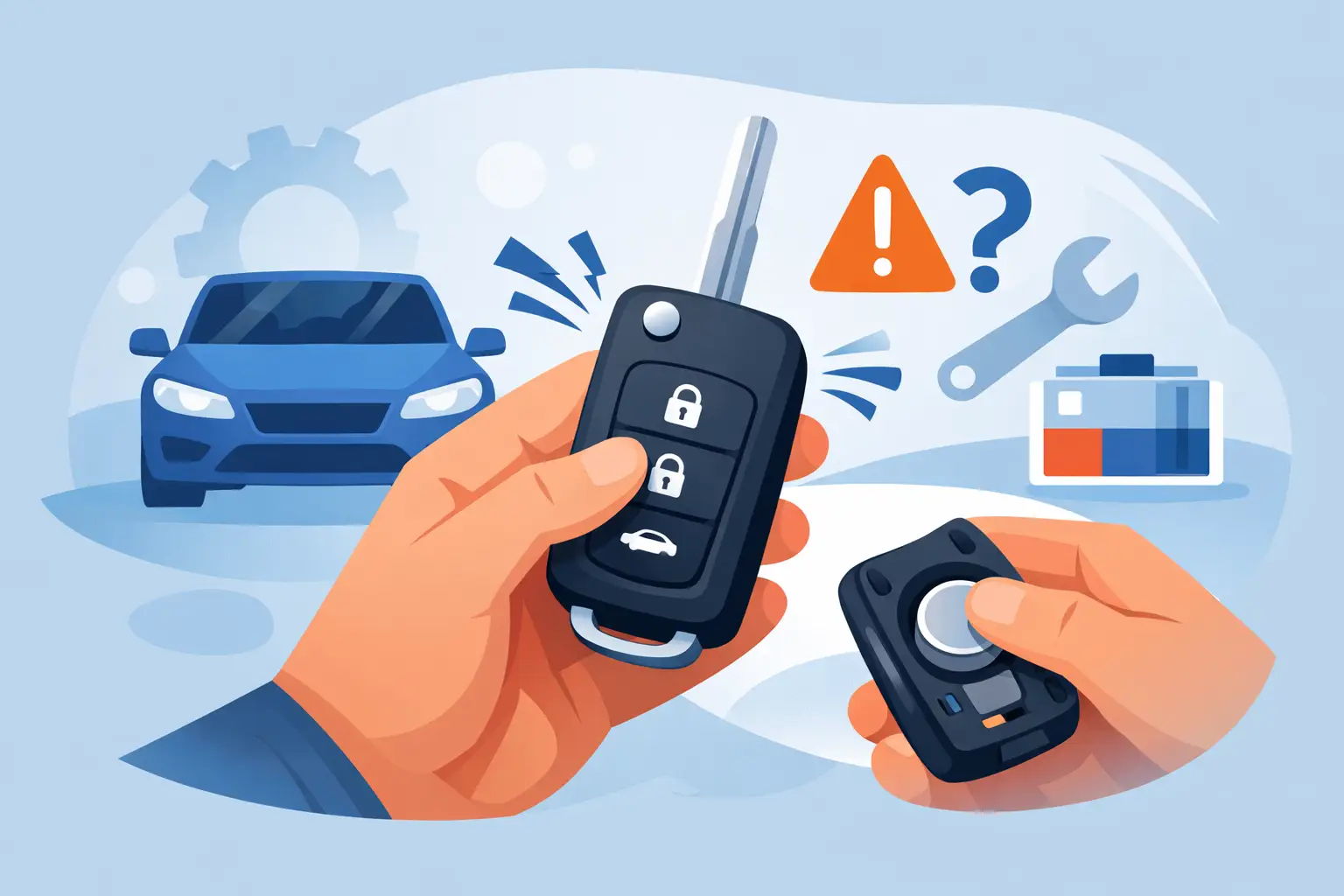
You press the button, nothing happens, and suddenly a normal day turns into a problem. If your car key remote not working is the issue, the good news is that the cause is often straightforward. The trick is knowing whether you are dealing with a dead battery, a remote fault, a vehicle-side issue, or a key that now needs professional programming.
Why a car key remote is not working
A remote can fail for several reasons, and they are not all the same level of urgency. Sometimes the remote battery is flat and the fix takes minutes. Other times the remote has lost programming, the internal circuit board is damaged, or the vehicle is no longer receiving the signal properly.
That matters because the symptoms can look similar. You press lock or unlock and get no response. In some cases the lights do not flash, the doors stay shut, and the panic button does nothing. In others, the remote works one minute and fails the next, which usually points to a weak battery, water damage, wear inside the remote, or a fault that is getting worse.
First checks when your car key remote not working
Start with the obvious before assuming the key needs replacing. A lot of remote problems are simple, and a quick check can save time and money.
Check the remote battery
This is the first place to look. A weak coin battery can cause reduced range, delayed response, or complete failure. If the remote only works when you are standing right next to the car, that is a strong sign the battery is nearly done.
If you can safely open the fob, inspect the battery for corrosion, leakage, or poor contact. Replacing it with the correct type often solves the problem straight away. It is worth making sure the battery is seated properly too, because a loose fit can mimic a dead remote.
Try the spare key
If you have a second remote, test it. This is one of the fastest ways to narrow the problem down. If the spare works normally, the issue is likely with the original remote itself. If neither remote works, the problem may be with the vehicle receiver, central locking system, or programming.
Check for physical damage
Remote cases crack, buttons wear through, and internals get damaged after drops. Water exposure is another common cause. A remote can look fine from the outside and still have a broken switch or damaged board inside.
If a button feels soft, stuck, or unusually loose, that is a clue. If the remote has been through the wash, left out in heavy rain, or dropped hard, damage is more likely than a simple battery issue.
Use the mechanical key
Most remotes still contain an emergency key blade. If the remote will not unlock the doors, use the mechanical key to get into the vehicle. That helps you separate a remote problem from a full lock problem.
If the mechanical key opens the door but the remote does nothing, the issue is usually electronic rather than the door lock itself. If the mechanical key also struggles, you may be dealing with wear in the lock, not just the remote.
When the problem is the car, not the remote
Drivers often assume the key is at fault, but sometimes the vehicle is the reason the remote has stopped responding. A weak car battery can affect central locking behavior on some models. Blown fuses, receiver faults, or body control module issues can also stop the remote from working.
One clue is whether other electrical functions are acting up. If the interior lights are weak, the car is slow to crank, or other locking features are inconsistent, the vehicle battery or electrical system deserves attention. If the car battery is completely dead, the remote may appear useless even though the key itself is fine.
There is also the possibility of signal interference. Parking near certain commercial sites, security systems, or heavy electronic equipment can sometimes block or weaken remote communication. It is not the most common cause, but it does happen. If the remote suddenly fails in one location but works again elsewhere, interference is worth considering.
What reprogramming looks like
Sometimes a remote battery change or electrical interruption causes the key to lose synchronization. On some older vehicles, there is a manual relearn process involving the ignition and door locks. On many newer vehicles, proper programming equipment is needed.
This is where guesswork starts costing time. If the remote is no longer recognized by the car, replacing the battery will not fix it. If the transponder chip and remote functions are separate, you might still be able to start the vehicle while the buttons do nothing. That can confuse people into thinking the key is fully working when it is only partly working.
A professional auto locksmith can test whether the remote is transmitting, whether the vehicle is receiving the signal, and whether the key still matches the system correctly. That is much quicker than replacing parts blindly.
Signs you need more than a new battery
A battery is cheap, so it makes sense to start there. But some signs point to a bigger fault.
If the remote works only intermittently, if one button works but the others do not, or if the casing is damaged and the buttons have worn through, repair or replacement is more likely. The same applies if the remote has already had a fresh battery and still does nothing.
If the car displays a key-related warning, refuses to recognize the key, or starts inconsistently, the problem may involve the immobilizer or chip rather than the remote buttons alone. That needs proper diagnosis, especially on modern vehicles where locking, alarm, and starting functions are tied closely together.
Why dealership delays are not always the best route
When a car key remote stops working, many drivers assume the dealer is the only option. In practice, that often means waiting, arranging transport, and paying more than expected. If the vehicle cannot be locked or accessed properly, that delay becomes a bigger issue.
A mobile auto locksmith is usually the faster route when the problem is urgent. On-site testing makes a real difference because the key and the vehicle can be checked together. That means you can confirm whether the fault is in the remote, the programming, the ignition recognition, or the car’s locking system without towing the vehicle anywhere.
For drivers who rely on their car for work, school runs, or daily travel, speed matters just as much as cost. A same-day repair or replacement is often the practical answer, not just the convenient one.
Can you keep using the car if the remote has failed?
It depends on the type of key and the exact fault. If the mechanical blade still works and the transponder is recognized, you may be able to unlock and start the vehicle manually. That can keep you moving in the short term.
But there are trade-offs. Manually locking and unlocking the car is inconvenient, and on some vehicles it can affect the alarm system. If the fault is getting worse, relying on a failing key can leave you stranded later. A remote that works only some of the time is rarely a problem that fixes itself.
Push-to-start vehicles are less forgiving. If the smart key battery is dead, there is often an emergency start procedure, but if the key itself has failed electronically, access and starting can become much more difficult. In those cases, getting the problem handled early is the smarter move.
How to avoid repeat remote problems
A remote key gets more abuse than most drivers realize. It gets dropped, squeezed in pockets, exposed to moisture, and used every day. Basic care helps.
Replace weak batteries early rather than waiting for total failure. Keep the key dry and avoid overloading your key ring, which puts extra stress on the blade and housing. If the buttons are splitting or the shell is cracked, get it repaired before the board inside is damaged too. Small issues are cheaper to sort out than a complete key failure.
If you only have one working key, this is also the right time to think ahead. Once a remote starts failing, losing your only backup becomes a much bigger risk.
When to call for help
If your car key remote not working after a battery change, if the spare key also fails, or if the car is not responding at all, it is time for proper testing. The same applies if you are locked out, the key is damaged, or the vehicle will not start reliably.
This is the kind of problem that benefits from a direct, on-site fix. Companies like Car Key Maker handle remote faults, replacement keys, programming, and vehicle access without the extra hassle of dealership delays or towing. When your day depends on getting the car working again, clear answers and fast action matter more than trial and error.
If the remote has stopped working, do the quick checks first, but do not waste hours fighting a key that is already failing. A fast diagnosis now is usually the difference between a minor interruption and a much bigger headache later.