
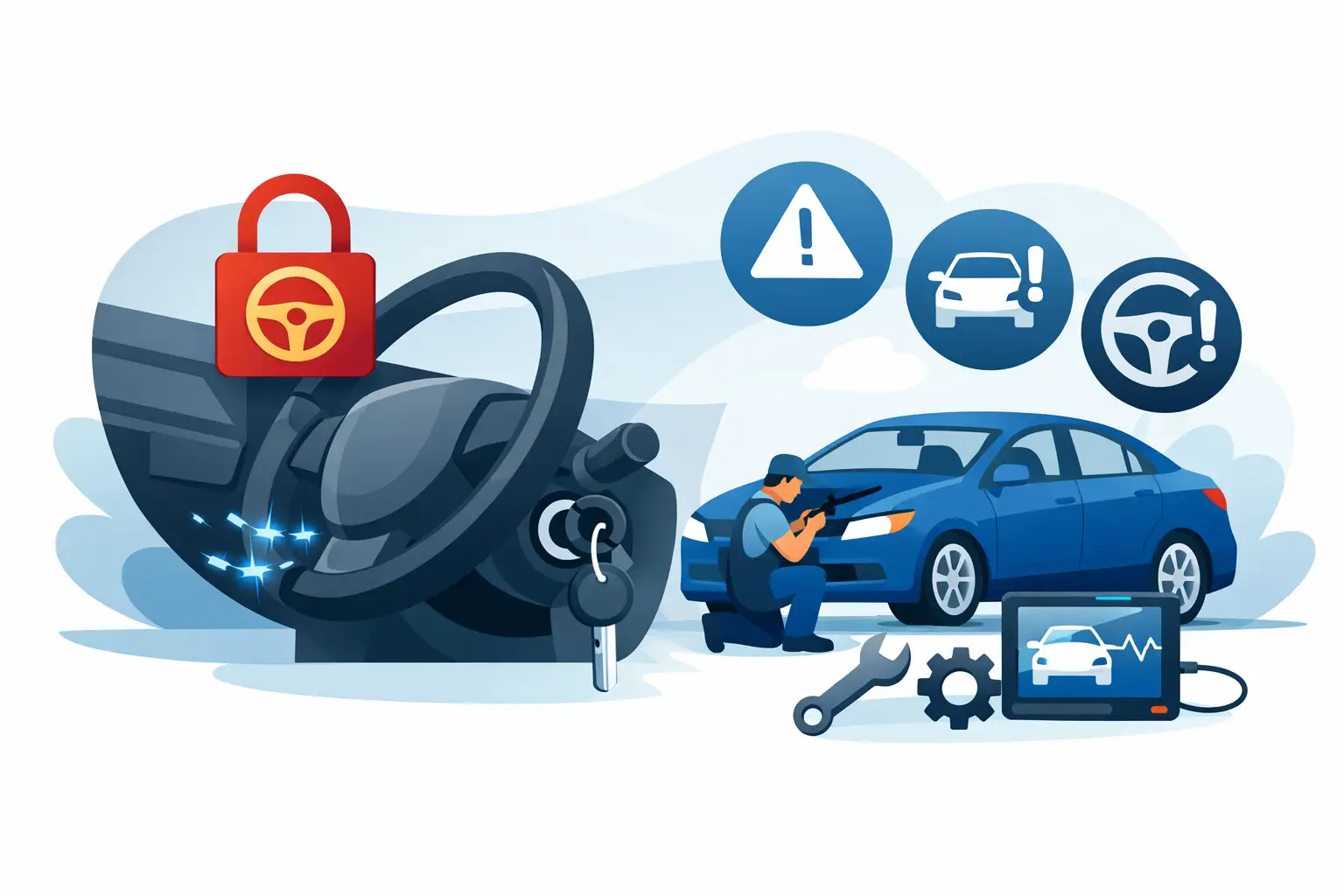
You turn the key, the wheel stays jammed, and suddenly a normal trip turns into a parking lot problem. Steering lock repair car issues usually show up without much warning, and when they do, the car can feel completely dead even though the fault is often limited to the lock, key, or ignition housing.
For most drivers, the frustrating part is not knowing whether this is a simple jam or a bigger failure. That matters, because some steering lock problems can be eased on the spot, while others need proper repair before the vehicle can be used safely again. If you force it, you can turn a manageable job into a broken key, damaged ignition, or a steering column repair that costs far more than it should.
What a steering lock actually does
The steering lock is a security feature designed to stop the steering wheel from turning when the key is removed or the vehicle is off. In older cars, this is usually a mechanical system built into the ignition barrel and steering column. In newer vehicles, the system may be electronic and linked to the immobilizer, start button, or steering column control module.
When it works properly, you barely notice it. You park, remove the key, the wheel locks into place, and the car is harder to steal. When it fails, the wheel may stay locked when you need to drive, the key may stop turning, or the ignition may refuse to switch on at all.
That is why the same symptom can have different causes. A locked wheel does not always mean the lock itself is broken. It can point to key wear, ignition barrel wear, internal lock damage, or an electronic fault.
Common signs you may need steering lock repair car service
A few warning signs tend to appear before total failure, although plenty of drivers only notice the problem once they are stuck. The key may feel stiff going in or turning. The wheel may lock more aggressively than usual. You may have to jiggle the steering wheel and key together every time you start the car. In some vehicles, a dashboard warning appears for the steering lock or ignition system.
Sometimes the key enters the barrel but will not turn. Sometimes it turns partly, then jams. In other cases, the steering wheel remains locked even though the key is in the correct position. With push-button start vehicles, the fault may show up as no ignition response, a steering lock warning, or repeated start failure.
If any of that sounds familiar, get it checked sooner rather than later. Lock components rarely improve on their own. They wear further, stick more often, and eventually fail at the worst time.
Why steering locks fail
Wear is the most common reason. Keys wear down over time, especially if they are old copies or have been used heavily. A worn key does not align the lock wafers cleanly, which puts extra strain on the ignition and steering lock mechanism.
The barrel itself can also wear internally. Tiny components inside the lock housing take a lot of daily use, and once they start sticking or misaligning, the lock may jam or stop recognizing the key position properly.
There is also driver-related strain. Parking with heavy pressure on the front wheels, such as when turned hard against a curb or slope, can load up the steering lock. That pressure can make the wheel feel stuck and the key difficult to turn. In that case, the lock may not be broken, but repeated force over time can contribute to damage.
On newer vehicles, electronic steering lock systems add another layer. Faults can come from the motorized lock unit, steering column electronics, wiring, low voltage conditions, or communication errors between the immobilizer and the start system.
What you can try before calling for repair
If the steering wheel is locked, try turning the wheel gently left and right while turning the key or pressing the start function. The key word is gently. You are trying to relieve pressure, not overpower the lock.
If you have a spare key, test it. A worn main key is a common cause of ignition and steering lock trouble. A better-cut spare may turn the barrel normally and confirm that the issue starts with the key rather than the steering column.
Check the battery condition if the vehicle uses an electronic steering lock or push-button start. Low voltage can trigger strange ignition and lock behavior.
What you should not do is force the key with pliers, spray random lubricants into the ignition, or keep twisting harder because the wheel is in a rush-hour parking spot. Those choices often lead to snapped keys, contaminated lock wafers, or a barrel that now needs full replacement.
When a repair is possible and when replacement makes more sense
Not every steering lock issue means replacing the whole unit. If the problem is key wear, cutting and programming a proper replacement key may solve it. If the ignition barrel is worn but the housing is otherwise sound, the barrel may be repairable or replaceable without changing every component around it.
If the steering lock mechanism has broken internally, replacement is often the safer route. The same goes for electronic steering lock units that have failed outright. In some vehicles, coding or module matching is part of the job, so the repair is not just mechanical.
This is where experience matters. A good auto locksmith or vehicle lock specialist will assess whether the fault sits in the key, barrel, steering lock, housing, or electronic control side before recommending parts. That avoids paying for the wrong fix.
Steering lock repair car service vs dealership repair
Dealerships can handle steering lock faults, especially on newer and more complex vehicles, but that is not always the fastest or most cost-effective route. If the car cannot be started or steered properly, you may need recovery first. That adds time and cost before any diagnosis even begins.
A mobile auto locksmith can often inspect the vehicle where it sits, whether that is at home, at work, or in a parking lot. For many mechanical steering lock and ignition barrel faults, on-site repair is possible. That saves the hassle of towing and can get the car moving much sooner.
There are trade-offs. Some highly integrated electronic systems may still require brand-specific diagnostics or dealer-level programming. But a lot of steering and ignition lock issues are more practical than people think, particularly when the real fault is a worn key, damaged barrel, or failed lock assembly that a qualified mobile specialist handles every day.
What affects the cost
The make and model matters first. Some vehicles use straightforward mechanical systems that are quicker to repair. Others have anti-theft housings, coded barrels, electronic steering locks, or security procedures that increase labor time.
Then there is the actual failure. A new key is very different from an ignition barrel rebuild, and that is different again from replacing an electronic steering lock module. If the key has snapped in the barrel, that adds extraction work before the repair even starts.
Urgency can affect price too. Same-day mobile help, out-of-hours attendance, and emergency callouts usually cost more than a planned daytime appointment. Still, that can be cheaper overall than dealer delays, recovery fees, and lost work time.
How to avoid the problem happening again
Do not ignore early stiffness in the key or ignition. Small symptoms are usually the first warning. Using a fresh, properly cut key instead of a worn copy can reduce strain on the barrel. Avoid heavy keychains that pull on the ignition while driving. When parking, try not to leave the steering loaded hard against a curb if it can be avoided.
If the vehicle has already started sticking once or twice, have it checked before it becomes a no-start problem. That is especially true if you rely on the car daily for commuting, school runs, or work calls. A planned repair is always easier than an urgent one.
When to call a mobile locksmith
If the wheel is locked, the key will not turn, the ignition feels rough, or the vehicle displays a steering lock fault and will not start, it is time to get professional help. The main thing is to stop before force creates extra damage.
A mobile specialist can usually tell quite quickly whether the issue is key-related, barrel-related, or a deeper steering lock failure. In many cases, that means on-site repair and a faster return to normal than most drivers expect. For stressed drivers dealing with a car that suddenly will not cooperate, that practical speed matters more than anything.
If you are dealing with this in the West Midlands or nearby, a fast-response service like Car Key Maker can often save you the cost and delay of towing the car elsewhere. The right fix starts with the right diagnosis, and that is what gets you back behind the wheel without making the problem worse.
A steering lock fault feels dramatic when it happens, but the best next step is usually simple – stop forcing it, get it assessed properly, and fix the real cause before it leaves you stranded again.