
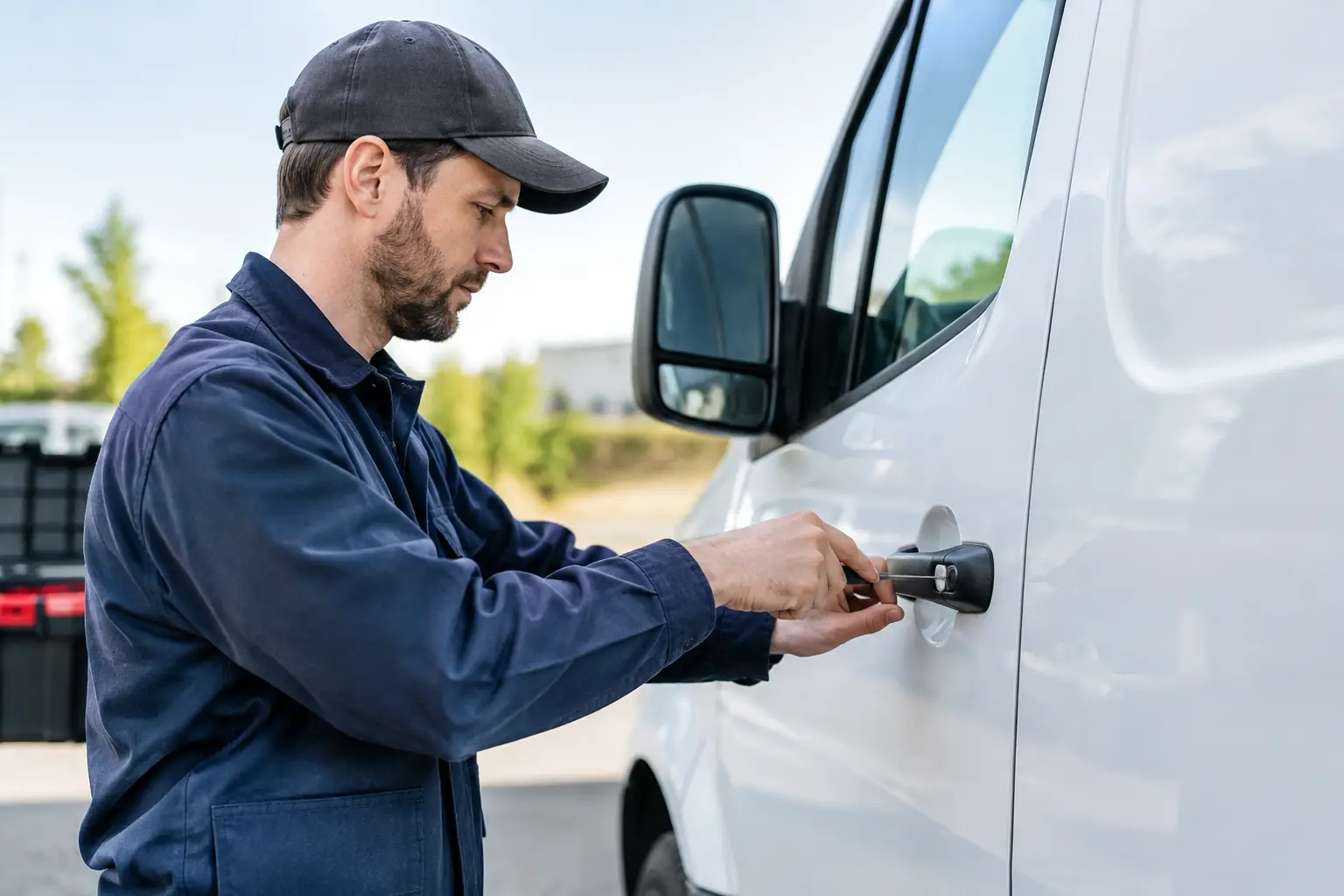
A trades van lockout case study is not just about getting a door open. When the keys are sitting on the driver’s seat and the van is full of tools needed for the next job, every minute off the road affects the day ahead.
For a self-employed electrician, plumber, builder or delivery driver, a locked van can mean missed appointments, delayed materials and customers left waiting. The right response is fast, calm and carried out without causing damage to the vehicle. Here is what a typical mobile lockout call looks like, why the details matter and what can reduce the chance of it happening again.
The call: locked out between jobs
The driver in this example had stopped briefly between appointments. The van was parked safely, the engine was off and the keys had been left inside the cab. When the driver shut the door, the central locking engaged automatically.
It was not a case of simply reaching through an open window. Every door was secure, the spare key was at home and the tools for the next job were locked in the rear load area. The driver needed access quickly, but did not want damaged seals, scratched paintwork or a broken lock creating another problem after the immediate one was solved.
This is a familiar situation for mobile locksmiths. Modern vans are designed to be secure, and that is good news until the key is on the wrong side of the glass. Trying to force a door, bend a frame or use improvised tools can damage the vehicle and may trigger a much bigger repair.
What makes a van lockout different?
A lockout on a trades van often carries more pressure than one on a private car. The vehicle is a workplace, a store room and transport rolled into one. Lost time quickly builds up when scheduled work, deliveries or emergency call-outs depend on it.
There is also the security issue. Many vans contain valuable equipment, so the job must be handled carefully and professionally. A locksmith should first establish that the person requesting entry is entitled to access the vehicle. This protects the owner, their tools and everyone else involved.
The vehicle itself can add complications. Some vans have deadlocks, aftermarket security upgrades, separate rear-door locks or keyless entry systems. Others have worn locks, a weak vehicle battery or a remote that has failed without warning. The cause of the lockout affects the safest route to a solution.
Trades van lockout case study: the on-site process
Once the driver had called, the first step was to confirm the vehicle make, model and location. Clear information at this stage helps the locksmith arrive prepared with the correct equipment for the van rather than wasting time making assumptions.
On arrival, the locksmith checked the situation and confirmed the vehicle details with the customer. The aim was straightforward: regain entry without damage and avoid turning a lockout into a repair job.
A professional locksmith uses vehicle-specific, non-destructive entry methods where possible. The exact approach depends on the van and its security system, but it should never involve guesswork or brute force. Care is taken around door seals, lock mechanisms, paintwork and window glass.
After access was gained, the keys were retrieved and checked. This matters because a lockout can sometimes be the first sign of another fault. If the remote had stopped working, if the key blade was worn or if the van had locked itself unexpectedly, the driver needs to know whether the problem is likely to happen again.
In this case, the keys were intact and the central locking system was operating normally. The driver was able to continue to the next job without a tow, a trip to a dealer or damage to the van.
Why forcing entry is a false economy
When you are late for a job, it is tempting to try anything that looks quick. A coat hanger, a screwdriver, a wedge or a borrowed tool can seem like a practical answer. It rarely is.
Modern vehicle doors contain wiring, locking components, side-impact protection and carefully fitted weather seals. A forced entry attempt can leave a window mechanism damaged, distort the top of a door frame or compromise the lock itself. Even if the door opens, rain, wind noise and security problems can follow.
There is another risk for tradespeople: an obvious attempt to force entry can make a van look vulnerable when it is later parked at a customer’s property or on a driveway. Keeping the vehicle intact is not just about appearance. It is about maintaining its security for the tools and equipment inside.
When the answer is more than opening the door
Not every call ends with the key being found inside. Sometimes the key is lost, snapped, stolen or no longer recognised by the vehicle. In those cases, access is only the first part of the job.
A mobile auto locksmith can assess whether a replacement key is needed, whether a remote requires repair or whether a fault in the ignition or immobiliser needs further attention. If keys have been stolen, it may also be sensible to remove old keys from the vehicle’s system so they can no longer be used to start it.
The right solution depends on the fault. A driver with a working spare key may only need safe entry. Someone with all keys lost needs a different response. Explaining the options clearly helps avoid unnecessary work and gets the van back into service with the right level of security.
What the driver did right
The main reason this lockout stayed manageable was that the driver stopped before attempting to force the van open. They parked safely, kept the vehicle in sight and called for specialist help.
They also had the van details ready. Knowing the registration, model and exact location can speed up the response. If access is needed at a busy site, it helps to mention any height restrictions, gated access or site contact requirements when booking the call-out.
For business vehicles, keeping proof of ownership or use accessible on a mobile phone can also prevent delays. A locksmith has a responsibility to check they are helping the legitimate driver, especially where tools or stock are secured in the vehicle.
Reducing the risk of another lockout
Lockouts are not always avoidable. A busy day, a phone call, wet weather or a moment of distraction is enough for a key to be left behind. A few practical habits can make the situation less likely.
Keep a spare key somewhere separate from the vehicle, rather than inside the van. Check the condition of the main key before it fails completely, particularly if the buttons are inconsistent, the blade is worn or the casing is damaged. If the van has an auto-locking feature, get into the habit of checking for the key before closing the door.
For firms with several drivers, key control matters as well. Clear handovers, labelled spares and a simple record of who has each key can prevent a minor mistake from taking a vehicle out of use. It may feel basic, but it is often the difference between a short delay and a lost working day.
Fast help when the van is your livelihood
A van lockout is stressful because the clock does not stop. Customers still expect you, materials still need collecting and the next appointment is already in the diary. What matters is getting professional help that comes to the vehicle, assesses the real issue and works carefully.
Car Key Maker provides mobile vehicle lockout and key assistance across the West Midlands and Warwickshire, helping drivers regain access without the added disruption of taking a van elsewhere. If your keys are locked inside, lost, broken or simply not working as they should, acting early can keep a difficult moment from becoming a longer stoppage.
The best outcome is not merely an open door. It is a secure van, an undamaged vehicle and the chance to get back to the work that was waiting for you.