
You usually do not think about the best spare car key options until the day your main key stops working in a grocery store parking lot, snaps in the ignition, or vanishes somewhere between work and home. That is when a cheap shortcut starts looking expensive. A proper spare key is not just backup convenience. It is the difference between driving away in minutes or losing half a day dealing with a breakdown you did not expect.
For most drivers, the right choice depends on three things – how old the vehicle is, what security system it uses, and how much risk you are willing to carry if your only key fails. Some options are cheap but limited. Others cost more up front but save real time, stress, and money later. If you want a spare that actually helps when things go wrong, it pays to know what you are buying.
Best spare car key options for different vehicles
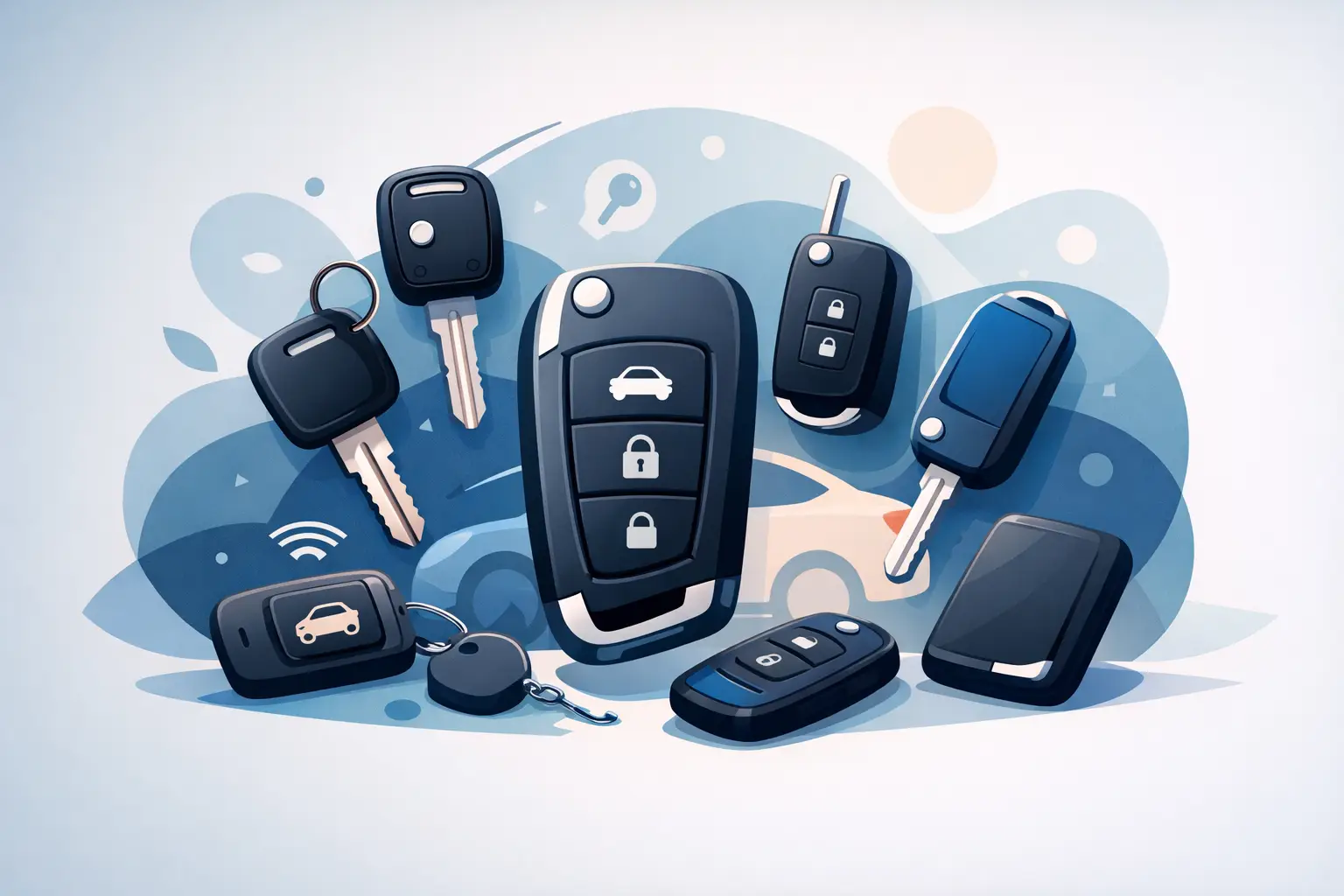
Not every spare key does the same job. A basic metal copy may unlock a door but fail to start the engine. A fully programmed remote key may cost more, but it gives you the closest thing to your original key. The best choice is the one that matches how you use the car and how badly a key failure would disrupt your day.
Basic mechanical spare keys
If you drive an older vehicle without a transponder chip or remote functions, a plain cut metal key can be a smart low-cost backup. It is simple, affordable, and useful if your main key is worn down or you want an extra key for another driver.
The trade-off is obvious. This type of spare only works on vehicles simple enough to accept it. On anything with an immobilizer system, a plain copy may open the door but it will not start the engine. That catches a lot of people out. They assume they have a working spare until they actually need to drive.
For older cars, though, this is often the easiest option and there is not much to go wrong with it. If your vehicle qualifies, it is a practical backup to keep at home.
Transponder chip keys
For many vehicles built over the last couple of decades, a transponder key is the real minimum standard for a useful spare. These keys contain a chip that communicates with the vehicle’s immobilizer system. Without the correct programming, the engine will not start.
This is where price and value can get confused. Some people see a cheaper blade copy and think it solves the problem. It does not if the chip is missing or not programmed correctly. A proper transponder spare is more expensive than a basic key, but it gives you an actual driving backup instead of a false sense of security.
If your main concern is avoiding a no-start situation, this is often the level you need. For a lot of drivers, it is the best balance of cost and usefulness.
Remote head keys
A remote head key combines the key blade, transponder chip, and remote locking buttons in one unit. If your original key starts the car and locks or unlocks the doors remotely from the same key, this is usually the closest match for a proper spare.
It is a strong option for drivers who want convenience as well as emergency backup. You are not just getting into the car and starting it. You are also keeping the same day-to-day function you are used to.
The downside is cost. These keys are more complex, and poor-quality shells or low-grade electronics can fail early. If you choose this route, the quality of the key and the programming matter. A spare that only works sometimes is not much of a spare.
Smart keys and proximity fobs
If your car uses push-button start, keyless entry, or a proximity fob, your spare needs to match that system. These are among the most advanced spare car key options, and they usually need specialist programming equipment to pair properly with the vehicle.
They are also the most expensive category, which leads some owners to delay getting a second key. That is understandable, but risky. If you lose the only working smart key, the job often becomes slower, more technical, and more expensive than simply duplicating an existing key.
For newer cars, this is one area where cutting corners rarely pays off. A proper programmed spare fob is expensive compared with older key types, but replacing all lost keys is usually worse.
The cheapest option is not always the best spare car key option
A lot of people shop for a spare key by looking at the lowest number first. That makes sense until the cheap option fails to do what you actually need. The best spare car key options are not always the least expensive. They are the ones that work properly, start the vehicle reliably, and do not leave you stranded later.
A low-priced online key shell, unprogrammed fob, or badly cut blade may look like a bargain. But if it cannot be paired correctly, has weak buttons, or uses poor internal components, you can end up paying twice. First for the part, then again to fix or replace it.
There is also a security angle. With stolen or missing keys, the issue is not just making another one. Sometimes the safer move is to erase lost keys from the vehicle system and program fresh ones. That costs more than a simple duplicate, but it closes a real risk.
What makes one spare key option better than another?
The best choice usually comes down to reliability, not just type. A proper spare key should be cut accurately, programmed correctly, and tested on-site for locking, unlocking, and starting. If any one of those steps is rushed, the spare may work intermittently or fail when you need it most.
Vehicle age matters. So does how many keys you already have. If you still have one working key, duplicating it is normally quicker and cheaper than starting from scratch. If all keys are lost, the process is more involved and the bill usually climbs with it.
Your own habits matter too. If you share the vehicle with a partner, child, or employee, a full-function spare often makes more sense than a basic emergency-only key. If the car is a backup vehicle that rarely moves, a simpler spare may be enough. There is no single answer for every driver.
Dealership, hardware store, or auto locksmith?
This is where convenience and speed separate sharply.
A dealership can often supply a replacement, but that usually means more time, more cost, and less flexibility. You may need to arrange transport if the car cannot move, and that is where the headache starts. For urgent situations, that delay is hard to justify.
A hardware store may be fine for very simple keys, but once chips, remotes, or proximity systems are involved, their limits show quickly. They are not built around vehicle-specific diagnosis or on-the-spot problem solving.
A mobile auto locksmith is usually the most practical option when speed matters. The key benefit is not just making a key. It is being able to cut, program, test, and solve related lock or ignition issues at the vehicle. If the key is worn, broken, stolen, or the ignition barrel is part of the problem, that experience matters.
When should you get a spare key made?
The best time is while you still have one fully working key. That is when the job is simplest, fastest, and usually cheapest. Waiting until the last key is damaged, lost, or locked inside the car turns a manageable job into an urgent one.
There are also a few clear warning signs that you should act now. If your current key is cracked, the buttons are failing, the blade is worn, or the car sometimes struggles to recognize it, do not ignore that. Keys rarely fix themselves. They normally get worse until they stop working at the wrong moment.
For drivers who rely on one vehicle every day, a spare key is not really optional. If missing a shift, school pickup, job call, or delivery run would be a serious problem, then having only one key is a gamble.
The option that fits your car and your risk
The best spare key is the one that works with your vehicle, matches your daily needs, and removes pressure before a small problem becomes an emergency. For some cars that means a basic duplicate. For many others, it means a properly programmed transponder key, remote key, or smart fob made by someone who can test it there and then.
If you are in the West Midlands or nearby and your only key is already showing signs of trouble, getting ahead of it is usually the cheaper move. A spare key feels easy to put off right up until the day you need one immediately. That day tends to arrive without much warning.