
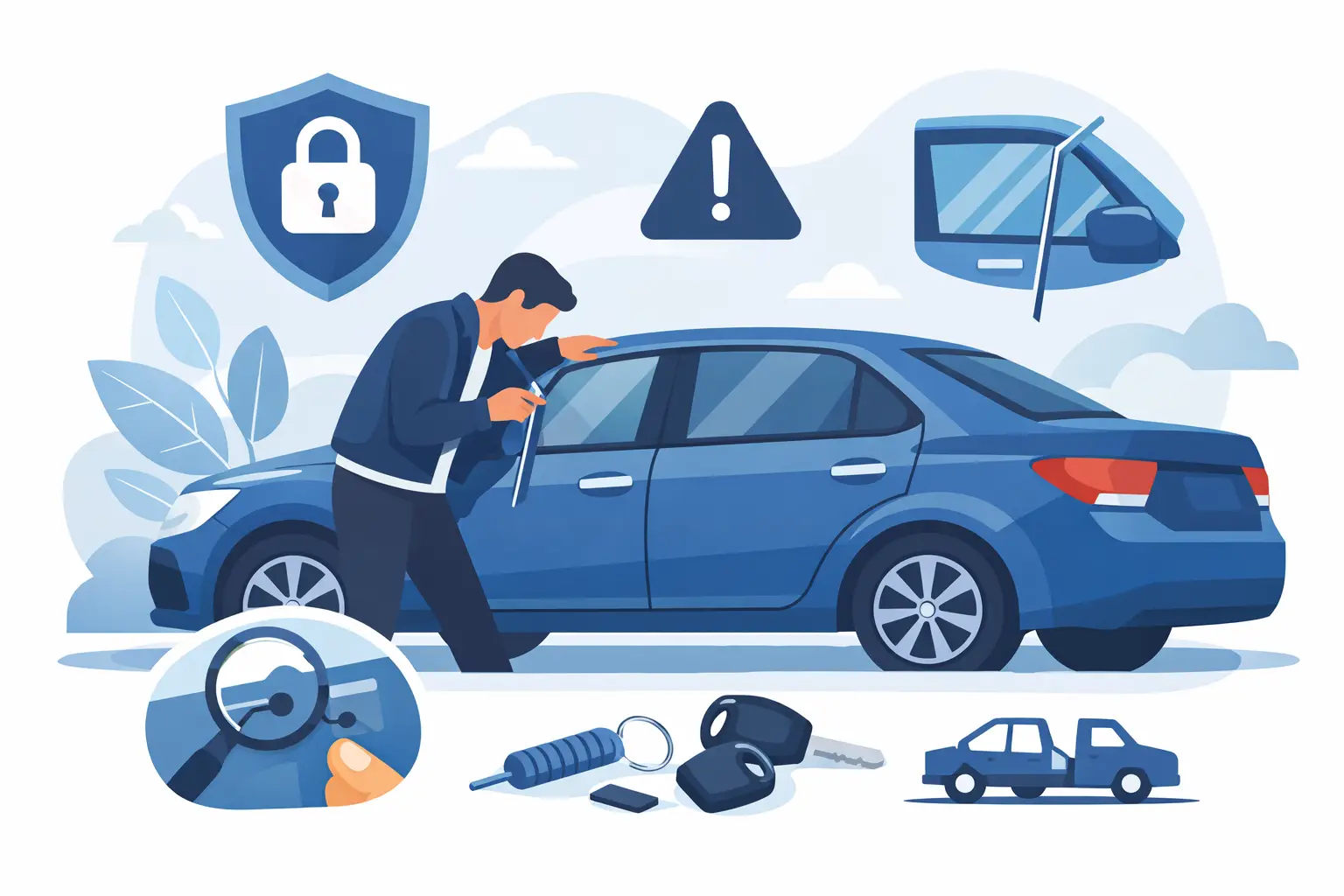
That sinking feeling usually hits fast – you shut the door, hear the lock click, and spot the keys sitting on the seat. If you are searching for how to open locked car doors, the first thing to know is simple: the wrong move can turn a lockout into a broken window, damaged weather stripping, or an expensive lock repair.
A car lockout is stressful, but it is usually fixable without making the situation worse. The best approach depends on your vehicle, where the keys are, whether the engine is running, and what tools you actually have. Some older cars leave more room for a careful DIY attempt. Newer vehicles often do not. In many cases, the fastest and cheapest option is a mobile auto locksmith who can get to you and open the vehicle without damage.
How to open locked car doors without causing damage
The biggest mistake people make is rushing. Coat hangers, screwdrivers, wedges from the garage, and random bits of metal can tear window seals, scratch paint, bend the door frame, or damage internal lock rods. That can leave you with a bigger bill than the lockout itself.
Before trying anything, stop and check the basics. Make sure every door is actually locked. Try the trunk or hatch if your vehicle design allows cabin access from there. Check whether a rear door or passenger door responds differently from the driver door. If you have a keyless app or a spare remote nearby, now is the time to use it.
If a child or pet is inside, or the car is running in unsafe conditions, this stops being a normal lockout. Treat it as urgent and get emergency help right away.
Start with the simplest options
If you have roadside assistance through your insurer, vehicle warranty, or a motoring plan, call them first and ask for ETA. If you have a spare key at home, think realistically about time. Waiting an hour for a spare may be better than damaging the car in five minutes.
Some vehicles also have manufacturer apps that can remotely open the doors if the account is active and the car is connected. This is common on newer models, but it only helps if everything was set up before the lockout happened.
When a DIY attempt might work
A careful DIY method is sometimes possible on older cars with upright manual lock posts and more forgiving door gaps. Even then, it depends on having proper lockout tools and knowing how to use them lightly. A professional uses an air wedge and long-reach tool to create a small controlled gap and press the internal button or pull the handle.
What matters here is control. Too much force can bend the top of the door and create wind noise or water leaks later. If you do not have the right tools, forcing household items into the gap is rarely worth it.
What not to do when figuring out how to open locked car access points
Breaking a window should be the last resort, not the first idea. Side glass can shatter unpredictably, cause injury, and leave the car insecure until repairs are done. Smashing a small window is not automatically cheaper once glass cleanup, replacement, and possible trim damage are added in.
Using a slim jim is another common misunderstanding. On older vehicles, these tools could sometimes reach the linkage. On many modern cars, they can damage wiring, side airbags, and delicate internal components inside the door. What looks easy in a video often goes badly in real life.
Trying to pry the door open with screwdrivers or hard wedges is also a poor trade. You may gain a few millimeters and lose the seal, paint finish, or alignment of the door edge.
Older cars vs newer cars
Vehicle age makes a real difference. Older cars tend to have simpler mechanical systems. Newer vehicles are tighter, more electronic, and more sensitive to damage. Some have deadlocks, shielded linkages, or anti-theft features that make quick DIY access much harder.
If your car has frameless windows, soft-close doors, double-locking systems, or advanced alarm functions, there is less room for error. These are the situations where professional lockout entry usually saves time and prevents damage.
There is also the key issue. Sometimes the problem is not just that the car is locked. The key fob battery may be dead, the emergency blade may be missing or worn, or the vehicle may not be recognizing the key correctly. In those cases, opening the car is only part of the job.
When to call a mobile auto locksmith
If you need the car open quickly, do not have proper tools, or drive a newer model, calling a locksmith is usually the smart move. A qualified mobile auto locksmith can come to your location, verify ownership, and gain entry with the correct tools. That means no towing, no dealership delay, and no guessing.
This is especially useful if your keys are locked in the trunk, your spare is not available, your fob has failed, or you have lost all keys rather than simply locking them inside. A proper auto locksmith can often do more than open the door. They may also cut and program a replacement key, repair a damaged remote, or sort out an ignition-related issue on-site.
For drivers who depend on the car for work, school runs, or appointments, speed matters. Waiting half a day for the wrong service can be more expensive than paying for the right one straight away.
What a professional will usually do
A proper lockout service starts with identification and proof that the vehicle is yours. That protects both you and the vehicle. From there, the locksmith chooses an entry method based on the make, model, lock type, and risk of damage.
In many cases, that means an air wedge and a long-reach tool used with care to press an internal button, pull the handle, or retrieve keys if they are visible and accessible. On some vehicles, the safest route may be through a different opening point or by using the mechanical lock with specialist tools.
The goal is straightforward: get into the vehicle quickly without leaving you with bent trim, electrical faults, or a door that never seals properly again.
How much it usually costs
Cost depends on the vehicle, time of day, location, and what has actually gone wrong. A simple lockout is normally cheaper than all keys lost. A high-security vehicle with complex access systems may cost more than an older sedan with a standard mechanical setup.
The cheapest-looking option is not always the cheapest outcome. If a low-cost attempt damages the lock, paint, glass, or door frame, you can end up paying for the lockout and the repair. Fair pricing matters, but so does getting the job done right the first time.
That is why many drivers choose a specialist instead of a general roadside provider. A dedicated auto locksmith deals with vehicle access and key systems every day, not just occasionally.
How to reduce the chance of another lockout
Most lockouts happen during routine moments – unloading groceries, fueling up, rushing to work, or dealing with kids and bags at the same time. A spare key kept in the right place makes a big difference, but only if it is actually accessible when you need it.
If your remote is intermittent, the battery is weak, or the key blade is worn, deal with it before it fails completely. Small key problems often turn into lockouts at the worst possible time. Getting a spare cut and programmed early is usually far easier than solving an emergency later.
For drivers in busy areas of the West Midlands and Warwickshire, mobile specialists like Car Key Maker are often the practical answer when time matters and the car needs to be opened where it is parked.
The best next step depends on the car and the risk
If you are stuck outside your vehicle, the right answer is not always a DIY trick. Sometimes it is checking every door and using the spare. Sometimes it is roadside assistance. And sometimes the quickest, safest fix is to get a mobile auto locksmith out to you and avoid turning a simple lockout into bodywork, glass, or lock damage.
When the pressure is on, choose the option that gets you back in the car without leaving you another problem to pay for later.