
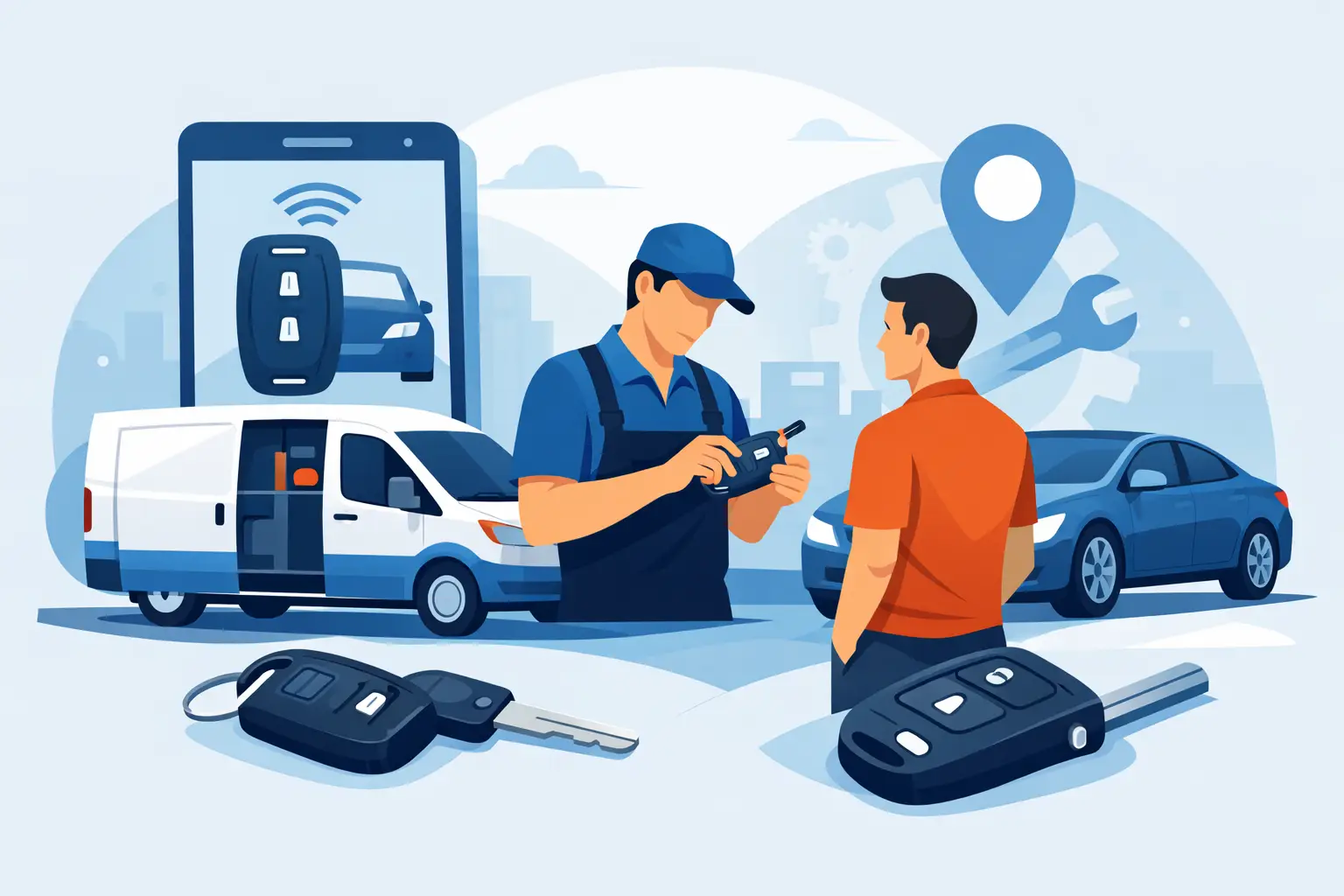
Losing your only car key rarely happens at a convenient time. It happens before work, outside the grocery store, on a school run, or when the key suddenly stops turning and the car will not start. That is usually when people ask how mobile car key replacement works, and whether it can really be done at the roadside, at home, or in a parking lot without towing the vehicle anywhere.
The short answer is yes – in many cases, a qualified mobile auto locksmith can come to you, identify the problem, cut or supply the right key, program it to the vehicle, and test everything on-site. The exact process depends on the make, model, year, and what has gone wrong, but the goal stays the same: get you back into your car and back on the road as quickly as possible.
How mobile car key replacement works in real life
A mobile service is built around one thing: bringing the workshop to the vehicle. Instead of arranging recovery or waiting days for a dealership appointment, the locksmith arrives with the tools, blanks, programming equipment, and diagnostic gear needed to handle most key problems where the car is parked.
That matters because modern car keys are rarely just pieces of cut metal. Many contain transponder chips, remote locking functions, or smart proximity systems that must match the car’s immobilizer before the engine will start. Replacing the key is often a mix of mechanical work and electronic programming.
When you call, the first step is usually diagnosis before arrival. You will normally be asked for the vehicle registration, make, model, year, and a clear description of the issue. Is the key lost? Snapped? Locked inside? Turning in the door but not starting the car? Has the remote stopped working? Those details help narrow down what equipment and parts are needed before the locksmith sets off.
What happens when the locksmith arrives
Once on-site, the locksmith confirms ownership and checks the vehicle condition. That part is not just box-ticking. It protects the vehicle owner, the locksmith, and the security of the car itself.
After that, the actual job begins with identifying the type of key system the vehicle uses. Older vehicles may only need a straightforward mechanical cut. Newer models often need a transponder chip programmed to the immobilizer. Push-to-start vehicles may need a smart key or proximity fob configured to the car’s system.
If all keys are lost, the process is more involved than copying an existing key. The locksmith has to generate a new key from the lock, vehicle data, or specialist key code information, then program it to the vehicle. If you still have one working key, replacement is usually faster and cheaper because the existing key can sometimes be cloned or used as a reference.
Cutting the key on-site
For many people, the surprising part is that the key can often be cut right there beside the vehicle. Mobile auto locksmith vans are typically equipped with key cutting machines that can produce a new blade to match the vehicle’s locks and ignition.
How that key is produced depends on the situation. If there is an existing working key, the new blade can often be duplicated from it. If there is no key at all, the locksmith may decode the door lock, ignition lock, or use vehicle data to determine the correct cut pattern.
This is one area where experience matters. A badly cut key can stick, wear the lock, or fail to turn consistently. A good mobile locksmith is not just making something that looks similar. They are making a key that works cleanly in the real world, not only in theory.
Programming the chip or remote
This is where many replacements stop being a simple hardware job. Most modern vehicles have an immobilizer system that looks for the correct transponder chip before allowing the engine to start. Even if the blade is cut perfectly, the car may still refuse to start until the key is properly programmed.
Programming usually involves diagnostic equipment connected to the vehicle. The locksmith communicates with the car’s onboard system, adds the new key to memory, and tests whether the immobilizer recognizes it. If the key includes remote buttons for locking and unlocking, those functions may need to be synced as well.
In stolen key or security-sensitive cases, old keys can often be deleted from the system so they no longer start the vehicle. That is an important difference between simply getting another key and actually restoring control over who can access and drive your car.
Why pricing can vary so much
People often expect one standard price for key replacement, then get frustrated when they hear “it depends.” The truth is, it really does depend.
A basic metal key for an older vehicle is a very different job from replacing an all-keys-lost smart fob for a late-model car with encrypted security. The price can change based on the key type, whether all keys are lost, whether the car needs emergency entry first, whether there is ignition damage, and how much programming is involved.
That does not mean pricing should be vague. A reliable mobile locksmith should explain what the job involves and give a clear idea of cost before starting work where possible. For many drivers, the value is not only the final price. It is also avoiding towing fees, dealer delays, and the time lost waiting around without a working vehicle.
How long it usually takes
A simple duplicate key can be done quickly. An all-keys-lost job on a modern vehicle will take longer because there is more to do – gaining access if needed, cutting the key, programming it, and testing every function.
Traffic, vehicle complexity, and parts availability all play a role. Some jobs are straightforward and completed fast. Others involve anti-theft systems, worn locks, or damaged ignitions that need extra work. The key point is that mobile replacement is designed to remove unnecessary delay, not create more of it.
For drivers who need the car the same day, that matters more than anything. If your vehicle is how you get to work, collect the kids, or run a business, speed is not a luxury. It is part of the fix.
Common situations a mobile locksmith can handle
When people think about key replacement, they usually picture a lost key. In reality, the problem is often messier than that.
A key may be bent, worn down, cracked, or snapped in the ignition. The remote may stop responding. The car may say no key detected. The blade may open the door but not start the engine. Sometimes the issue is not the key alone but the ignition barrel, door lock, or a fault that is being mistaken for a dead key.
That is another reason mobile service works well. The locksmith can assess the full problem on-site instead of guessing based on symptoms. If the issue is a damaged ignition or failed remote casing rather than a complete key replacement, a practical repair may be the better and cheaper option.
Dealership vs mobile replacement
There are cases where a dealership route makes sense, especially for very new or highly restricted systems. But for many vehicles, a mobile auto locksmith is the faster and more realistic option.
The dealership model often means arranging transport for a vehicle that cannot be driven, waiting for parts, and working around service department schedules. A mobile locksmith is built for the opposite situation: urgent response, on-site work, and getting the problem solved without moving the car.
That convenience is not a small detail. If the vehicle is stuck at home, at work, or in a public parking area, bringing the service to you removes a lot of hassle immediately. For drivers across areas like the West Midlands and Warwickshire, that kind of direct response is often the difference between losing a whole day and getting back on with it.
What you can do before help arrives
If you need a replacement key, having the right information ready can speed things up. Your vehicle registration, make, model, year, and location help the locksmith prepare. If you know whether the spare is also missing, whether the key has remote buttons, or whether the ignition is jammed, mention that early.
It also helps to check the basics before assuming the key is dead. A flat fob battery can sometimes mimic a bigger problem. So can a locked steering wheel or a worn key that has been getting harder to turn for weeks. Even then, do not force anything. Turning a worn key too aggressively can turn a simple replacement into a broken key extraction and ignition repair.
How mobile car key replacement works best
The best results come from accurate diagnosis, the right equipment, and someone who knows the difference between a quick fix and the correct fix. Mobile car key replacement is not magic. It is skilled locksmith work carried out with specialist tools at your location, often under time pressure and in stressful situations.
If your key is lost, broken, stolen, or simply not doing its job anymore, the main thing to know is this: you usually do not need to tow the car, wait around for days, or guess your way through it. A proper mobile service is there to cut through the problem fast, explain what is needed clearly, and get you moving again with as little disruption as possible. When your car key fails, practical help matters more than theory.