
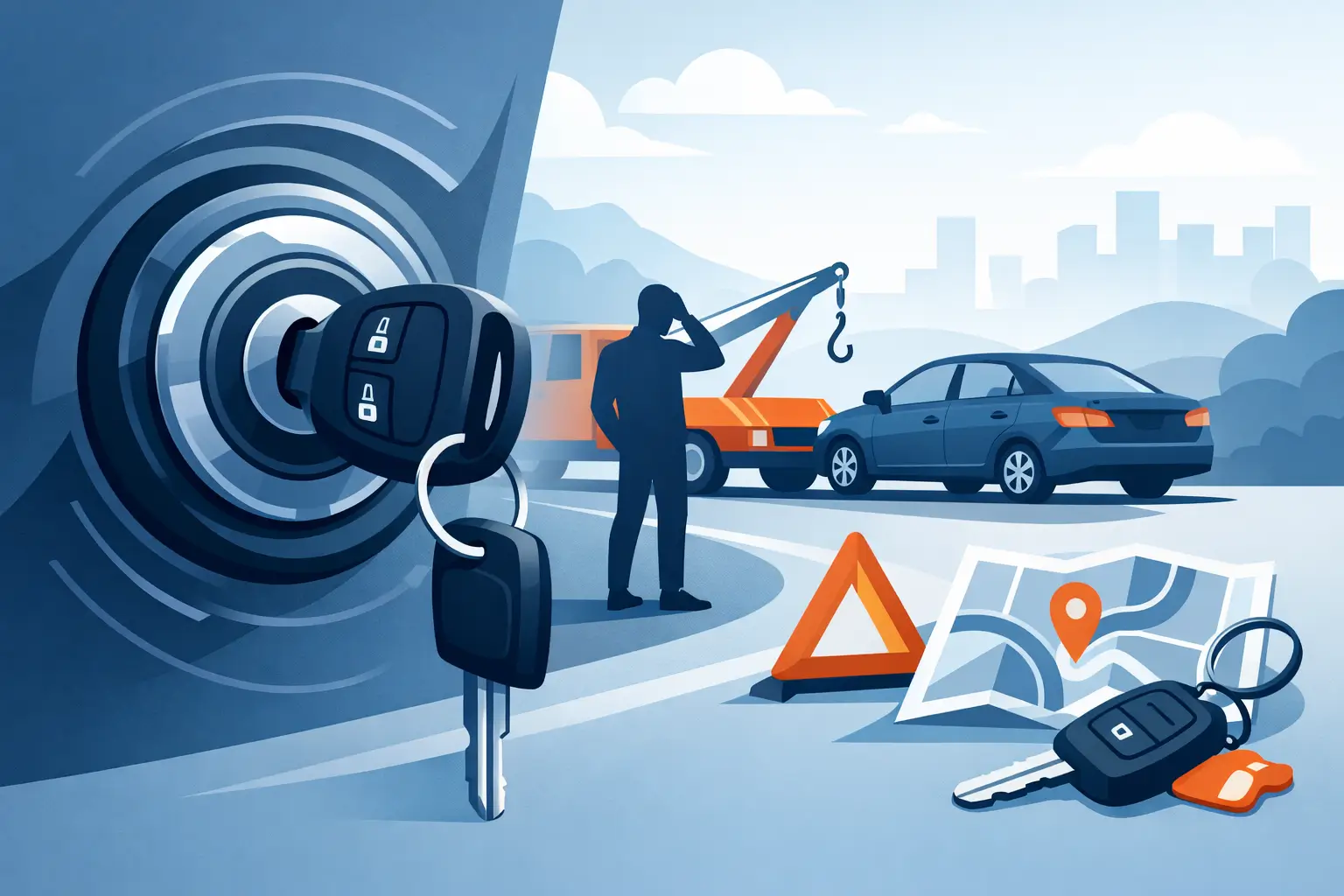
A car key stuck in the ignition is more than an inconvenience when you need to get to work, collect the kids, or finish a job. The temptation is to pull harder and get it over with. That is often how a minor key or ignition issue turns into a broken key blade, a damaged ignition cylinder, and a vehicle that cannot be moved.
Take a breath, keep force out of the equation, and work through a few safe checks first. If the key still will not come out, a mobile auto locksmith can usually diagnose the fault and carry out the repair where the vehicle is parked.
Car Key Stuck Ignition: Start With the Gear Selector
On most automatic vehicles, the key will only release when the transmission is fully in Park. A selector that looks like it is in Park may not have engaged the park position completely, particularly if the vehicle is on a slope, the battery is weak, or the shift mechanism is worn.
Keep your foot on the brake, apply the parking brake firmly, then move the shifter into Park again. You can also try moving it gently through the positions and back to Park while turning the key slightly toward the off position. Do not pull on the key while doing this. The goal is to relieve pressure on the release mechanism, not force it.
For a manual vehicle, make sure the key is fully turned to the off position. Some models have a steering or ignition lock that needs the key to return to exactly the right point before it can be removed.
If the engine is still running and the key will not turn off, do not leave the vehicle unattended. Put the vehicle in Park or neutral as appropriate, set the parking brake, and arrange professional help promptly. An engine that cannot be shut down safely is not a problem to put off until later.
Release Pressure From the Steering Lock
A locked steering wheel is one of the most common reasons a key feels trapped. It often happens after parking with the front wheels turned, especially against a curb. The steering wheel puts tension on the locking pin inside the steering column, which can prevent the key from turning or coming free.
Hold the key gently in the position it is already in. Then turn the steering wheel left and right. Usually, one direction will be solid and the other will have a little movement. Apply steady pressure in the direction with movement while lightly turning the key back toward the removal position.
This should feel controlled, not aggressive. If the key does not release after a few careful attempts, stop. Repeated twisting can wear the key further or damage the internal parts of the ignition.
Check the Key Before Blaming the Ignition
Keys wear down gradually, which is why the problem can seem to appear out of nowhere. A worn key may still start the vehicle but struggle to line up the small pins inside the ignition cylinder when you try to remove it. Bent keys, cracked plastic heads, damaged remote housings, and keys that have been used as tools or bottle openers are all more likely to stick.
Look for obvious bending, chipped edges, deep wear, or a blade that sits at an odd angle. If you have a properly cut spare key, try it carefully. A spare that removes normally points to a worn original key rather than a failed ignition cylinder.
Do not use a badly worn duplicate as a long-term fix. It may get you home, but it can continue wearing the ignition and leave you with the same issue again at the worst possible time. A locksmith can cut and program a fresh key where required, using the correct specifications for your vehicle.
Why remote keys can make this harder
On many vehicles, the metal blade is attached to a remote or transponder key. When the remote case is loose, heavy, or damaged, it can place sideways pressure on the blade while it sits in the ignition. Remove bulky keychains if possible, then try the key again with only light, straight pressure.
A failed remote battery usually does not cause a physical key to stick. However, it can be part of a wider key issue if the casing is broken or the key has been dropped repeatedly. The mechanical blade, transponder chip, and ignition cylinder all need to be checked separately.
What Not to Do When a Key Is Jammed
A stuck key often feels like it needs a quick trick. In reality, improvised fixes can turn a repairable fault into a more expensive ignition replacement. Avoid these common mistakes:
- Do not yank or twist the key with pliers, grips, or another tool.
- Do not hit the key, steering column, or ignition with a hammer.
- Do not flood the ignition with household oil, grease, or random spray lubricant.
- Do not try to pry apart the ignition surround or steering column covers without the right tools.
Some lock-specific lubricants can help in limited situations, but they are not a cure for a worn key, a damaged ignition cylinder, or a faulty gear-selector interlock. Household products can collect dirt inside the lock or interfere with delicate components. If the key is already difficult to turn, adding spray and continuing to force it can make diagnosis harder.
There is one exception worth mentioning: if the key is visibly bent or partly broken, do not keep testing it. Leave it as still as possible. A blade snapped inside the ignition is recoverable in many cases, but extracting it without damaging the cylinder requires proper locksmith tools.
When the Problem Is the Ignition Cylinder
If the gear selector and steering wheel checks do not help, the ignition cylinder itself may be worn or damaged. Inside the cylinder are small moving parts that must match the cuts on your key precisely. Over years of use, both the key and those internal parts can wear. Dirt, previous forced attempts, or a damaged key can accelerate the problem.
Signs of an ignition-cylinder fault include a key that has been getting harder to turn, a key that only works when jiggled, a key that will not return fully to off, or a key that comes out only at a certain angle. Some drivers notice intermittent starting problems first. Others find that the key works normally one day and sticks completely the next.
The right repair depends on the vehicle and the damage. Sometimes a new correctly cut key solves it. In other cases, the ignition cylinder needs to be repaired or replaced. A professional should also make sure the repair works with the vehicle’s immobilizer system, so the car starts reliably after the mechanical issue is fixed.
Why a Mobile Auto Locksmith Is Often the Fastest Option
A dealership may be able to help with some key and ignition problems, but it can mean arranging a tow, waiting for an appointment, and paying dealer-level prices. That is not practical when your car is stranded outside your home, workplace, or job site.
A qualified mobile auto locksmith comes to the vehicle with equipment to assess the key, ignition cylinder, and vehicle security system. Depending on the fault, the work may involve removing a broken blade, cutting a replacement key, repairing the ignition lock barrel, or programming a replacement transponder key on-site.
This is particularly useful when you have no spare key, the key has broken in the ignition, or your vehicle cannot be shut down or secured. Car Key Maker provides mobile help across the West Midlands and Warwickshire for drivers who need a practical solution without the delay and inconvenience of a tow.
A Stuck Key Can Be an Early Warning
If the key eventually comes out, do not assume the issue has disappeared. A key that sticks once can stick again, and the next time may be when you are late for work, away from home, or parked somewhere inconvenient.
Get the key checked while the vehicle is still usable. Replacing a worn key or repairing an ignition that is starting to fail is usually far easier than dealing with a snapped key and an immobilized car. Until it is inspected, use a light hand, avoid heavy keyrings, and keep a working spare somewhere safe. Fast action now can save a much bigger problem later.