
A missing or failed car key can stop the whole day in seconds. You may be outside work, parked at home, loading the children into the car, or stranded after the last key has snapped in the ignition. This guide to on site key cutting explains what a mobile auto locksmith can do at your vehicle, what information helps speed things up, and when cutting a new key is only part of the repair.
What on site key cutting means for your car
On site key cutting means a specialist travels to your vehicle with the equipment needed to produce a working key there and then. Rather than arranging recovery, finding transport to a dealer, or waiting for a key to be ordered, the locksmith assesses the vehicle where it is parked and creates the key around the actual fault.
For older vehicles with a basic metal blade, the job may be relatively straightforward. Modern vehicles are different. Most have a transponder chip, remote functions, an immobiliser system, or all three. The blade must be cut accurately, but the electronics may also need to be programmed so the car recognises the key and allows the engine to start.
That is why a car key is not simply a piece of metal with grooves cut into it. It is part of your vehicle’s security system. A proper on-site service covers both the mechanical key and the electronic side where required.
When you may need a new key cut at the vehicle
The obvious situation is all keys lost. If you have searched the house, retraced your steps, and still cannot find them, a mobile locksmith can often produce a replacement without the vehicle moving an inch. This is particularly useful when the car is blocking a drive, sitting in a work car park, or parked somewhere recovery access would be difficult.
On-site cutting is also useful when a key has broken. A blade can wear down over time, snap in the door or ignition, or separate from a remote case. If the cut is worn, the key may turn inconsistently, stick, or fail to operate one lock while still working in another. Continuing to force it can turn a key problem into an ignition or lock-barrel problem.
You may also need help after a lockout. Keys left on the seat, in the boot, or inside a locked vehicle are stressful, but they do not always mean a replacement is needed. A locksmith will first establish the safest route to regain access. If the key is unavailable, damaged, or cannot be recovered, on-site key cutting may be the practical next step.
How a mobile locksmith cuts and programmes a replacement
The exact method depends on the make, model, year, and type of key, but the process should be methodical rather than rushed. First, the locksmith confirms you are entitled to access the vehicle. Having photo identification and proof that you own or are authorised to use the car avoids unnecessary delay.
Next comes an assessment of the fault. Is the key genuinely lost? Has the blade snapped? Is the remote not responding? Does the key turn but the car show an immobiliser warning? These details matter because a flat battery in a remote, a damaged circuit board, a worn lock, and an unprogrammed transponder all call for different work.
Producing the key blade
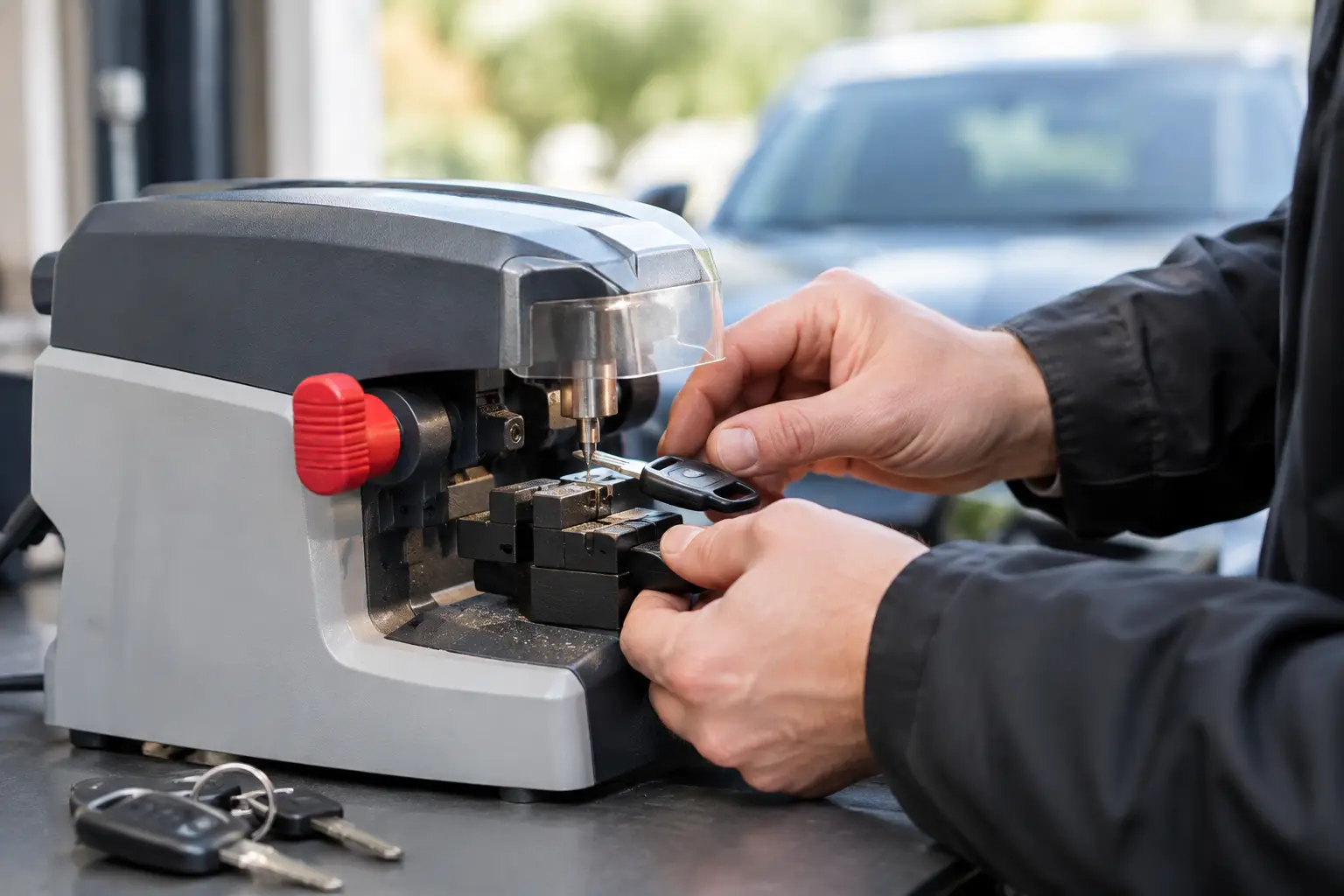
A new blade can be cut from key data, from a working key where one is available, or by decoding the vehicle’s lock. The locksmith uses specialist cutting equipment to match the profile precisely. Accuracy matters: a poorly cut blade can damage a lock, stick in the ignition, or give you a key that works once and fails when you are already late.
For vehicles with a keyless fob, there may still be an emergency blade hidden inside the remote. It is easy to overlook, but it can be essential if the vehicle battery or fob battery fails and you need to open the door manually.
Programming the vehicle electronics
Once the blade is prepared, the replacement key may need programming to the immobiliser and remote locking system. A diagnostic tool communicates with the vehicle and adds the new key to its authorised list. The process differs widely between manufacturers, which is one reason generic advice found online can be misleading.
Programming is not always the whole story. If a key has been stolen, it is sensible to ask whether the missing key can be removed from the vehicle’s memory. Cutting a fresh key gets you moving; deleting an old, stolen key helps prevent it being used to start the car later.
Testing before the job is finished
A professional job is tested at the vehicle. The key should enter and turn smoothly in the relevant locks, start the engine where applicable, and operate the remote functions it is designed to control. This final check is especially valuable with intermittent faults. A key that only works when held at a certain angle is not a reliable solution.
What to have ready when you call
The fastest way to get the right help is to give clear information from the start. Tell the locksmith the vehicle registration, make, model, approximate year, your location, and what has happened. If you have any remaining key, keep it nearby even if it no longer starts the car. It can help identify the type of blade and electronics involved.
Explain the symptoms rather than trying to diagnose the cause. For example, say that the remote has stopped working but the engine still starts, or that the key turns in the ignition but no dashboard lights appear. Mention if the key is broken in a lock, if you are locked out, or if there are no keys at all.
Have identification and vehicle ownership or authorised-use documents ready where possible. A legitimate auto locksmith should take vehicle security seriously. That protects you, your vehicle, and everyone else who relies on the service.
Key cutting does not fix every starting fault
A non-starting car does not automatically mean the key needs replacing. The battery may be flat, the starter could have failed, or there may be an engine management issue unrelated to the key. Equally, a remote that will not lock the doors may need a battery, a replacement case, or circuit-board repair rather than a fully new key.
The ignition also deserves attention. If the key is difficult to turn, catches, or must be wiggled to work, do not keep forcing it. Wear inside the ignition barrel can eventually leave you unable to start the car or with a key stuck in place. In that situation, repairing the ignition lock barrel and cutting a correctly matched key may be the proper repair.
This is where an experienced mobile auto locksmith earns their keep: by identifying whether the issue is the blade, chip, remote, lock, ignition, or a combination of faults. The quickest fix is not always the first fix that comes to mind.
Why on-site help is often the sensible option
Taking a vehicle to a dealer is not always possible when it will not start, the key is lost, or the ignition is damaged. On-site work avoids arranging a tow and lets the locksmith see the vehicle, locks, and key symptoms directly. It also means the replacement can be cut, programmed, and checked in the conditions where you actually need it to work.
For drivers across the West Midlands and Warwickshire, Car Key Maker provides this kind of practical mobile support when a key problem has left a vehicle going nowhere. The aim is simple: establish the fault, carry out the right work at the vehicle, and leave you with a key you can rely on.
A spare key is easier before there is an emergency
If your only working key is cracked, loose, worn, or occasionally ignored by the car, do not wait for it to fail completely. A duplicate made while one key still works usually gives the locksmith a useful reference and gives you breathing room if the original finally gives up.
Keep the spare separate from your everyday key, not on the same keyring and not hidden inside the car. If your main key is lost or stolen, a spare at home can turn a major disruption into a manageable call. And if your key starts sticking tomorrow, treat it as the warning it is: get it checked before the next journey depends on it.