
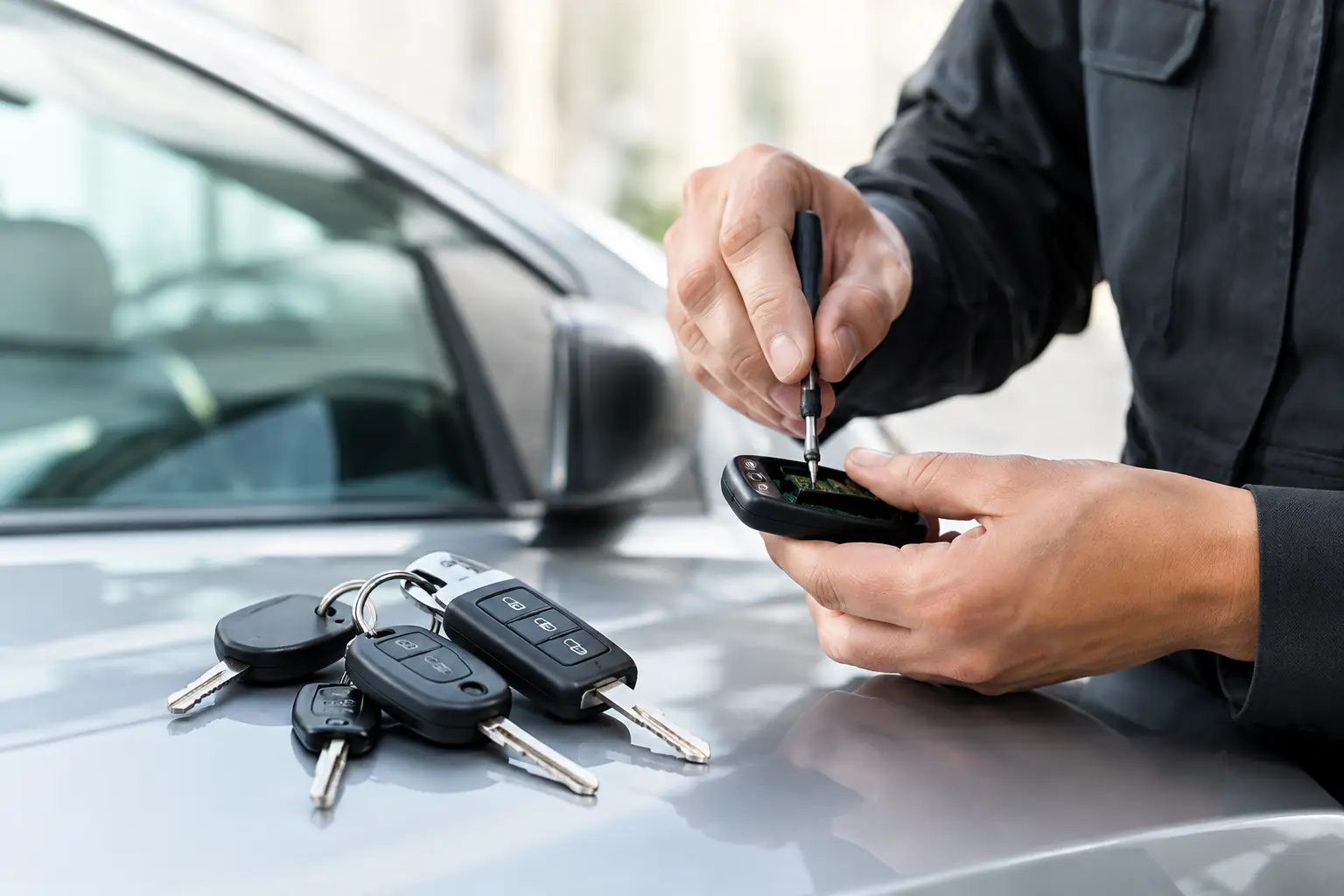
A missing car key is not always just an inconvenience. If it has been stolen, taken by someone you do not trust, or lost near your home or workplace, the real question is: can locksmiths delete old keys so they no longer start the car?
In most modern vehicles, yes. A qualified auto locksmith can usually remove an old key or remote from the car’s authorised key list, then programme working or replacement keys back in. That means the missing key may still physically fit the lock in some cases, but its electronic chip will no longer be recognised by the immobiliser. Without that recognition, the engine should not start.
That distinction matters. Replacing a key gets you moving again. Deleting the missing key helps restore control over who can drive your vehicle.
Can locksmiths delete old keys from every vehicle?
It depends on the vehicle’s make, model, year and security system. Most cars built over the last two decades use a transponder chip, remote fob or proximity key linked to the immobiliser. These systems store a number of approved keys in the vehicle’s memory. An auto locksmith with the correct diagnostic equipment can access that system, clear old key data where the vehicle allows it, and programme the keys you still have or new replacements.
The work is common after a key has been stolen, when a vehicle is bought with only one key, or when a previous owner, employee or family member may still have access. It is also sensible if you have lost a key somewhere that could identify your car, such as outside your house, on a work site or with documents containing your registration details.
Very old vehicles are different. If a car has no immobiliser chip or electronic key programming, there may be nothing stored digitally to delete. In that situation, security may require a lock change, ignition barrel repair or replacement, depending on how the vehicle is set up.
Some newer models add another layer of complexity. Keyless entry and start systems, smart keys and certain premium vehicles can have manufacturer-specific procedures. The right approach is still available in many cases, but the locksmith needs to identify the system before promising the exact solution.
What deleting an old key actually does
When people say they want a key deleted, they usually mean they want it stopped from starting the vehicle. The locksmith connects specialist equipment to the car and works with its immobiliser or body control system. The authorised keys are then checked, removed or reset as appropriate, and the keys that should remain in use are programmed back to the car.
Once completed, an erased key normally cannot communicate with the vehicle’s immobiliser. It may turn in the ignition on older-style systems, but the vehicle will not start because the security chip is no longer approved. With remote or keyless keys, the buttons and proximity function should also stop working once that remote has been removed from the system.
There is one important trade-off: deleting keys often means every key must be programmed again. If you own two working keys, have both available when the locksmith attends. If you only have one, it can be retained and programmed alongside a new spare. If all keys are missing, new keys can often be created on site, then the vehicle can be set up so only those replacements are authorised.
When key deletion is the sensible option
Not every lost key needs deleting. If you dropped a spare somewhere with no link to the vehicle and quickly recovered it, a replacement may be all you need. But there are situations where treating the old key as a security risk is the sensible call.
A stolen key is the clearest example. The person holding it may know which vehicle it belongs to, or have access to your address, workplace or parking location. Deleting it from the system removes their straightforward route to starting the car.
The same applies after a bag, wallet or set of house keys goes missing alongside the car key. The combination of personal details and a vehicle key creates a much bigger concern than a key lost on its own.
Businesses should also consider deletion when a driver leaves, particularly where a van, fleet car or trade vehicle is regularly left with equipment inside. Handing a vehicle to a new employee with no certainty over how many keys are still in circulation is an avoidable risk.
If you have bought a used vehicle with a single key, you cannot always know whether another programmed key exists. A second working key is useful for day-to-day reliability, while removing unknown keys gives you a clearer security position.
Deleting the key does not always change the locks
This is where many drivers understandably get confused. Electronic key deletion and mechanical lock changes solve related but different problems.
Deleting a key stops its transponder, remote or smart-key functions from being accepted by the vehicle. It is often the fastest way to prevent it from starting the engine. However, the metal blade on an old conventional key may still be able to open the driver’s door if it matches the existing lock.
For many situations, preventing the vehicle from being driven is the priority. In a higher-risk situation, such as a known theft, a break-up with ongoing access concerns, or a key stolen together with your address, changing or repairing the locks may be recommended as well. The ignition barrel and door locks can be assessed so the vehicle is secure both electronically and mechanically.
With keyless cars, there may be no traditional blade used in daily driving, although many fobs contain an emergency blade. Again, the answer depends on the vehicle and what has happened to the key.
What a mobile auto locksmith will need
For security reasons, a legitimate locksmith will need proof that you own or are authorised to deal with the vehicle. This normally means identification and vehicle documents where available. If you are locked out or all documents are inside the vehicle, explain that when you call. A professional will guide you through what can be checked and what is needed before key programming begins.
It also helps to have the registration number, make, model and approximate year ready. Tell the locksmith whether you have any working keys, whether the missing key was lost or stolen, and whether the car uses an ignition key, remote fob or push-button start. These details help establish the likely process before attendance.
A mobile specialist can carry out many key deletion and programming jobs at your location. That avoids arranging recovery simply because the vehicle cannot be started, and it is especially useful when all keys are missing or a key has failed without warning.
Do not wait if the key was stolen
If a key has been stolen, act as though the vehicle could be targeted. Move it to a safer location if possible, keep any remaining keys secure, and avoid leaving paperwork with your address inside. If you have tracking or connected-car features, check that access is protected and change account passwords where relevant.
Then arrange for the missing key to be removed from the car’s memory. If there are signs of attempted theft, damage around the ignition or a problem with the door locks, mention this at the outset. The locksmith can assess whether the issue is limited to programming or whether lock and ignition work is needed too.
For drivers across the West Midlands and Warwickshire, Car Key Maker can attend for on-site key replacement, programming and security-focused key work when a missing key has left you unable to use your car with confidence.
A lost key does not have to leave a permanent question mark over your vehicle’s security. The sooner the old key is assessed and, where appropriate, deleted, the sooner you can use your car knowing that only the keys in your possession are authorised to start it.