
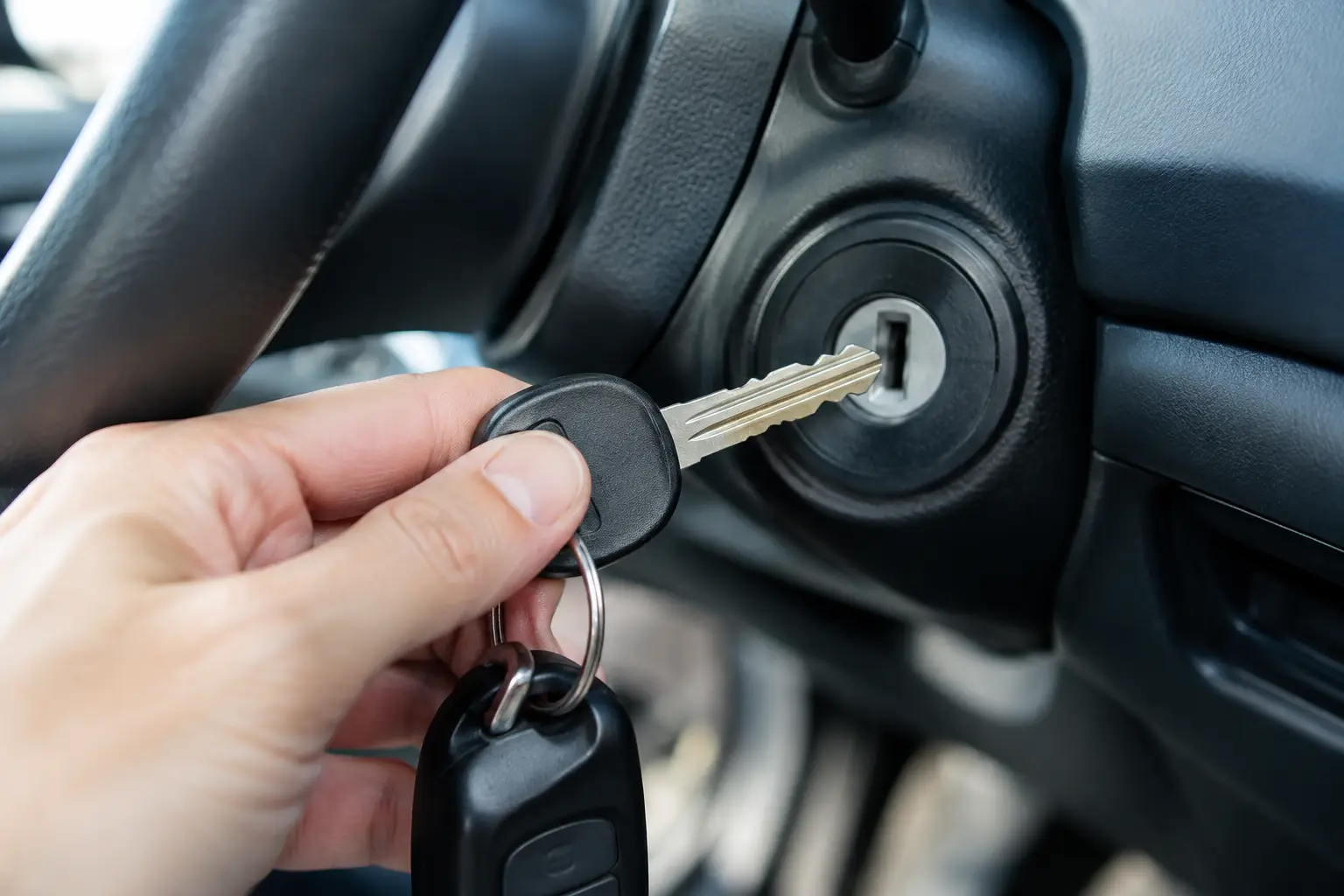
That key that only works after a wiggle is not just annoying. If you are asking, can worn keys damage ignitions, the short answer is yes. A badly worn, bent or damaged key can put extra strain on the ignition lock barrel and eventually leave you unable to turn the key or start the vehicle.
The good news is that ignition damage is often preventable when the warning signs are dealt with early. Replacing or repairing a tired key is usually far less disruptive than waiting until the key sticks in the ignition on a busy morning or outside work.
Can worn keys damage ignitions over time?
Traditional vehicle keys work because the cuts along the blade match the small pins or wafers inside the ignition barrel. When the key is inserted and turned, those components line up, allowing the barrel to rotate.
Over years of use, the edges and cuts on a metal key can become rounded. A key that has been copied from another worn key can be even less accurate. It may still work, but it no longer lifts the internal components cleanly into position. That means you may need to jiggle the key, pull it back slightly or apply more turning pressure than normal.
That repeated force can wear the ignition barrel internally. In some cases, the barrel is already worn and the tired key simply exposes the problem. Either way, continuing to force it is where a manageable issue can turn into a no-start situation.
Modern vehicles can also have a transponder chip or remote built into the key. The metal blade may turn the ignition, but if the chip is damaged, missing or no longer recognised, the engine may not start. These are separate faults, although they can happen at the same time.
Signs your key or ignition needs attention
A healthy key should insert smoothly, turn without a fight and come out easily. If yours behaves differently, do not assume it will keep working indefinitely.
Common signs include the key needing a particular position before it turns, a key that feels loose or catches in the barrel, visible smoothing around the cuts, a bent blade, or a key that only works on one side. You may also notice that your spare works better than the key you use every day. That is a strong clue that the daily key is worn.
Pay attention if the steering lock stays engaged while the key will not turn. Do not put all your strength into the key. Gently moving the steering wheel left and right while applying light turning pressure can relieve normal steering-lock tension. If the key still will not turn, stop there. Forcing it can snap the blade or damage the ignition barrel further.
A key that is difficult to remove is another warning sign. Pulling hard or twisting it sideways can damage both the key and the internal mechanism.
When the problem is the ignition, not the key
Sometimes a fresh, correctly cut key still sticks or refuses to turn. This points more strongly towards wear or damage inside the ignition lock barrel. Internal wafers can wear, jam or break, especially on older or high-mileage vehicles.
If both your main key and spare show the same symptoms, the ignition should be inspected. A locksmith can assess the key and barrel together rather than replacing parts blindly. This matters because fitting another key will not cure an internal barrel fault, while replacing an ignition unnecessarily is equally frustrating.
Why forcing a worn key makes the fault worse
It is tempting to keep trying when you need to get home, collect the children or start the work van. The problem is that extra pressure does not restore the missing shape on a worn key. It only transfers force into components that are designed to move precisely.
A bent key can scrape inside the barrel. A worn key can catch the wafers between positions. A cracked key head can also leave the blade unsupported, making it easier to twist or break. Once a blade breaks in the ignition, the vehicle may be immobilised until the broken piece is removed and the damage is assessed.
Avoid gripping the key with pliers, tapping it, or spraying household oil into the ignition. Oil can attract dirt and leave residue inside the barrel. If a lubricant is appropriate, it should be one intended for vehicle locks and used sparingly – but it will not repair a worn key or damaged internal parts.
What to do when your ignition starts sticking
Start with the simplest check: try your spare key. If it turns normally, stop using the worn key and arrange a replacement as soon as possible. Keeping the better-working key for occasional use is not a long-term solution if the other key is clearly deteriorating.
If neither key turns properly, or the key is difficult to insert or remove, do not keep forcing it. Leave the vehicle secure and get specialist help. A mobile auto locksmith can test the key, inspect the ignition barrel and provide the right repair on site where possible. That can save the inconvenience of arranging recovery simply because the vehicle will not start.
For vehicles with remote or transponder keys, mention any dashboard security light, intermittent starting or remote-button problems as well. Those details help identify whether the fault is mechanical, electronic or a combination of both.
Preventing worn keys from damaging the ignition
Keys wear slowly, so it is easy to overlook the early signs. A few sensible habits can protect the ignition and reduce the chance of being stranded.
Use the original key or a properly cut replacement as your everyday key rather than a copy of a copy. Keep a working spare in a safe place away from the vehicle. Avoid a heavy keyring that puts constant downward strain on the ignition, particularly on cars where the key hangs from the steering column.
Do not use the key as a tool for opening parcels, prising things apart or scraping surfaces. Even a slight bend can affect how it sits in the barrel. If the key is damaged after a drop, accident or heavy impact, have it checked before it becomes stuck.
It is also worth acting at the first sign of a fault. A key that occasionally catches is giving you useful warning. Waiting until it will not turn at all can turn a straightforward replacement into an urgent ignition repair.
Can a new key fix a worn ignition?
It depends on what has worn. A new key cut accurately to the vehicle’s lock code can make a major difference when the old key is the main problem. On many vehicles, this restores smooth operation because the internal components can once again line up as intended.
However, a new key cannot rebuild worn or damaged parts inside the ignition barrel. If internal wafers are sticking, broken or heavily worn, the barrel may need repairing or replacing. The right route is determined by checking both parts first, not guessing from one symptom.
This is particularly relevant when a key works in the door lock but not the ignition, or when the vehicle has had years of use with a badly worn key. The locks can wear at different rates, so one working lock does not clear the ignition.
Get help before the key fails completely
A worn key rarely improves on its own. If it needs wiggling, feels rough in the ignition or looks visibly rounded, treat it as an early repair job rather than a quirk you have to live with.
Car Key Maker provides mobile key replacement and ignition lock barrel help across the West Midlands and Warwickshire, so you can get the fault assessed where the vehicle is. Acting while the key still turns gives you the best chance of avoiding a broken key, a damaged ignition and an unexpected day without your car.