
A car key can fail at the worst possible moment: outside the school gates, on a work call or when you are already late. Knowing how to protect car keys is not just about avoiding a replacement. It helps prevent lockouts, protects your vehicle and gives you a much better chance of getting moving without disruption.
Modern vehicle keys do far more than turn an ignition. Many contain a transponder chip, remote buttons and keyless-entry electronics. Treating them like an ordinary house key can lead to cracked cases, flat batteries, damaged blades and security problems that are easy to avoid.
Keep your car keys in one reliable place
Most lost keys are not stolen. They are put down during a rushed moment and forgotten. Build one routine: keys go in the same place when you get home, and in the same secure pocket or compartment when you leave. A hook or tray near the door works well, provided it is out of sight from windows and away from easy reach.
Avoid leaving keys in a coat pocket that gets moved between rooms, in an open bag, or on a table in a café or pub. If you carry several sets of keys, use a clearly different keyring or pouch for your vehicle keys. That small distinction can stop you taking the wrong set when you are in a hurry.
Never attach your name, home address or vehicle registration to the keyring. If someone finds your keys, that information can turn a lost-key problem into a home and vehicle security risk. If you need an identifier, use a phone number or a tag with a return service that does not reveal your address.
Protect car keys from physical damage
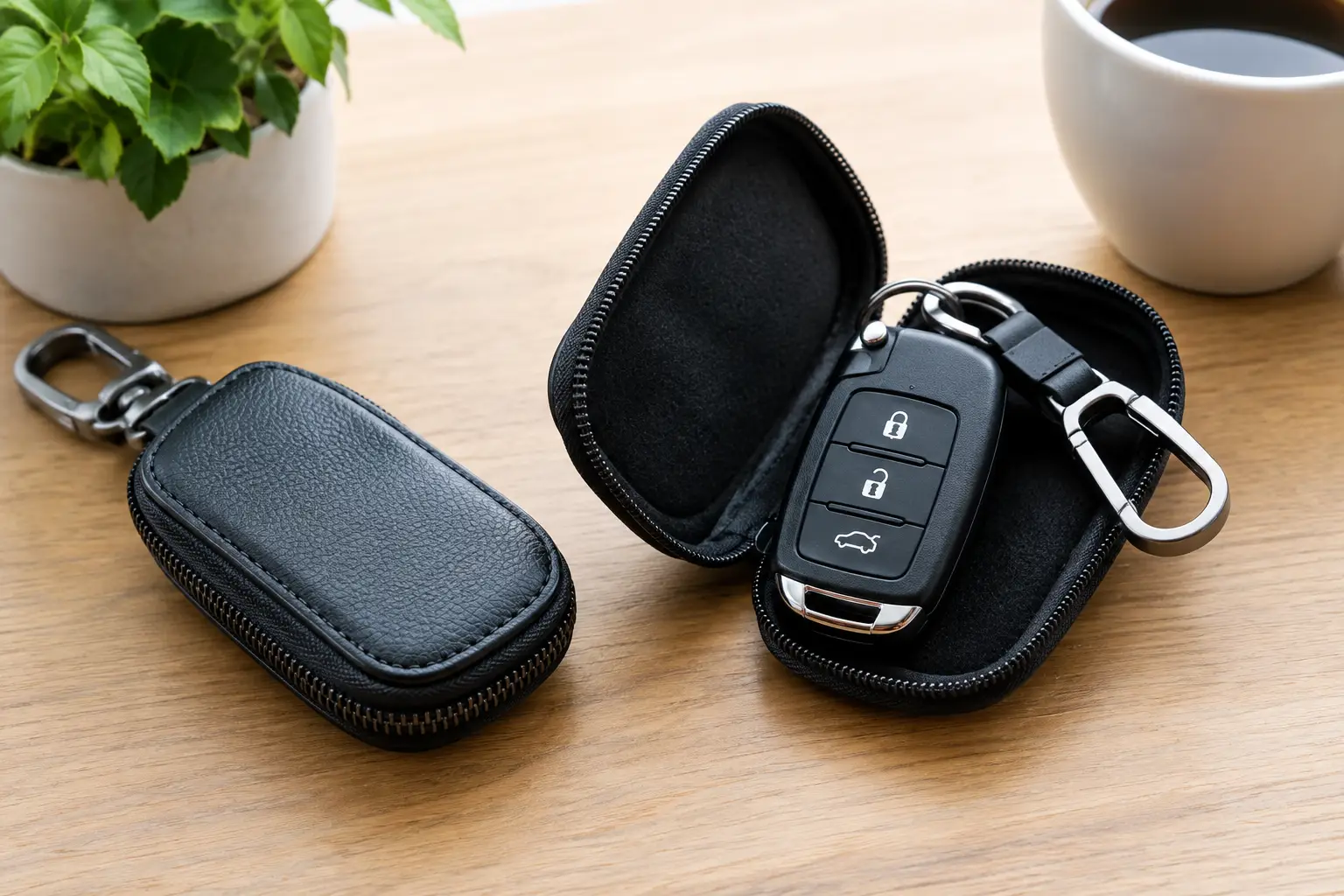
A remote key fob is tougher than it looks, but it is not designed to be dropped repeatedly, soaked or crushed at the bottom of a toolbox. A fitted protective case can reduce cosmetic damage and soften the impact of a fall. Choose one that does not obstruct the buttons or the emergency key blade.
Water is a common cause of remote failure. Keep the key out of trouser pockets when washing the car, working in heavy rain or heading into the sea. If it gets wet, do not keep pressing the buttons to see whether it still works. Dry the outside, remove the battery if you can do so without forcing the case, and arrange professional help if it begins behaving erratically.
Heat matters too. Do not leave a key fob on a dashboard in direct sun or in a very hot vehicle for long periods. High temperatures can affect batteries and delicate internal components. Equally, avoid storing keys where they may be knocked onto a hard floor, such as the edge of a kitchen worktop.
Keep heavy keyrings off the ignition key
If your vehicle has a traditional ignition key, a heavy bunch of keys can put unnecessary strain on the key blade and ignition barrel while driving. Over time, that weight may contribute to a worn key, a loose barrel or a key that no longer turns smoothly.
Keep the vehicle key on a light, simple ring and separate work keys, tools and bulky fobs. Never force a key that feels stiff in the ignition. Forcing it can snap the blade or damage the lock, leaving the car unusable. A key that has started to stick needs attention before it becomes an emergency.
Reduce keyless-entry theft risk at home
Keyless entry is convenient, but some vehicles can be vulnerable to relay theft. This is where criminals use equipment to amplify the signal from a key inside your home, allowing the vehicle to believe the key is nearby.
Keep keyless fobs away from the front door, front windows and external walls. A signal-blocking pouch or box can be useful, especially if the vehicle is parked close to your home. Test it properly: place the key inside, stand next to the car and check that the doors will not open. Not every pouch performs equally well, and a worn or poorly closed pouch may no longer block the signal.
Some vehicles allow keyless entry to be switched off, or have a sleep mode for the fob. Check your vehicle handbook or ask a qualified specialist if you are unsure. The right option depends on the make, model and how you use the car. If switching off passive entry makes daily use impractical, secure storage at home is still a sensible step.
Look after the battery before it catches you out
A weak fob battery rarely fails without warning. You may need to stand closer to the car, press the button more than once, or see a dashboard message about the key battery. Replace it promptly with the correct type rather than waiting for the remote to stop working completely.
Changing a battery is straightforward on some keys, but others have delicate clips, seals or electronic components that can be damaged by prising the case open with the wrong tool. If the case is already split, the buttons are loose or the key works only intermittently, have it checked instead of repeatedly opening it.
Remember that a flat remote battery does not always mean you are stranded. Many vehicles have an emergency blade and a backup method for starting the car. Learn where these are and how they work while everything is functioning. Your handbook should explain the process, but a vehicle locksmith can also show you if the instructions are unclear.
Have a working spare, not just an old spare
A spare key is one of the best forms of protection, but only if it is complete and tested. A spare that has been sitting in a drawer for years may have a flat battery, a worn blade or a remote that has lost synchronisation.
Test the spare occasionally. Check that it unlocks the car, starts the engine and operates the remote functions you rely on. Store it securely at home or with a trusted person, not inside the vehicle. Keeping a spare in the glovebox does not help during a lockout and can create another security issue.
If you only have one working key, arranging a duplicate before it is lost is usually far less stressful than dealing with all keys lost. It also gives you a fallback when a key is damaged, stolen or accidentally locked inside the car.
Act quickly if keys are stolen or missing
If you cannot find your key, do not assume it will turn up. Retrace your steps promptly and consider where the key may have been seen with your vehicle. If there is any chance it was stolen, or lost alongside documents that identify your address, treat it as a security matter.
A professional auto locksmith can often erase missing keys from the vehicle’s memory and programme replacement keys, so the old key can no longer start the car. In some cases, lock changes or repairs may also be appropriate. The right response depends on the vehicle and the circumstances, but acting early gives you more control.
Avoid sharing photos of your keys online, particularly clear images of the blade, key code tag or vehicle details. Key codes and visible cuts can provide useful information to the wrong person. Keep paperwork containing key codes in a safe place, separate from the car.
Know when a key needs professional attention
Do not ignore small changes. A cracked fob case, a key blade that is visibly worn, buttons that only work sometimes, or an ignition that feels rough are all signs worth dealing with early. These faults tend to get worse when the key is used every day.
For drivers across the West Midlands and Warwickshire, Car Key Maker can attend on site when a key is broken, lost, locked in the car or no longer recognised. Mobile help is particularly useful when the vehicle cannot be driven or when you do not have a working spare to get to a garage.
The habit that saves the most trouble is simple: keep one working key protected, one tested spare stored safely, and deal with warning signs before the morning you need the car most.