
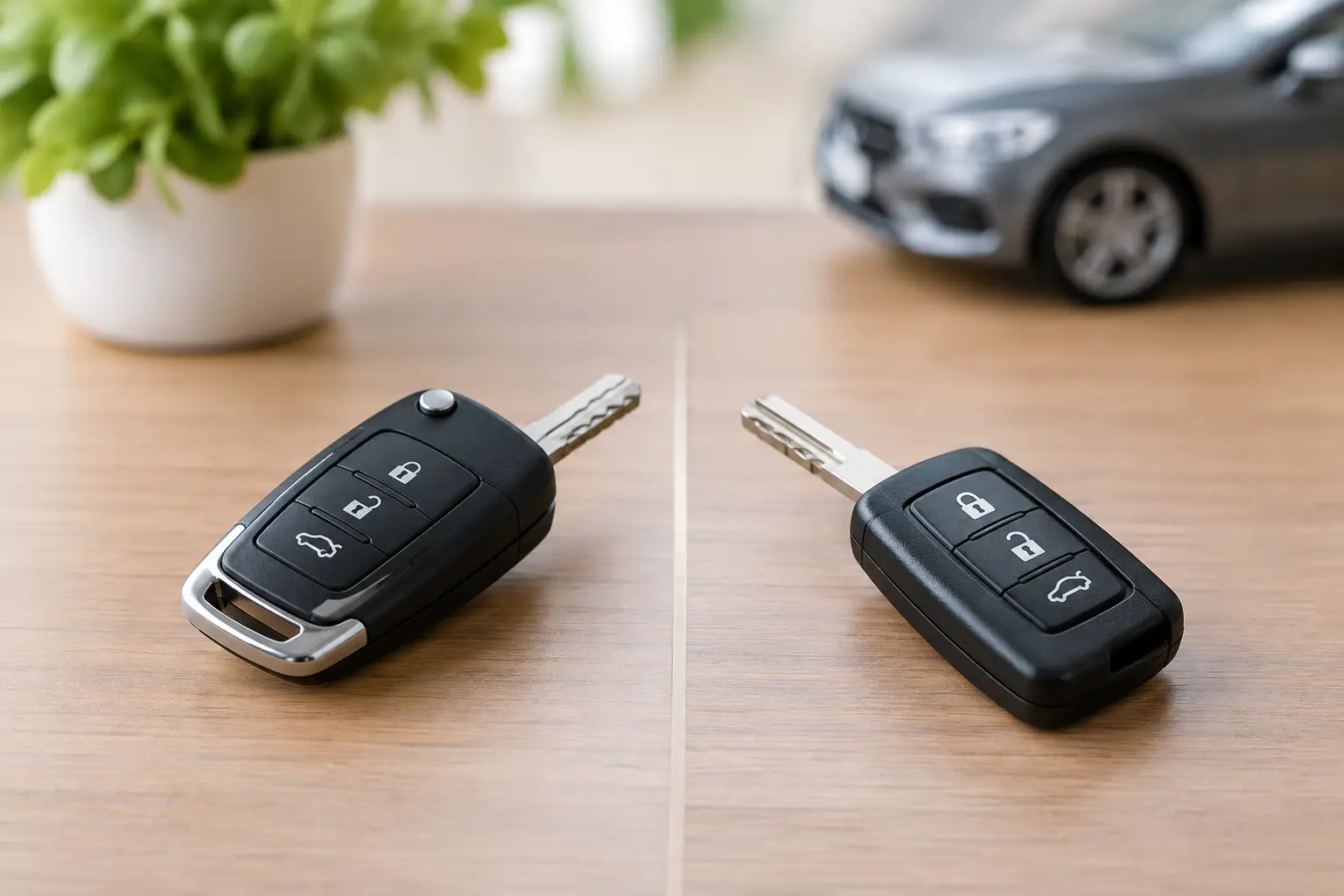
A lost key is not the moment for guesswork. When choosing original versus aftermarket car keys, the right answer depends on your vehicle, the type of key you need and why it needs replacing. An original key can be the best fit in some situations. A quality aftermarket key can be a dependable alternative in many others. What matters is that the key is correct for the vehicle, properly cut and programmed, and tested before the locksmith leaves.
What is an original car key?
An original car key, often called an OEM key, is made by or for the vehicle manufacturer. It is designed to match the key supplied when the car was new, including the blade, remote casing, transponder chip and button layout where applicable.
For drivers, the main attraction is familiarity. The key should look and feel like the original, and it is built to the manufacturer’s intended specification. This can matter if you have a newer vehicle, a specialist model or a key with more advanced functions, such as keyless entry, remote start or a built-in emergency blade.
Original does not automatically mean it is the only workable option, though. A car does not start because the badge on the remote is correct. It starts because the blade, transponder and programming communicate properly with the vehicle’s locks and immobiliser system.
What is an aftermarket car key?
An aftermarket car key is produced by a third-party manufacturer rather than the vehicle maker. It may be a complete remote key, a replacement key blade, a transponder key, a smart key or simply a new casing for a worn or cracked original remote.
The word “aftermarket” covers a wide range of quality. Some aftermarket keys are well-made, vehicle-specific replacements with reliable electronics and a close fit. Others are poorly manufactured copies with weak buttons, loose blades or chips that cannot be programmed correctly. That difference is why the source of the key and the locksmith’s experience matter far more than a label alone.
A proper automotive locksmith will identify the exact key type before cutting or coding anything. The vehicle’s make, model, year and system fitted all affect what is suitable. A key that looks right can still have the wrong frequency, transponder type or circuit board.
Original versus aftermarket car keys: the real differences
The practical differences usually come down to fit, functions, availability and long-term reliability.
Fit and build quality
An original key is manufactured to the vehicle maker’s specification, so the casing, buttons and blade profile are intended to match precisely. This can be reassuring on vehicles with unusual key designs or complicated smart-key systems.
A high-quality aftermarket key can also fit and work very well. However, the finish may not always be identical. The plastic texture can feel different, the button symbols may vary slightly, or the metal blade may need careful cutting and finishing. None of these points stops a properly matched key from doing its job, but they can matter to owners who want an exact like-for-like replacement.
Low-quality keys are where problems begin. A remote shell that flexes, a blade that sits loosely or buttons that fail after limited use are false economies. Good key replacement work starts with suitable parts, not the first key that appears in an online search.
Programming and immobiliser compatibility
Most modern car keys contain a transponder or electronic remote system. The chip has to be programmed to the vehicle so that the immobiliser recognises it and permits the engine to start. Cutting the blade alone is not enough.
Original and compatible aftermarket keys can both be programmed successfully when they are the correct type. The difficulty is that some vehicles have stricter systems than others. Certain newer models, keyless systems and premium vehicles may require a specific original part or specialist diagnostic process.
This is also why buying a key online before getting advice can cause delays. You may receive a remote that matches your existing key visually but cannot be coded to your car. A professional can check compatibility first and explain whether an original key, a quality aftermarket option or a repair to your current remote makes the most sense.
Remote functions and convenience
A replacement must do more than start the engine. It should operate the features you rely on, including central locking, boot release, panic functions and keyless entry where fitted.
With an original key, those functions should follow the original design. With a good aftermarket replacement, the core functions can work just as they should, provided it is correctly matched and programmed. Less reliable alternatives may have limited button functions, reduced remote range or a casing that does not accept the original emergency blade properly.
If your existing key starts the car but has damaged buttons or a split case, you may not need a completely new programmed key. A remote repair or replacement shell may restore the key without changing its electronics. That can be the sensible route when the transponder and circuit board are still sound.
Security after a lost or stolen key
If a key is merely worn or broken, the decision is mainly about functionality. If it has been stolen, security becomes the priority.
A replacement key on its own does not stop the missing key from being used. The old key should be deleted from the vehicle’s memory where possible, so it can no longer start the engine. In some cases, lock changes or rekeying may also be appropriate, particularly if there is a risk that the key can be linked to your vehicle or address.
This work needs to be handled correctly whether the replacement is original or aftermarket. The important point is not just giving you a working new key. It is making sure unwanted keys are no longer authorised on the vehicle.
When an original key is the better choice
An original replacement is often worth considering when your vehicle has a complex smart key, when you need an exact match to the supplied key, or when the manufacturer system has limited compatible alternatives. It can also be the sensible option if you have already tried a non-original key that did not programme or behave correctly.
Owners of very new cars may prefer original parts for consistency, especially where several electronic functions are built into one unit. The same can apply to prestige, imported or less common vehicles, where the correct key specification is more difficult to source.
The best choice should be based on what the vehicle needs, not on a blanket rule that one type is always better.
When a quality aftermarket key makes sense
For many common vehicles, a quality aftermarket key is a practical and reliable replacement. It can be especially useful when all keys are lost, a spare is needed, the original has been damaged, or you need help quickly at home, at work or by the roadside.
The key word is quality. A compatible replacement should be selected specifically for your vehicle, cut accurately, programmed with the right equipment and fully checked. Before the job is complete, the locksmith should test that it starts the car and operates the relevant locking functions.
For everyday drivers, that is what counts. You need a key that works first time, does not leave you stranded and gives you confidence every time you set off.
Avoid the common replacement-key mistakes
The most common issue is choosing a key by appearance alone. Similar-looking remotes can use different frequencies, chips and blade profiles. Another mistake is assuming a used key can simply be programmed to another car. Many used keys are locked to their original vehicle or require specialist preparation before they can be reused.
It is also risky to force a badly cut key into an ignition or door lock. A poor cut can damage the lock barrel, and a cracked remote should not be held together with tape if the battery or circuit board is exposed. Small problems with keys often become bigger lock or ignition problems when left untreated.
If your key has snapped in the ignition, stopped being recognised, or works only intermittently, get it assessed before it fails completely. A mobile auto locksmith can diagnose whether the fault is in the key, the remote battery, the transponder, the ignition barrel or the vehicle’s immobiliser system.
Get the key that is right for your car
There is no automatic winner between original and aftermarket keys. Original can be the right call for an exact match or a more specialised system. A quality aftermarket key can be an excellent choice for many vehicles when it is properly selected and programmed.
Car Key Maker provides mobile key replacement, duplication, remote repair and immobiliser key programming across the West Midlands and Warwickshire. If you are down to one key, have lost every key or your remote is failing, acting early gives you more options and helps keep a routine key issue from becoming a no-start situation.