
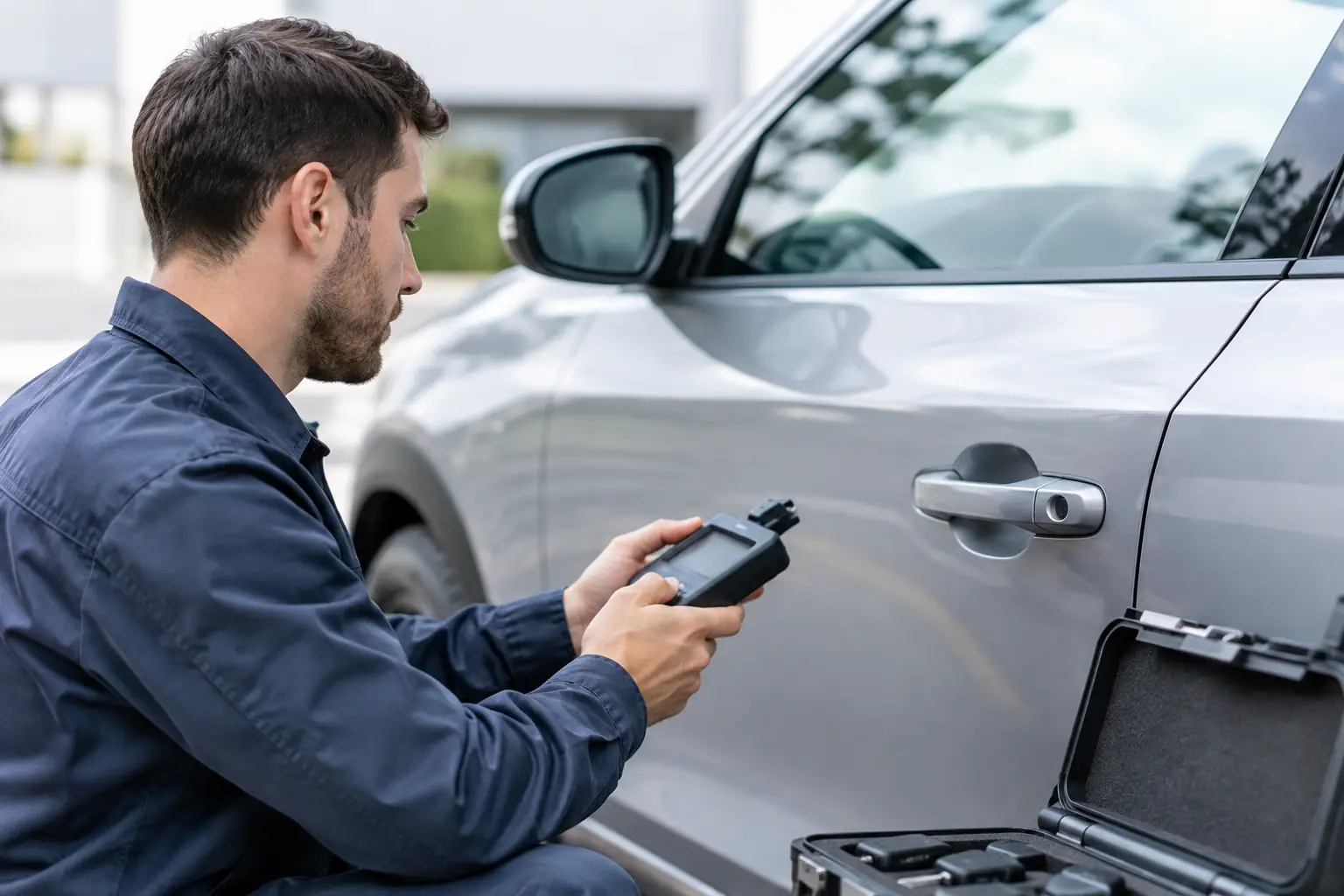
A car key can look perfectly ordinary while carrying the one detail that decides whether your vehicle will start: coded electronic data. When that data is missing, damaged or no longer recognised, cutting a new blade alone will not get you moving. On-site key coding is the practical answer. A mobile auto locksmith comes to the vehicle, programmes a compatible key or remote into its security system, and checks that it starts and operates as it should.
That matters when you are stuck on a drive before work, outside the supermarket, at a customer’s address or in a car park with the family waiting. Rather than arranging recovery and waiting for a dealership appointment, the work can often be completed where the vehicle is parked.
What on-site key coding actually does
Most modern vehicles use an immobiliser system. Inside the key, fob or smart key is a transponder chip that communicates with the car. When you turn the key or press the start button, the vehicle checks for the correct electronic authorisation. If it cannot find it, the engine may crank but fail to start, or it may not respond at all.
Key coding adds the correct information to a new or replacement key and pairs it with the vehicle. Depending on the make, model and age of the car, this may involve programming a transponder, remote central locking functions, a proximity key, or all three. The locksmith uses specialist diagnostic equipment to communicate with the vehicle and follows the correct procedure for that system.
It is not the same as simply copying a key blade. A duplicated blade may turn in the lock, but without a programmed chip it may still leave the vehicle immobilised. Equally, a remote that locks and unlocks the doors is not always proof that it has been coded to start the car. The mechanical and electronic sides of the job both need to be right.
When you may need on-site key coding
The most obvious situation is an all keys lost emergency. If every key has gone missing, a locksmith can identify the vehicle, gain entry without unnecessary damage, create a suitable replacement key and programme it to the car. This is often possible at the roadside, on a driveway or at a workplace, provided the vehicle is accessible and its electrical system can communicate properly.
A damaged or worn key can cause the same disruption. Keys suffer years of use in pockets, bags and ignition barrels. The blade may become worn, the case may split, buttons may fail or the internal chip can be damaged after a drop, a wash cycle or a heavy knock. If the key starts working only occasionally, do not wait for it to fail completely. A working spare gives the coding process a useful reference and can prevent a much more stressful call-out later.
There are other common cases too. A replacement remote bought separately may need pairing before its buttons work. A key that has been stolen may need removing from the vehicle memory so it can no longer start the car. Following an ignition lock barrel repair, a vehicle may need a correctly matched key solution before it can be used normally again.
Signs that the key or immobiliser needs attention
A warning light on the dashboard, a key symbol, a flashing immobiliser light or a message such as “key not detected” can point to an electronic key issue. So can a vehicle that unlocks but will not start, or one that starts with one key but not another.
These signs do not automatically mean the key needs coding. A flat vehicle battery, weak fob battery, wiring fault, faulty aerial ring around the ignition or an issue within the vehicle’s control unit can create similar symptoms. A proper on-site assessment avoids replacing or programming a key when the fault lies elsewhere.
How a mobile coding visit works
The first step is confirming the vehicle details and ownership. This protects customers and prevents key programming work being carried out for someone who is not entitled to access the car. Have identification and proof that you own or are authorised to use the vehicle ready where possible.
The locksmith then assesses the fault and the type of key system fitted. For a lost-key job, they will establish the correct key profile and programming route. For a faulty key, they may test the existing key, inspect the casing and blade, check the remote functions and scan the vehicle for relevant faults.
Once the correct replacement is prepared, the key is programmed to the immobiliser and any remote functions are paired where required. The final checks are just as important as the programming itself: the blade should operate the door or ignition correctly, the remote should respond as expected, and the engine should start reliably more than once.
Some vehicles require additional security steps, PIN access or module-level work. Others have systems that are quicker to programme. The exact process depends on the manufacturer, model, year and whether there is an existing working key. A reliable locksmith will explain what is possible before proceeding, rather than making promises without checking the vehicle.
Why on-site service is useful when the car will not move
The main advantage is simple: the vehicle stays where it is. That is valuable when the car cannot be started, when a key is locked inside, or when a broken key has left you unable to secure the vehicle properly. Mobile coding removes the need to arrange transport solely because of a key problem.
It also allows the locksmith to test the key against the actual car straight away. Remote locking range, push-button start recognition, immobiliser response and mechanical operation can all be checked in the real conditions where the fault occurred. If the problem turns out not to be key coding, that is useful information too. It means the next repair can be directed at the actual cause.
For drivers across the West Midlands and Warwickshire, a local mobile service is especially helpful when work, school runs, appointments and deliveries cannot wait. Car Key Maker focuses on practical vehicle key and lock solutions at the location of the vehicle, including urgent same-day situations where availability allows.
Coding a spare key before you need it
Many drivers only think about a spare after the main key has disappeared. That is understandable, but a spare key is more than a convenience. It can keep a small fault from becoming a no-start emergency, especially when the original key begins to show signs of wear.
If you have one working key, coding an additional key is generally a more straightforward job than starting from no keys at all. Store the spare separately from the daily key. Keeping both on the same keyring or in the same bag defeats the point if the bag is lost or stolen.
It is also worth acting promptly if a key has been stolen. Replacing the physical key is only part of the response. Where the vehicle system allows, deleting the missing key from its memory helps ensure it cannot be used to start the car. The right approach depends on the vehicle, but it is a sensible security question to raise during the call.
What to do when your key stops working
Start with the simple checks. If the remote buttons have become unreliable, a fob battery may be the issue. Try the spare key if you have one, but avoid repeatedly forcing a blade into the ignition or door lock. A worn blade can damage an already tired lock barrel, and a broken key can turn a manageable problem into an urgent extraction job.
If the vehicle will not start, keep the key with you and make a note of what happened. Did the remote stop working first? Is there an immobiliser warning light? Does the engine crank? Has the key been dropped, wet or damaged? These details help a locksmith arrive prepared with the right equipment and likely key type.
Do not rely on online coding tricks or cheap blank keys unless you are certain they are compatible with your exact vehicle. Modern vehicle security is not universal, and the wrong key or procedure can waste time and complicate diagnosis. A qualified auto locksmith can identify the system, handle the programming securely and confirm that the finished key works before leaving.
When a key fails, the priority is not just getting a replacement in your hand. It is getting a key that opens the vehicle, communicates correctly and gets you safely back on the road.