
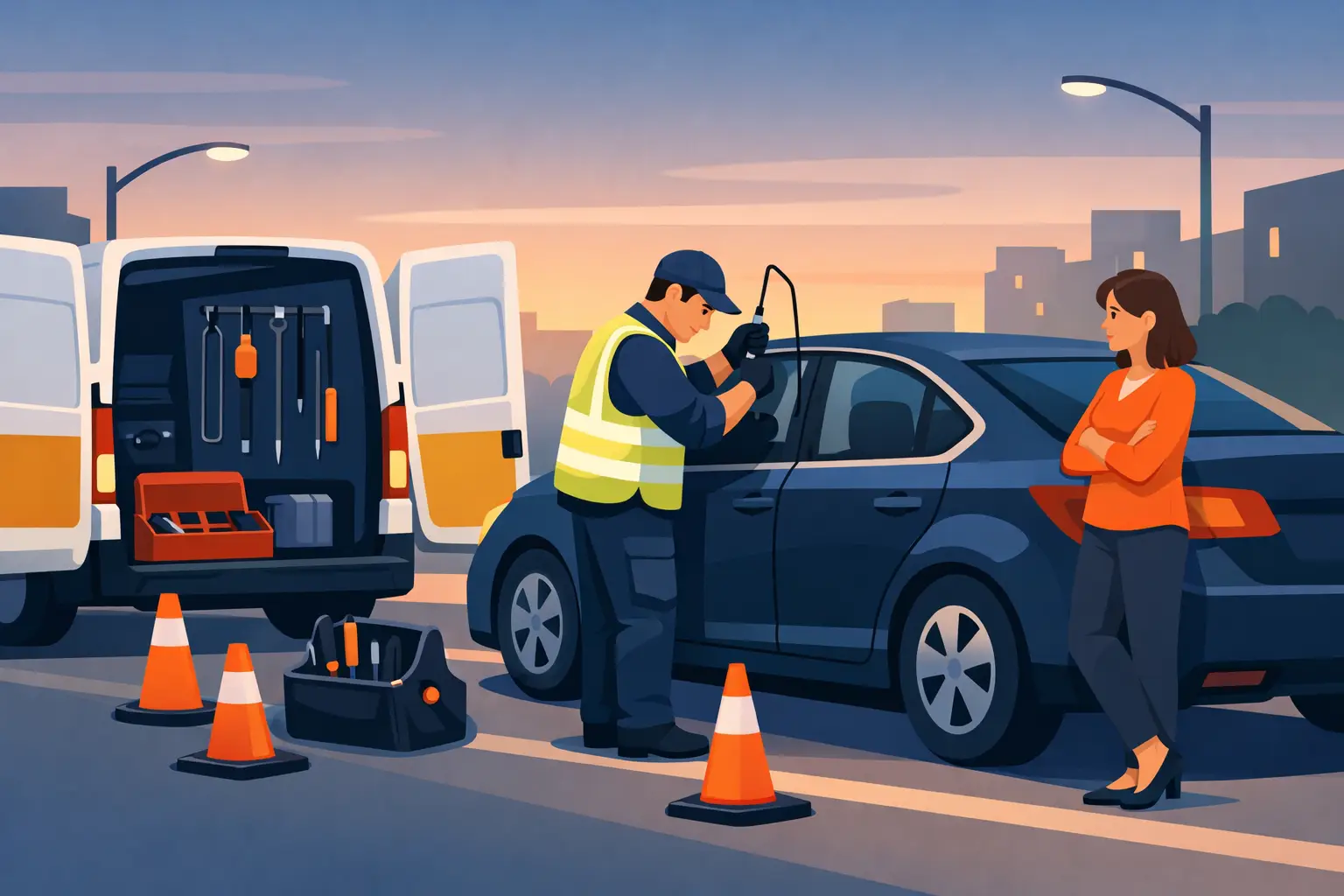
You notice it the second the door shuts. Your keys are on the seat, in the cup holder, or still in the ignition, and now you are standing outside the car with no easy way back in. A good guide to emergency car unlocking starts with one fact: speed matters, but doing the wrong thing can turn a simple lockout into a damaged door, broken glass, or an expensive repair.
When people get locked out, the first instinct is usually force. A coat hanger, a screwdriver, a wedge from the garage, or a hard pull on the top of the door feels like a quick fix. In reality, modern vehicles are much less forgiving than older cars. Side airbags, tighter weather seals, electronic deadlocks, alarm systems, and painted trim all raise the risk. What looks like a five-minute shortcut can leave you with a bent frame, scratched paint, a ruined seal, or a lock that no longer works properly.
That is why the best approach is calm, methodical, and focused on safe access first.
Guide to emergency car unlocking: what to do first
Start by checking the obvious without rushing. Look at every door, including the rear doors and trunk, because one may still be open. If your car uses keyless entry, test whether the system is actually responding or whether the key fob battery has failed. In some cases, the car is not fully locked at all, and the problem is simply that the usual door is not opening.
Next, think about safety and urgency. If a child, pet, or vulnerable passenger is inside the vehicle, the situation changes immediately. Heat builds fast, even on a mild day, and waiting too long is not an option. The same applies if the car is stopped in a dangerous place, such as the shoulder of a busy road, a dark parking lot, or a live work site. In those cases, getting professional help fast is more important than experimenting with a DIY method.
If there is no immediate danger, take a minute to rule out the simplest answer. Check your pockets, bag, jacket, and anywhere you may have placed a spare key. Call someone who may have access to your extra set if that can be done quickly. It sounds basic, but lockouts often happen when people are distracted, carrying groceries, managing kids, loading tools, or switching cars.
Why emergency car lockouts happen
Most lockouts are not dramatic. They are routine mistakes made at the worst possible time. A key gets left on the driver seat while unloading the trunk. The fob is in a gym bag that ends up in the back seat. The central locking system activates automatically. A worn key stops turning smoothly, so the driver tries another door, closes the first one, and suddenly everything is locked.
Electronic keys have reduced some old problems and created new ones. Keyless systems can be convenient, but they also make people less aware of where the key actually is. Weak fob batteries, signal issues, or intermittent locking faults can create situations that look like a simple lockout but are really part of a bigger key or immobilizer problem.
That matters because the right solution depends on the cause. If the keys are visible inside the car, entry may be straightforward. If all keys are lost, broken, or no longer recognized by the vehicle, opening the door is only the first step.
The risks of DIY entry methods
Online advice makes car entry look easier than it is. Many tricks you see were designed for older vehicles with simple vertical locks and fewer internal components. Most late-model cars do not respond the same way, and some methods can make professional entry harder afterward.
Trying to pry the top of the door can distort the frame enough to create wind noise or water leaks later. Forcing tools between the glass and weather stripping can tear seals or damage tint. Fishing blindly inside the door area can interfere with wiring, linkage, and side curtain airbag components. Smashing a window is usually the worst option unless there is a genuine emergency where immediate entry is the only safe choice.
There is also the issue of cost. People often try to avoid paying for lockout help, then end up paying for a window, a new seal, bodywork, or a replacement lock. A clean, non-destructive entry is almost always the cheaper route.
When a mobile locksmith is the right call
A professional locksmith is usually the right choice when the vehicle is deadlocked, the keys are inside, the spare is not available, or you are dealing with a modern car that uses a transponder or smart key. The value is not just opening the car. It is opening it without creating a second problem.
A proper emergency response should begin with identity and vehicle ownership checks, then move to the safest entry method for that make and model. That matters because different vehicles have different lock designs, tolerances, and access points. What works safely on one car can damage another.
For many drivers, the biggest advantage of a mobile service is that the problem can be handled where the car is parked. There is no need to arrange towing, wait days for a dealership appointment, or figure out how to move a locked vehicle that will not start. If the issue turns out to be more than a basic lockout, a qualified auto locksmith can often deal with the key, remote, or ignition problem on-site as well.
Guide to emergency car unlocking for newer vehicles
Newer cars need a more careful approach because the lockout may be tied to electronics, not just the physical lock. If the key fob battery has died, there is often still a manual key blade hidden inside the fob. Many drivers do not realize it is there until they are already stuck. That blade may open the door, but if the immobilizer or push-to-start system is also affected, you may still need further assistance to get the car running.
Some vehicles also enter a security mode after repeated failed attempts, especially if the alarm has been triggered or the system thinks an unauthorized key is being used. In that case, random button pressing and repeated lock cycling can make the situation more confusing. A proper diagnosis saves time.
This is where experience matters. A locksmith who works with automotive systems every day can usually tell the difference between a straightforward lockout, a failed remote, a damaged key blade, and a deeper programming issue. That means you are less likely to pay for the wrong fix.
What to expect during emergency car unlocking
If you need urgent help, the process should be clear. You explain the vehicle make, model, year if known, your location, and what has happened. The locksmith confirms whether the key is inside, lost, broken, or not working. From there, they can give you a realistic idea of response time and what the job may involve.
On arrival, the goal should be non-destructive entry whenever possible. Once the vehicle is open, the next step depends on the original problem. If the keys were simply locked inside, the job may end there. If all keys are lost or the fob has failed, you may need key cutting, programming, remote repair, or ignition work.
That is why choosing a specialist matters more than calling the first generic roadside number you find. A general service may open the door, but if the key itself is the issue, you still may not be back on the road.
How to reduce the chance of another lockout
The best prevention is simple, but it has to be consistent. Keep one working spare key in a separate place, not inside the same bag or vehicle. Replace weak fob batteries before they fail completely. If your key is worn, cracked, sticking in the lock, or only working some of the time, get it checked before it becomes an emergency.
Drivers who rely on their car for work should be especially careful. One lockout can cost more than the locksmith call when it means missed jobs, delayed deliveries, or lost time waiting in a parking lot. Families feel the same pressure when school pickup, appointments, or childcare are involved. In real life, the price of delay is often higher than the price of fixing the problem properly.
If you are in the West Midlands or nearby and need fast, on-site help, a specialist mobile service such as Car Key Maker can often save a lot of time compared with dealer routes or trial-and-error roadside fixes.
A car lockout feels urgent because it is urgent. The smart move is not the fastest-looking trick. It is the option that gets you back into the vehicle safely, protects the car from damage, and solves the actual problem instead of adding a new one. When that moment happens, stay calm, avoid force, and choose the fix that gets you moving again with the least hassle.