
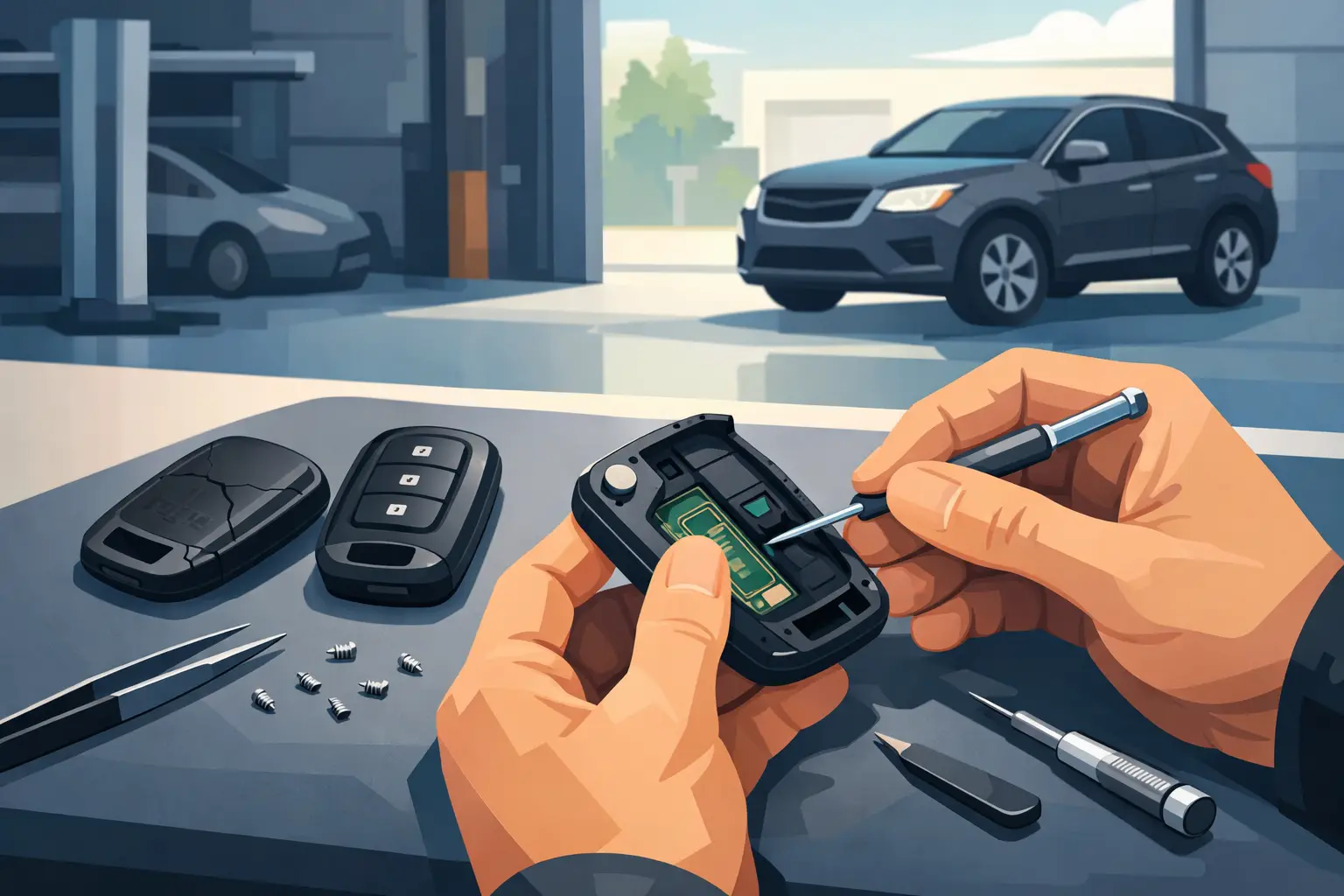
A key fob usually fails in a very ordinary way. It gets dropped on concrete, sat on in a back pocket, soaked in rain, or worn down from years of daily use. When the buttons split, the case cracks, or the key blade starts wobbling, car key fob shell replacement is often the quickest and most affordable fix.
That matters because a damaged shell can turn into a bigger problem fast. What starts as a loose case can lead to broken buttons, exposed circuit boards, battery contact issues, or a blade that no longer folds or locks properly. If you use your car every day for work, school runs, or deliveries, that is not something to leave until the key stops working altogether.
What car key fob shell replacement actually means
A shell replacement is exactly what it sounds like. The outer casing of the remote key is swapped for a new one, while the internal electronics are moved over from the old fob. In many cases, that includes the circuit board, battery contact points, transponder chip, and sometimes the key blade if it is still in usable condition.
This is different from full car key replacement. If the electronics inside the fob still work, you may not need a new programmed key. You may only need a new housing so the existing parts are protected and usable again.
For drivers, the main benefit is simple. If the problem is cosmetic and mechanical rather than electronic, replacing the shell can restore normal use without paying for a complete new remote.
Signs your fob needs a new shell
Some cases are obvious. The plastic is cracked, the buttons have fallen out, or the two halves of the case no longer clip together. Other signs are easier to miss.
If you have to press unusually hard to lock or unlock the car, the issue may not be the circuit board at all. The rubber button pad could be worn out or misaligned because the shell has shifted. If the folding key blade feels loose, sticks halfway, or will not flip out cleanly, the hinge section inside the shell may be worn or damaged.
A battery cover that will not stay shut is another common one. People often tape the back of the fob closed and keep using it. That works for a while, but it leaves the battery and electronics vulnerable to dirt and moisture. Once that gets inside, a cheap shell problem can become an expensive key problem.
When car key fob shell replacement makes sense
A shell replacement makes sense when the internal electronics still function correctly. If the remote locks and unlocks the vehicle, the immobilizer chip is recognized, and the car starts normally, the shell may be the only failed part.
It is also a sensible option when the blade is intact but the casing around it has broken. Many flip keys develop wear around the pivot point long before the chip or remote board fails. In that situation, replacing the outer shell can give the key a second life.
This is where a proper inspection matters. A fob can look battered on the outside while the internals are fine. It can also look minor from the outside while the circuit board has hidden damage. The right answer depends on what is happening inside the case, not just what you can see from the driver seat.
When a shell replacement is not enough
This is the part many drivers are not told clearly enough. A new shell will not fix every key issue.
If the circuit board is damaged, the transponder chip is missing, the battery contacts are corroded, or the remote has stopped communicating with the vehicle, replacing the housing alone will not solve it. The same applies if the key blade is badly worn and no longer turns smoothly in the ignition or door lock.
Water damage is another gray area. Sometimes the board can be cleaned and moved into a new shell. Sometimes the damage is already done and the key needs repair or replacement. There is no point fitting a fresh case around failed electronics and hoping for the best.
That is why the cheapest fix is not always the lowest price upfront. If the wrong repair is done first, you can end up paying twice.
The risks of DIY shell swaps
A lot of replacement shells are sold online, and some are decent. Some are not. The problem is not just quality. It is that many vehicle owners do not know what has to be transferred from the old fob to the new one.
The small transponder chip is the biggest trap. On many keys, this chip is separate from the main circuit board. If it is left behind, damaged, or lost during the swap, the remote may still lock the car but the engine will not start. That catches people out all the time.
There is also the issue of poor-fitting aftermarket shells. Buttons can sit too high or too low, battery covers may not hold tightly, and flip mechanisms often feel weak compared with the original. A shell that looks right in a product photo can still be the wrong fit for your specific key version.
If you are confident with delicate parts, a DIY swap can work. But if the key is your only working key, there is real risk in taking it apart on a kitchen table with no backup.
Why professional fitting is often the safer option
A professional can quickly tell whether the problem is limited to the shell or whether the key has deeper faults. That saves time, especially when you are already dealing with a car you need to use the same day.
Proper fitting also reduces the chance of damaging internal parts during transfer. That matters with modern remote keys, where tiny clips, blade pins, springs, and chips can be easy to misplace. If the blade needs cutting or transferring, that is another step where experience helps.
For mobile locksmiths, the practical advantage is convenience. You do not have to guess what shell to order, wait for it to arrive, and then hope it fits. The key can be assessed and dealt with on-site, which is often the difference between a quick fix and losing half a day.
Cost vs full key replacement
One reason drivers ask about shell replacement is price. In the right situation, it is usually cheaper than replacing and programming a complete key. That is because the expensive part of many modern car keys is not the plastic housing. It is the electronics, chip, and programming work.
But cost depends on the condition of the existing key. If the shell is broken and the internals are healthy, replacing the case is usually good value. If the board is intermittent, the buttons no longer register properly, or the transponder is unreliable, a shell replacement may only delay the real repair.
A fair assessment should focus on what gets you back to a dependable working key, not just the lowest number on a quote.
How to avoid shell damage in the first place
Most shell wear comes from pressure, impact, and neglect. Heavy keychains put strain on flip key hinges. Sitting on keys cracks the case. Leaving a damaged shell in use after the first split usually makes it worse.
If the battery cover starts loosening or a button tears, get it looked at early. Replacing a shell before the board is exposed is far easier than repairing a key after moisture and dirt get inside. Using a simple protective cover can help too, especially if your keys get knocked around in a work van, gym bag, or tool pouch.
The practical bottom line on car key fob shell replacement
Car key fob shell replacement is a smart repair when the outer casing has failed but the key still works electronically. It can restore a worn, cracked, or loose key without the cost of full replacement and programming. The catch is that it only works when the damage is truly limited to the shell.
If your key is falling apart, the buttons are collapsing, or the blade is loose, get it checked before it fails completely. A fast repair at the right stage can keep a minor key issue from turning into a lockout, a non-start, or a much more expensive job later. When you rely on your car every day, that kind of prevention is not a luxury. It is just common sense.