
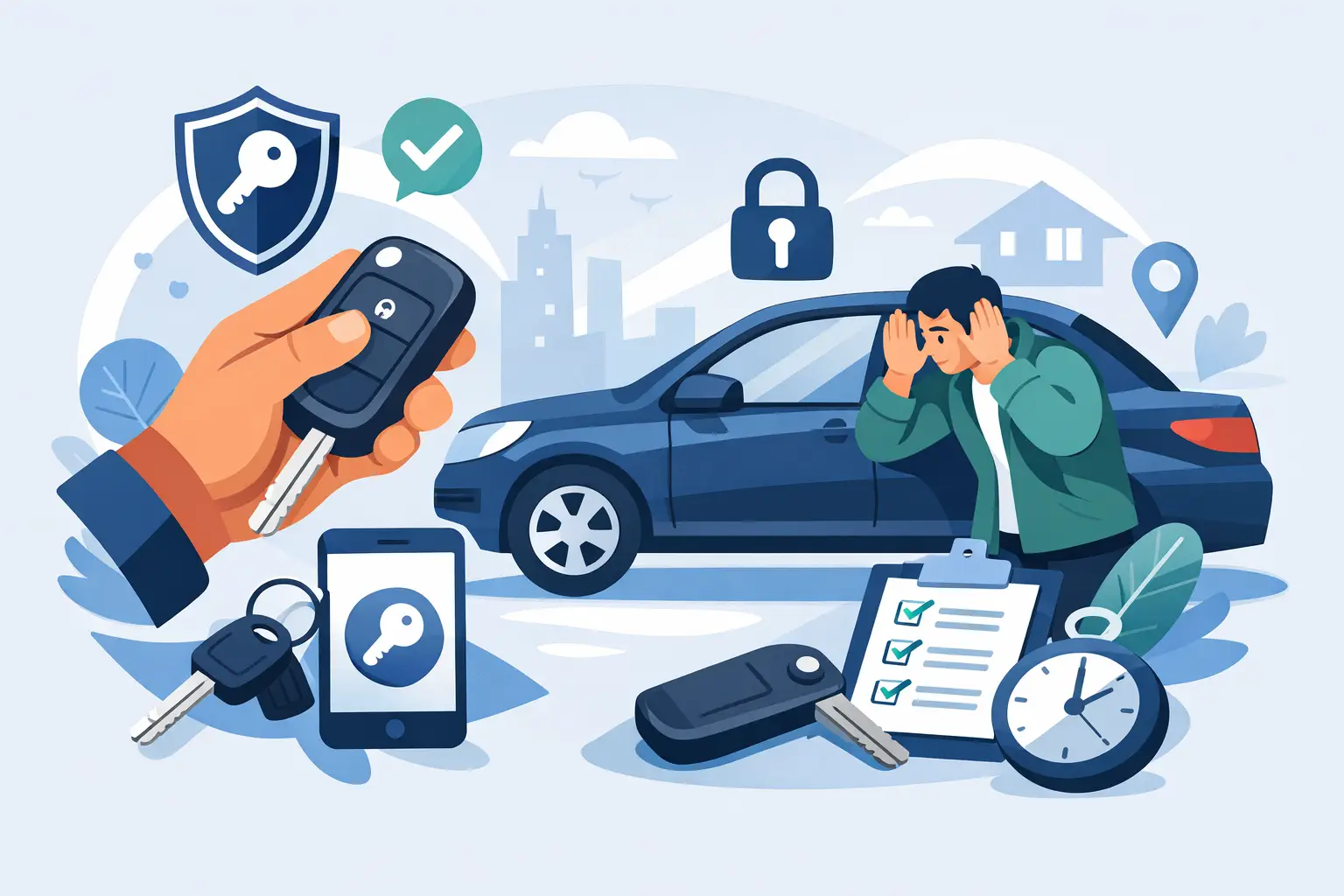
A car lockout rarely happens when you have time to spare. It is usually outside the house with the engine running, at a petrol station, on the school run, or at the end of a long shift. The best ways to avoid lockouts are simple habits backed up by a working spare key and early action when your key starts showing signs of trouble.
Modern vehicle keys are more than cut metal. They may contain a remote, transponder chip, proximity system and immobiliser coding. That means a small fault can quickly become a no-start or no-entry problem if it is ignored.
The best ways to avoid lockouts before they happen
1. Make checking for your key part of leaving the car
Before shutting the door, make one quick check: key in hand, pocket or bag. It sounds obvious, but this is the habit that prevents the most common lockout – keys left on the seat, in the ignition or in the boot.
Give your key a fixed place when driving. A zipped jacket pocket, a secure handbag compartment or a specific cup holder while parked is better than putting it down wherever there is space. If you drive a van for work or make frequent stops, this routine matters even more because distractions add up quickly.
2. Keep a spare key, but keep it separate
A spare key is the most useful protection against a lost or locked-in key. It should not live on the same keyring or in the same bag as your main key. If both disappear together, you are still stuck.
Leave the spare in a secure place at home, or with someone you trust who can reach you when needed. Avoid hiding a key under the vehicle or using an obvious magnetic box. Aside from the theft risk, these can corrode, fall off or be found by anyone who knows where to look.
If you only received one key when buying your car, arrange a duplicate while that key still works. Copying and programming one working key is normally simpler and less disruptive than replacing every key after the only one is lost.
3. Replace a weak remote battery early
A remote fob that only works at close range, needs repeated presses or works intermittently is often warning you about a weak battery. Do not wait until it fails completely in a supermarket car park.
Check your vehicle handbook for the correct battery type and replacement method. Some fobs can be opened easily, while others are easy to damage if forced. If your car uses keyless entry, a low fob battery may trigger a dashboard warning or stop the vehicle recognising the key reliably.
A fresh battery will not cure every problem. Water damage, worn buttons, damaged circuit boards and faults with the vehicle receiver can look similar. If changing the battery makes no difference, get the remote checked before it becomes an urgent job.
4. Do not ignore a damaged key blade or casing
A cracked key case, loose blade or badly worn buttons may seem minor, but daily use puts pressure on the chip and electronics inside. Dropping the key can also damage internal components without leaving much visible evidence.
A worn mechanical blade can eventually snap in the door or ignition. If it feels rough when turning, needs jiggling, or looks bent, stop forcing it. The same applies if the key is separating from its remote housing. Having it repaired or replaced early is usually far easier than dealing with a broken key when you need to get moving.
5. Know how your automatic locking works
Many cars lock themselves after a short period if they have been unlocked but no door is opened. Others relock when the driver walks away with a proximity key, while some can lock if the key is left inside and a door is shut. The exact behaviour depends on the make, model and settings.
Take a few minutes to understand your vehicle’s locking features rather than relying on assumptions. Test them safely with a window open and the key in your hand. If you share the car with a partner, teenager or employees, make sure everyone knows whether the vehicle has walk-away locking or automatic relocking.
6. Be careful around the boot
Boot lockouts are common because drivers put keys down while loading shopping, tools, prams or luggage. On some vehicles, closing the boot with the key inside can leave you unable to get back in, particularly if the rest of the car is already locked.
Keep the key on you until the boot is fully closed. For keyless vehicles, do not assume the car will always detect the fob and refuse to lock. System behaviour varies, and a weak fob battery or an awkward key position can affect detection.
7. Protect keyless fobs at home
Keyless entry is convenient, but it needs a little extra care. Keep the fob away from external doors and windows rather than leaving it on a hallway table. A signal-blocking pouch or box can be a sensible extra layer for cars at higher risk of relay theft.
This is not just about security. Knowing exactly where your key is each evening reduces the chance of a rushed morning search and the temptation to use an unreliable old spare. Make one place at home the permanent place for every vehicle key.
8. Deal with ignition problems promptly
If the key will not turn freely, sticks in the ignition or only works at a certain angle, the issue may be the key, the ignition lock barrel or both. Repeatedly twisting and forcing it can make a repairable problem much worse.
Immobiliser faults can also appear as an engine that cranks but will not start, a key warning light on the dashboard, or a vehicle that suddenly stops recognising a previously working key. These faults do not always mean the car battery is at fault. A proper diagnosis can identify whether the issue is with the key, programming, ignition or vehicle system.
9. Save help before you need it
When you are locked out, searching for a trustworthy locksmith while stressed wastes time and can lead to poor decisions. Save the number of a qualified mobile auto locksmith in your phone before anything goes wrong.
Look for someone who can handle more than basic door opening. If a key is lost, damaged or not recognised by the car, you may need cutting, programming, remote repair or ignition work on site. A specialist mobile service can often get the job resolved where the car is, without the delay and cost of recovery to a dealer.
For drivers across the West Midlands and Warwickshire, Car Key Maker provides mobile help for lockouts, replacement keys, remotes and ignition faults. Having the right contact saved means you know who to call if prevention does not go to plan.
10. Have a plan for the moment it does happen
Even careful drivers can have a bad day. If you are locked out, stay calm and avoid forcing the door, breaking a window or using online tricks with coat hangers and wedges. These can damage seals, locks, airbags, wiring or the door frame, leaving a bigger bill than the original problem.
Check every door and the boot only if it is safe to do so, and confirm whether somebody can bring your spare key. If the vehicle is in a dangerous place, move yourself and passengers to safety first. Then give the locksmith the make, model, registration, location and a clear description of what happened. This helps them arrive with the right equipment and replacement options.
A spare key is useful only if it works
Do not assume an old spare will start the car just because it unlocks the door. Test it occasionally. A key may have a flat remote battery but still start the engine, or it may have a transponder issue that prevents the immobiliser from accepting it. Testing at home is far better than finding out outside a station at 6am.
If your spare is a basic emergency blade, check what it can and cannot do. Some cars need the remote fob or programmed chip nearby to start. Others have a hidden mechanical key inside the fob for emergency entry. Your handbook can explain the intended emergency procedure, but if anything feels unreliable, have it checked before you depend on it.
A few small routines can keep a key problem from becoming a missed appointment, a stranded family or a lost workday. Put the key in the same place, keep a tested spare separate, and act on faults while the car is still accessible. That is the practical way to stay in control when life is already moving quickly.