
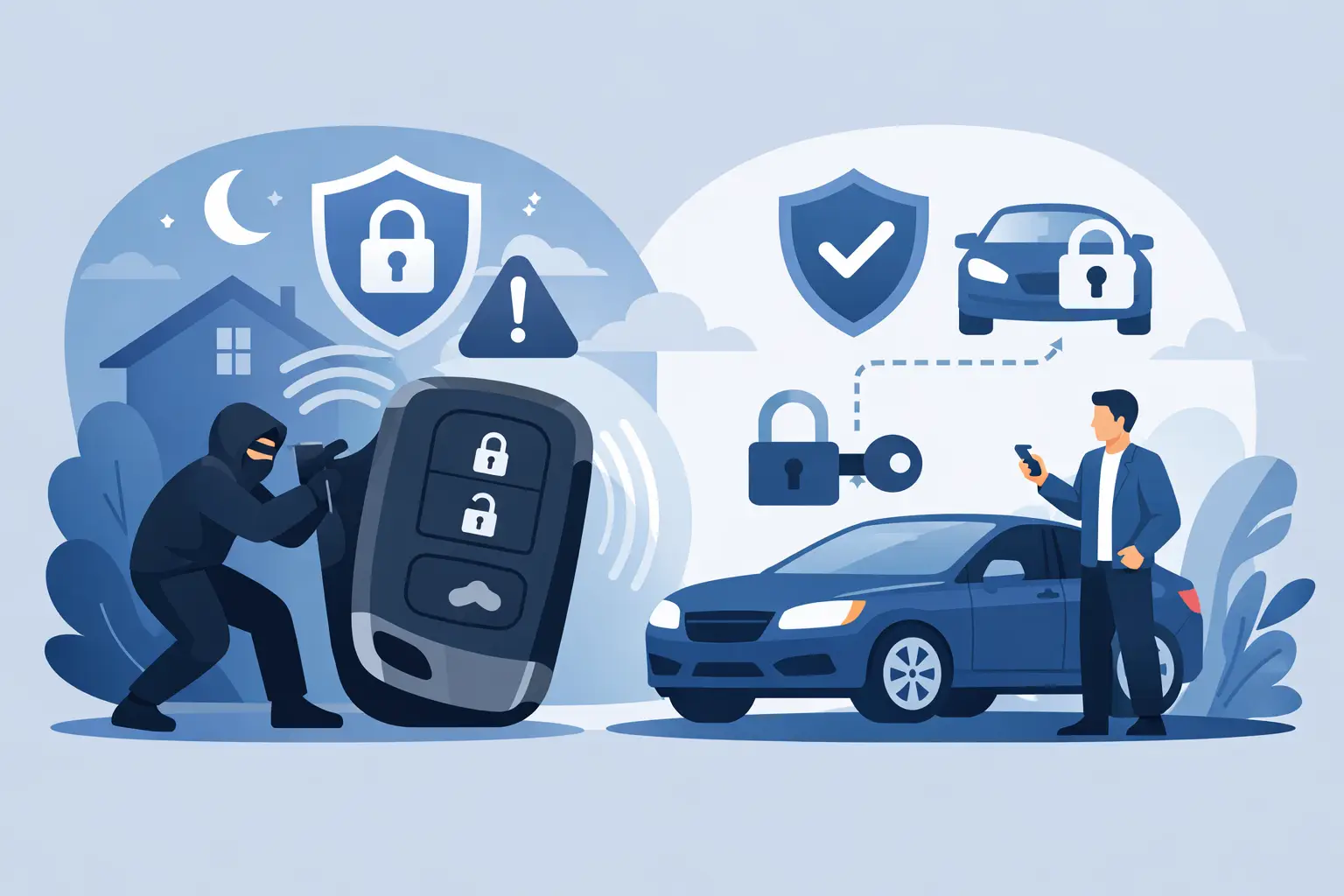
You notice your keys are gone, and that sick feeling hits right away. If there is any chance they were stolen rather than simply misplaced, time matters. This guide to stolen key security is built for drivers who need clear next steps, not vague advice, because the real risk is not just losing access to your car – it is someone else gaining it.
A stolen car key is different from a lost house key in one major way. Modern vehicle keys can do more than unlock a door. Depending on the car, they may disarm the alarm, start the engine, open the trunk, and give a thief a clean, quiet way to take the vehicle without forcing entry. That changes what you should do and how quickly you should do it.
Guide to stolen key security: what to do first
Start by treating the situation as a security issue, not just an inconvenience. If the keys disappeared from a gym locker, coat pocket, workplace, restaurant table, or bag that was taken, assume someone could connect those keys to your vehicle. If your driver license, registration, address details, or work ID were stolen at the same time, the risk goes up further.
Your first move is to secure the vehicle itself. If the car is parked somewhere predictable such as outside your home, apartment, or workplace, move it if you can do so safely with a spare key. If you do not have a spare, keep it in a well-lit, monitored area and act fast to arrange help. Waiting a day or two because the car is still there can be a costly mistake.
Next, check exactly what type of key was taken. A basic metal key, a transponder key, a remote head key, and a smart proximity fob each create different levels of exposure. The newer and more integrated the key, the more important it is to remove that key from the vehicle’s system rather than just cutting a replacement.
Then gather the vehicle details you will need. That usually means the make, model, year, and your proof of ownership. Having that ready speeds up the job and avoids delays if you need same-day service.
When a replacement key is not enough
This is the point many drivers get wrong. If a key was truly stolen, simply making another key does not solve the security problem. You may regain access to the car, but the stolen key may still work.
For many vehicles, the right fix is to program a new key and delete the missing key from the car’s memory. That means the old key is no longer recognized by the immobilizer system. In practical terms, even if someone still has the stolen key, it should not start the vehicle once the programming is updated.
That said, it depends on the vehicle. Some cars allow selective key deletion. Others may require all existing keys to be reintroduced during programming. Older vehicles with purely mechanical keys create a different problem because there may be no electronic key memory to erase. In those cases, lock changes or rekeying may be the safer route, especially if the thief knows which car the key belongs to.
This is where hands-on locksmith experience matters. The best response is not always the most expensive one, but it should match the actual risk. If the stolen key cannot be tied to your vehicle, key deletion may be enough. If your car and address were linked to the theft, a more complete security reset is often the smarter choice.
How stolen key security works on modern vehicles
Modern car security usually relies on two layers. The first is physical access – unlocking the door or trunk. The second is authorization – allowing the engine to start. On many vehicles, the immobilizer chip inside the key or fob is what matters most.
That is why a copied metal blade alone may not be enough to steal a newer car, but a stolen original key can be a serious problem. The original key already has the correct transponder or smart credentials. If it remains active in the system, the vehicle may treat that thief exactly like the owner.
Remote functions add another layer. A stolen fob might still lock, unlock, or trigger comfort access even if the metal emergency blade is never used. Some smart key systems also allow push-button start as long as the valid fob is inside or near the vehicle.
Because of that, proper stolen key security often means more than replacing a shell, battery, or blade. It means checking whether the missing key is still authorized and whether the locks themselves should be changed.
Signs you need lock changes as well as key programming
Not every stolen key case needs new locks, but some absolutely do. If your vehicle documents were taken with the key, if your home address can be linked to the car, or if the theft happened in a targeted way rather than by chance, the situation is more serious.
For example, if a handbag containing your car key, registration, and house ID was stolen, someone may know exactly where the vehicle is parked. In that case, deleting the key from the immobilizer helps prevent starting the engine, but it may not stop attempts to enter the car if the mechanical lock still matches the stolen blade.
Likewise, if you run a van, carry tools, or use your vehicle for work, the risk is not only the vehicle itself. A thief may be after the contents. Changing door locks, trunk locks, or ignition components can make sense when there is a clear exposure.
A good locksmith should talk you through that trade-off plainly. Full lock replacement costs more than programming alone, but sometimes it is the only option that properly closes the gap.
A practical guide to stolen key security by scenario
If the key was likely taken by a stranger and there is no link to your car or address, focus on fast reprogramming and disabling the missing key. That is often enough on newer vehicles.
If the key was stolen with identifying documents, move the car if possible and ask about both key deletion and lock changes. This is one of the higher-risk situations.
If all keys are gone and one may have been stolen, do not assume the problem is just replacing what you no longer have. The job should include security measures, not just getting the engine running again.
If the stolen item was a spare key kept in a bag, drawer, or worksite, think about who had access and for how long. A spare stolen quietly can be more dangerous than a main key snatched in public because you may not notice right away.
What to ask before booking help
When you call for assistance, be direct. Ask whether the missing stolen key can be deleted from the vehicle’s system. Ask whether your make and model may also need lock work. Ask what proof of ownership is required and whether the job can be done on-site.
Mobile service makes a real difference here. If your car cannot be trusted where it sits, or you have no working key left, towing to a dealer adds time and cost when speed is the main priority. An experienced mobile auto locksmith can usually assess the risk, cut and program replacement keys, and handle many security-related changes where the vehicle is parked.
That matters even more for families, commuters, and tradespeople who cannot leave a vehicle off the road for days. Fast response is not just about convenience. In stolen key cases, it is part of the security solution.
How to reduce the risk next time
Most drivers do not think about key security until something goes wrong. Once you have dealt with a stolen key, it is worth tightening up a few habits. Keep spare keys separate from documents that identify the vehicle. Do not leave keys near doors, in unlocked lockers, or in obvious work bags. Be careful with valet tags, key labels, and anything that makes it easy to match a key to a specific car.
It is also smart to test your remaining keys and replace worn ones before they fail. A damaged key can turn a theft response into a bigger emergency if your only backup stops working under pressure.
If you need help with urgent stolen key security, companies such as Car Key Maker handle these situations on-site, including replacement, reprogramming, and security-focused key work without the delay of dealership booking.
The main thing is simple: if a key may have been stolen, do not treat it like an ordinary lost key. The quicker you shut down that old key and secure the car properly, the better your chances of avoiding a much bigger problem.