
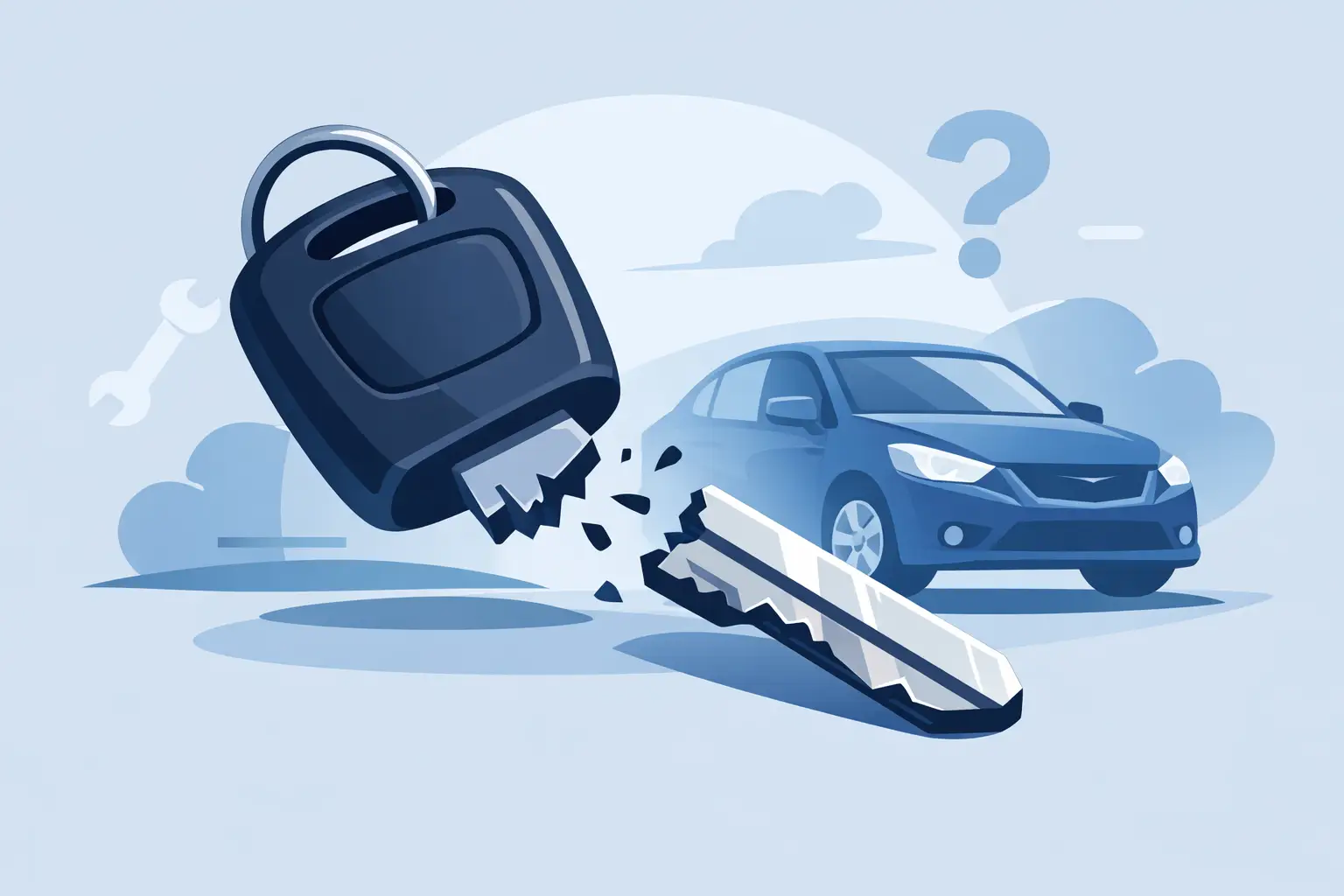
You go to unlock the car or turn the ignition, feel a sudden give, and then realize the car key blade snapped. It usually happens at the worst possible moment – before work, on the school run, or when you’re already late. The good news is that a broken key does not always mean a major repair, but the next few minutes matter if you want to avoid making the problem worse.
When a car key blade snapped, what actually broke?
The blade is the metal part of the key that goes into the door lock or ignition. On many modern car keys, that blade folds into the remote fob or is attached to a plastic head containing the chip that communicates with the immobilizer. If the blade snaps, you may still have the electronic part of the key, but that does not mean the car will start or the doors will open.
A clean break in the blade is very different from a problem inside the fob, a dead battery, or a worn ignition barrel. Sometimes the key breaks because the metal has weakened over time. Sometimes the real issue is resistance in the lock or ignition, and the blade simply becomes the part that gives way first. That difference matters because replacing just the blade may solve it, or it may only be half the job.
What to do first if the car key blade snapped
Start by checking where the broken piece is. If the snapped section is still in your hand and nothing is stuck in the door or ignition, the situation is usually simpler. If part of the key is stuck inside the lock or ignition, stop trying to force it out with random tools.
Tweezers, paper clips, and screwdrivers often turn a manageable problem into a more expensive one. They can push the fragment deeper, damage the wafers inside the lock, or scratch the ignition barrel. If the lock has already become stiff, forcing it can make extraction and repair more complicated.
If you have a spare key, do not rush to use it in a stiff ignition or sticky door lock until the underlying cause is clear. A second key can snap too, especially if the lock is binding. A fast check by an auto locksmith is often cheaper than risking a second failure.
If you are stranded somewhere unsafe, your first priority is your location, not the key. Move yourself and any passengers to a safe place if possible and get help on the way.
Can you still drive if the car key blade snapped?
It depends on the type of key and where it broke.
If the blade snapped but the immobilizer chip is intact inside the fob, some vehicles may still recognize the key if the chip is held close enough to the ignition area or start button. That said, recognition alone will not help if you cannot physically turn the ignition or access the vehicle. On older cars with a traditional key, a broken blade often means you cannot drive at all until the key is repaired or replaced.
With flip keys, there is another wrinkle. If the blade has become loose at the hinge before snapping completely, the remote may still lock and unlock the car, but the key may fail when you need to turn the ignition. That catches a lot of drivers out because the remote seems fine right up until the mechanical part lets go.
Why car key blades snap in the first place
Most snapped key blades are not random. They usually fail after wear has been building for a while.
One common cause is a worn key. Over time, the blade becomes thinner, rounded off, or stressed from daily use. Another is pressure on the key while it is in the ignition, such as a heavy keyring swinging while you drive. That extra weight puts strain on both the blade and the ignition.
Locks also play a role. If the door lock or ignition barrel is dry, dirty, worn, or slightly damaged, you may have been using more force than normal without thinking about it. In that case, replacing the blade alone may get you moving again, but the same issue can come back unless the lock itself is inspected.
There are also cases where the key was cut badly in the past. A poor copy can work just enough to seem usable, while quietly putting extra stress on the metal every time you turn it.
Repair or replace?
This is where a lot of people lose time. They tape the key together, try glue, or order a cheap shell online hoping for a quick fix. Sometimes that works for a very basic key with no chip issues, but more often it wastes money and delays the proper repair.
If the break is limited to the metal blade and the remote casing, chip, and electronics are still sound, a locksmith may be able to cut and fit a new blade to the existing fob. That can be the fastest and most cost-effective option.
If the fob is also cracked, the buttons are failing, or the transponder chip has been damaged or lost, a full replacement key is usually the smarter choice. The same goes for keys that have already been repaired badly before. A temporary fix on a weak key rarely stays temporary for long.
If part of the key is stuck in the ignition and the ignition has been damaged by forcing it, you may need both extraction and ignition repair. That is why the right diagnosis matters before anyone starts swapping parts.
What a mobile auto locksmith can do on-site
This is usually the point where mobile service makes the biggest difference. Instead of arranging towing or waiting days for a dealer appointment, an experienced auto locksmith can come to the vehicle, assess the lock, extract broken pieces safely, and cut or program the correct key on-site.
That matters because a snapped blade is not always just a key problem. It can be a lock problem, an ignition problem, or both. A proper on-site visit means the person fixing it can test the door, ignition, remote, and chip together rather than guessing from a parts counter.
In many cases, the job can be completed the same day. That includes cutting a new key blade, transferring or replacing the transponder, repairing a damaged remote shell, removing a broken fragment from the ignition, and checking whether the barrel itself is causing excess resistance.
For drivers in a hurry, the practical benefit is simple: you get a working key and a clear answer without moving the car first.
When a snapped key points to a bigger issue
Not every broken blade is a one-off. If your key was getting harder to turn, sticking in the ignition, or only working after a few attempts, the break may be a warning sign that the ignition barrel or door lock is worn.
Ignoring that can lead to repeat failures. You get a new blade cut, it works briefly, then the same stiffness returns. In the worst case, another key snaps or the ignition seizes completely. A good locksmith will tell you when the key is the only problem and when the lock needs attention too.
This is especially relevant for work vans, older family cars, and vehicles that see constant daily use. More usage means more wear. If the key has been showing signs of strain for weeks, treat the snapped blade as a symptom, not just the fault itself.
How to reduce the chances of it happening again
Keep your keyring light. It sounds minor, but constant weight on the key can shorten the life of both the blade and ignition. If the key starts feeling rough, do not keep forcing it for another month hoping it sorts itself out.
Get worn keys checked before they fail. A fresh copy taken from a good original can save a lot of trouble, but copying a badly worn key just duplicates the problem. If your remote shell is loose or cracked, have it repaired before the blade starts wobbling at the hinge.
Most of all, pay attention to resistance. A key should not need extra muscle. If it does, the cheapest fix is often the one done early.
A broken car key can feel like your whole day just fell apart, but it is usually solvable faster than people expect. The trick is not forcing it, not guessing, and getting the right help before a snapped blade turns into a damaged lock or ignition. If you’re stuck and the car key blade snapped, a proper mobile auto locksmith service can usually get you moving again without the extra cost and delay of the dealership route.