
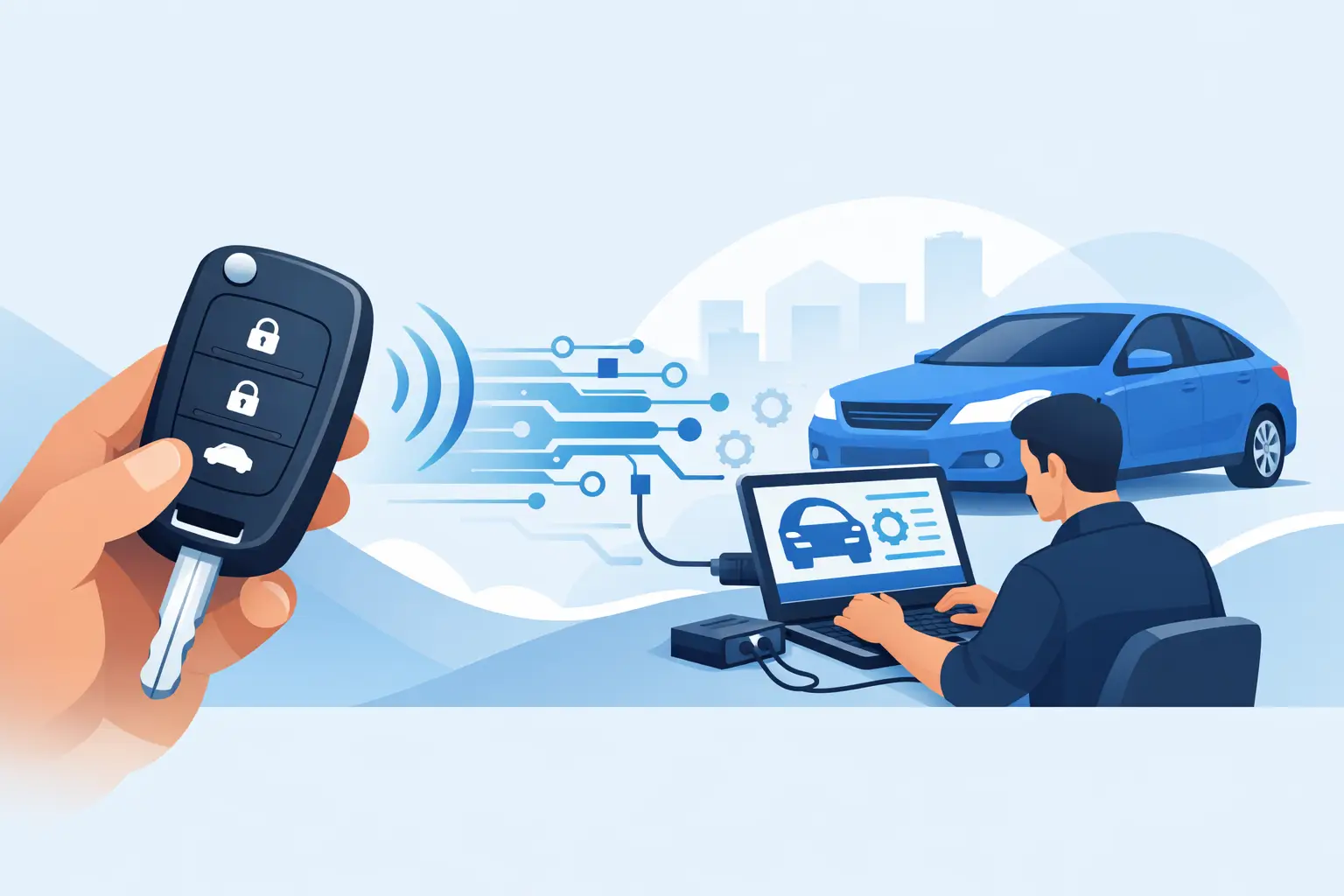
A freshly cut key can turn in the ignition and still leave you stranded. That is because most modern vehicles do not only check whether the metal blade fits. They also check whether the key has been authorized to start the engine. Understanding how car key coding works makes it easier to see why a replacement key needs more than cutting, and why the right equipment matters when every key is lost.
What car key coding actually means
Car key coding is the process of registering a key, remote, or smart fob with a vehicle’s security system. The vehicle stores approved electronic identities in its immobilizer, body control module, or another security-related control unit. When you try to start the car, the vehicle looks for a recognized code before allowing the engine to run.
The term is often used to describe a few related jobs. A locksmith may program a transponder chip inside a traditional key, pair the buttons on a remote fob, or add a proximity smart key that lets the driver start the vehicle with a push button. These are connected tasks, but they are not always the same thing.
A key can have the correct blade but no coded chip. It may unlock the door manually and even turn the ignition barrel, yet the engine will not start. On many vehicles, an immobilizer warning light flashes or remains illuminated when this happens.
Why a car will not accept just any key
The immobilizer is designed to prevent theft. Inside most chipped keys is a tiny transponder that communicates with an antenna around the ignition or, on keyless vehicles, with antennas inside the cabin. The vehicle sends a signal, the key responds with its electronic identification, and the system checks whether that identity is approved.
If the response is valid, the vehicle permits starting. If it is not, the engine may crank but fail to fire, or it may start briefly and then cut out. The exact behavior depends on the make, model, and year.
Older systems may use a fixed identification number. Newer systems often use encrypted communication or rolling security data that is much harder to copy. This is why the process varies so much between vehicles. Coding a basic spare for an older car can be straightforward, while replacing all keys for a late-model keyless vehicle may involve secure access procedures and specialist diagnostic equipment.
How car key coding works during a replacement
The job normally begins with identifying the vehicle accurately. The make, model, year, engine type, and key style all matter. A remote that looks nearly identical to the original may use different electronics, frequency, chip type, or software.
Next, the locksmith checks the existing key if one is available. This helps confirm whether the fault is with the transponder, remote battery, buttons, key blade, ignition, vehicle antenna, or the car’s security system. A key that starts the car but does not lock the doors may need remote pairing or repair, not full immobilizer programming.
For a replacement key, the physical blade is cut to match the vehicle’s locks. The chip or smart fob is then prepared and programmed using professional tools that communicate with the vehicle. Depending on the system, the equipment may add the new key to the vehicle’s approved list, synchronize security data, or perform a guided programming procedure.
The final step is testing. A proper on-site job checks more than whether the engine starts once. The key should operate the ignition or push-button start consistently, lock and unlock the doors where applicable, and work without warning messages. If it is a remote key, the buttons and emergency blade should also be checked.
Key cutting, remote pairing, and coding are different jobs
These terms are regularly mixed together, which can lead to confusion over cost and repair options. Key cutting creates the metal profile that works in the door lock and ignition. It does not program the chip.
Remote pairing connects the lock, unlock, trunk, and panic functions to the vehicle. On some cars, the remote and immobilizer chip are programmed in the same session. On others, they are separate systems. That means a fob can open the car but still fail to start it, or a key can start the car while the remote buttons do nothing.
Immobilizer coding is the part that authorizes the vehicle to start. For a push-button vehicle, this often involves programming the smart key’s proximity function as well. The correct diagnosis prevents paying for work that does not address the real problem.
When coding is needed
Car key coding is commonly required after a key is lost, stolen, damaged, or replaced. It is also needed when a spare key is added, a remote fob is replaced, or a customer has bought a blank key that has never been programmed to their vehicle.
All-keys-lost situations are more involved because there is no working key available to help identify the system or complete certain programming routines. A qualified auto locksmith can still often create and program a new key at the vehicle, but the method depends on the car’s security design.
Stolen keys deserve extra attention. Simply making a new key may restore access, but it does not necessarily stop the old key from starting the vehicle. Where the vehicle allows it, the safer option is to erase missing or stolen keys from the authorized list and program only the keys that remain in your possession.
A worn key can create a different issue. If the blade is badly worn, it may struggle in the door or ignition even though its chip is still coded correctly. In that case, a replacement may need accurate key cutting and chip transfer or new programming, depending on the key type and condition.
Why the process differs by vehicle
There is no universal sequence that works for every car. Manufacturers use different immobilizer systems, security levels, key chips, diagnostic protocols, and access requirements. Some vehicles allow a new key to be added quickly when one working key is present. Others require security PINs, online authorization, or module data work.
The age of the vehicle also matters, but newer does not always mean harder in every respect. Some older immobilizer systems require more hands-on access to modules, while some newer vehicles have tightly controlled digital security. A professional should explain what is required for your particular vehicle rather than promising a one-size-fits-all fix.
Can you code a car key yourself?
For a small number of older vehicles, owners can synchronize remote buttons through a manual sequence using the ignition and door locks. That may restore central locking after a battery change or fob repair. It usually does not program a new immobilizer chip.
DIY programming devices and low-cost replacement fobs can be tempting, especially when a key looks simple. The risk is that the fob may be incompatible, the chip may be locked or incorrectly prepared, or an unsuccessful attempt may leave you with no working key. Cheap aftermarket keys also vary widely in quality.
If you have one reliable working key and want a spare, getting it coded before there is an emergency is usually the easiest and least disruptive option. If all keys are gone, the key will not start the car, or you are dealing with a stolen key, specialist help is the sensible route.
What a mobile auto locksmith can do on-site
A properly equipped mobile auto locksmith can cut a replacement blade, supply a compatible transponder key or remote, program it to the vehicle, and test it where the car is parked. This avoids the practical problem of arranging recovery to a dealership when the vehicle cannot start.
For drivers in the West Midlands and Warwickshire, that can mean a same-day solution at home, work, or the roadside instead of days without transport. It is particularly useful for families, tradespeople, and business drivers who cannot afford to leave a vehicle off the road.
Proof of ownership and identification should be expected before key work begins. This protects the vehicle owner and helps ensure that key coding is carried out responsibly. The locksmith should also be clear about whether they are adding a key, replacing a faulty key, or deleting old keys for security.
A coded key is not just a convenience item. It is part of the vehicle’s theft protection and starting system. If your key is failing, missing, or has been stolen, acting before the next journey turns into a breakdown can save time, stress, and unnecessary recovery costs.