
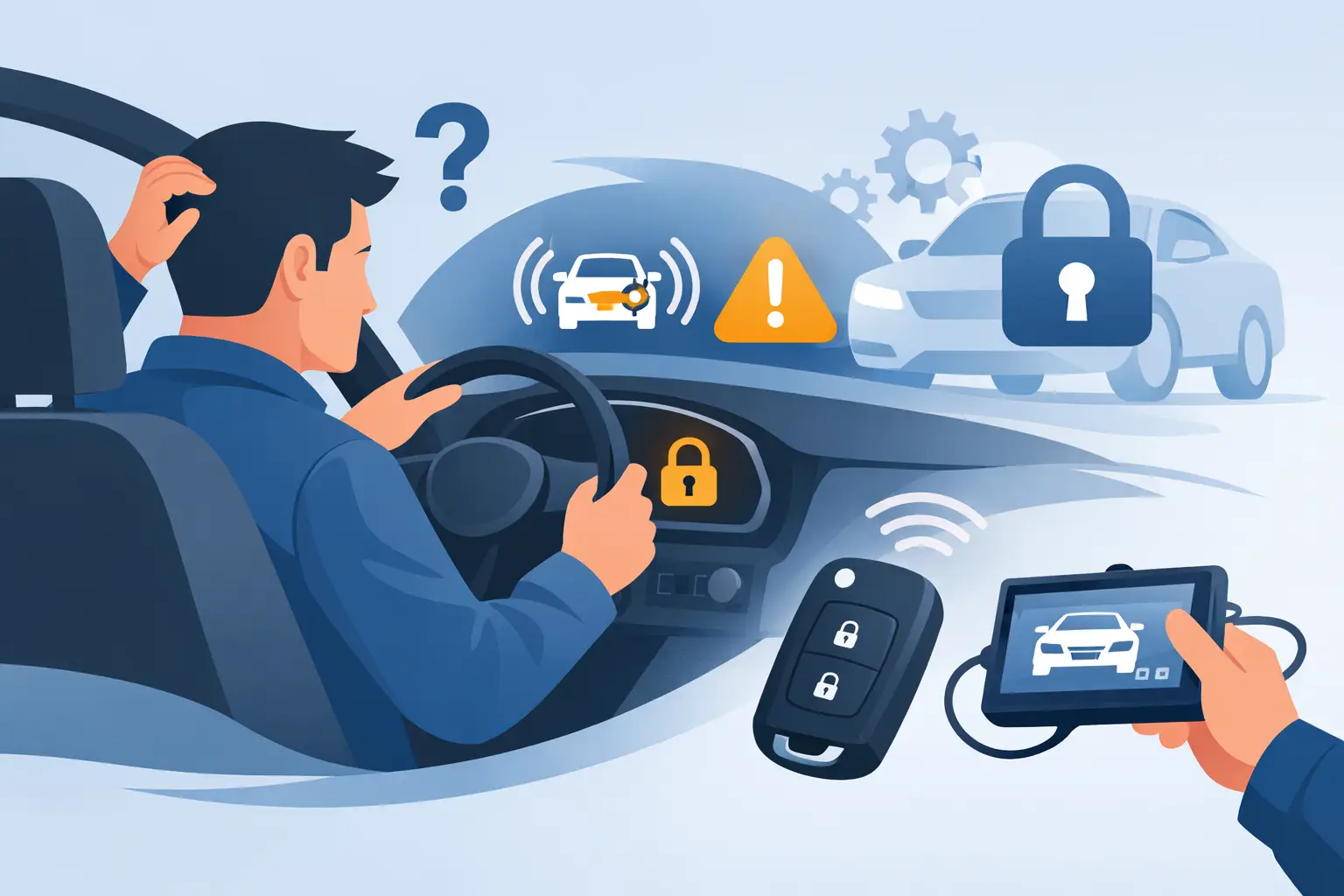
You turn the key or press the start button, the dash lights up, and then nothing useful happens. If your car wont start immobilizer issues may be the reason, especially if the battery seems fine and the engine will not crank or starts and dies right away. This is one of those faults that feels sudden, but in many cases there were signs before it failed completely.
An immobilizer is a security system designed to stop the vehicle from starting unless it recognizes the correct key or transponder. When that communication fails, the car treats your own key like the wrong one. The result is simple – you are stuck, often with no obvious clue whether the problem is the key, the car, or both.
Why a car wont start immobilizer fault happens
Most immobilizer problems come down to one of three things. The vehicle is not reading the chip in the key, the key is no longer transmitting correctly, or the immobilizer system itself has lost communication with another part of the car.
In older vehicles, a worn key blade can add confusion. The key may still turn in the ignition, but the chip inside the plastic head is what matters for authorization. In newer push-to-start vehicles, a weak key fob, damaged electronics, or failed proximity detection can create the same no-start problem without any visible wear at all.
Sometimes the issue starts after the car battery has gone flat or been replaced. Voltage drops can upset modules, stored sync data, or key recognition. That does not always mean the immobilizer unit has failed, but it can trigger symptoms that look very similar.
Signs the immobilizer is the real problem
A no-start condition does not automatically mean immobilizer trouble. Starters fail, batteries die, and ignition switches wear out. Still, a few signs point more strongly toward a security-related issue.
If the immobilizer warning light stays on or flashes, that is an obvious clue. If the engine cranks but will not start, or it fires for a second and then shuts off, key authorization is worth checking. The same applies if one key works and another does not, or if the fault is intermittent and seems worse after dropping the key, getting it wet, or changing the battery in the fob.
On some vehicles, you may also see messages such as key not detected, incorrect key, or anti-theft system active. Those messages are useful because they narrow the fault down quickly. On others, you get no message at all, just silence and frustration.
What to check first before you call anyone
Start with the simplest possibility. Try your spare key if you have one. If the spare starts the car, the problem is probably in the original key rather than the vehicle itself. That matters because key repair or replacement is usually faster and less expensive than chasing a deeper electrical fault.
Next, check the key fob battery if your vehicle uses one for detection. A dead fob battery does not cause every immobilizer issue, but it can on some systems. If the car has a backup start procedure, such as holding the fob close to the start button or a marked spot on the steering column, try that too.
If you recently changed the car battery, make sure the voltage is healthy and the terminals are tight. Low voltage can confuse vehicle electronics in ways that look like a key problem. Also pay attention to whether the dashboard powers up normally. If lights are dim or systems are acting erratically, the immobilizer may not be the only issue.
Take a careful look at the key itself. Cracks in the casing, signs of water damage, loose buttons, or a key that has come apart can all affect the chip or circuit board inside. If the blade is badly worn, the ignition may turn poorly, but remember that turning the lock and passing immobilizer authorization are two separate jobs.
When the problem is the key, not the car
This is more common than people think. Keys take abuse every day. They get dropped, bent, sat on, soaked, and stuffed into pockets with coins and tools. Over time, the transponder chip can fail, the fob circuit board can break, or the casing can loosen enough to cause unreliable contact.
In practical terms, this often shows up as an intermittent fault first. Maybe the car starts after a few tries. Maybe one day it only works when you hold the key a certain way. That is usually the warning stage. Once the chip or internal electronics fail completely, the car stops recognizing the key at all.
This is where a specialist auto locksmith can save a lot of time. Instead of assuming you need a dealer visit, diagnostics can confirm whether the key is being read, whether a replacement key can be programmed on-site, and whether old keys should be removed from the system for security.
When the immobilizer system in the car is at fault
There are cases where the key is fine but the vehicle is not receiving or processing its signal correctly. The antenna ring around the ignition barrel can fail on turn-key cars. Wiring faults, module issues, water ingress, or previous electrical work can all interfere with immobilizer communication.
Push-to-start vehicles add another layer. If the vehicle cannot detect the fob inside the cabin, the fault could involve the fob, receiver, start authorization module, or related control unit. This is why guessing gets expensive. Replacing parts without testing can waste money fast and still leave the car stranded.
A proper diagnosis matters because symptoms overlap. An immobilizer fault can look like an ignition problem. An ignition issue can look like a dead key. And if the steering lock, ECU, and key system are all talking poorly because of low voltage, it may appear more serious than it is.
Car wont start immobilizer issues after battery replacement
This catches a lot of drivers out. You replace or recharge the battery, expect the car to start, and instead get an anti-theft warning or a key recognition fault. In some vehicles, the system just needs stable voltage and a normal restart sequence. In others, the key and module may need resynchronization.
If this happened right after a battery change, do not keep forcing the issue for half an hour. Repeated failed start attempts can flatten the battery again and make diagnosis harder. It is better to verify battery condition, test with a spare key, and have the security system checked properly if the fault remains.
Why dealership delays are not your only option
When your car will not start, towing it to a dealer is rarely the best first move. It costs time, money, and usually leaves you waiting while the vehicle sits in a queue. For something key or immobilizer related, a mobile auto locksmith can often diagnose and fix the fault where the car is parked.
That is especially useful if all keys are lost, the only key has failed, or the car is stuck at home, at work, or in a parking lot. A qualified locksmith can test the existing key, cut and program a replacement, repair some remote faults, and in many cases deal with ignition barrel and transponder issues on-site. If the problem turns out not to be key-related, you at least avoid paying dealer rates just to find that out.
For drivers in the West Midlands and nearby areas, this is exactly the kind of situation where a fast-response service like Car Key Maker makes sense. The value is not just convenience. It is getting the right diagnosis without losing a day to towing and waiting rooms.
When to stop troubleshooting and get help
If you have tried the spare key, checked the fob battery, confirmed the car battery is healthy, and the immobilizer light is still active, it is time to bring in a specialist. The same applies if the key is broken, lost, stolen, or the fault keeps coming back even after temporary fixes.
There is also a security angle here. If a key has been stolen, deleting old keys from the system is often just as important as replacing the missing one. And if your only working key is showing signs of failure, waiting until it dies completely is a gamble you usually lose at the worst possible time.
The good news is that immobilizer faults are often fixable faster than drivers expect. The hard part is knowing whether the trouble is in the key, the ignition, or the vehicle electronics. Once that is identified properly, the path forward gets much simpler.
If your car suddenly refuses to start and the signs point to the immobilizer, do not assume the whole vehicle is at fault. Sometimes the fix is a replacement key, sometimes it is a programming issue, and sometimes it is a failed component that can be tested on-site. Either way, quick action beats guesswork every time.