All Keys Lost Service for Cars

All Keys Lost Service for Cars

Losing your last car key usually happens at the worst possible moment – when you are late for work, stuck in a parking lot, or trying to get the kids home. An all keys lost service is built for exactly that situation. Instead of towing the vehicle and waiting on a dealership schedule, a mobile auto locksmith can come to you, cut a new key, program it to the car, and get you moving again.

This is not the same as replacing a spare key when you still have one working. When every key is gone, the job is more involved. The vehicle has to be identified correctly, the lock or key data has to be read, and the replacement key often needs to be programmed to the immobilizer system before the engine will start. That is why speed matters, but so does experience.

What an all keys lost service actually includes

A proper all keys lost service is more than just cutting a piece of metal that fits the door. Modern vehicles use transponder chips, remote locking functions, and anti-theft systems that must recognize the new key. If that programming is not done correctly, you may be able to open the car but still not start it.

In most cases, the service begins with verifying ownership and confirming the exact vehicle details. From there, the locksmith identifies the right key type, decodes or picks the lock information, cuts a new key blade if needed, and programs the chip or remote to the vehicle. If the original keys were stolen rather than misplaced, old keys can often be removed from the system for added security.

That last part matters more than many drivers realize. If there is any chance your missing key could be used by someone else, deleting lost keys from the vehicle memory can reduce the risk of unauthorized access or theft.

Why drivers choose mobile help instead of the dealership

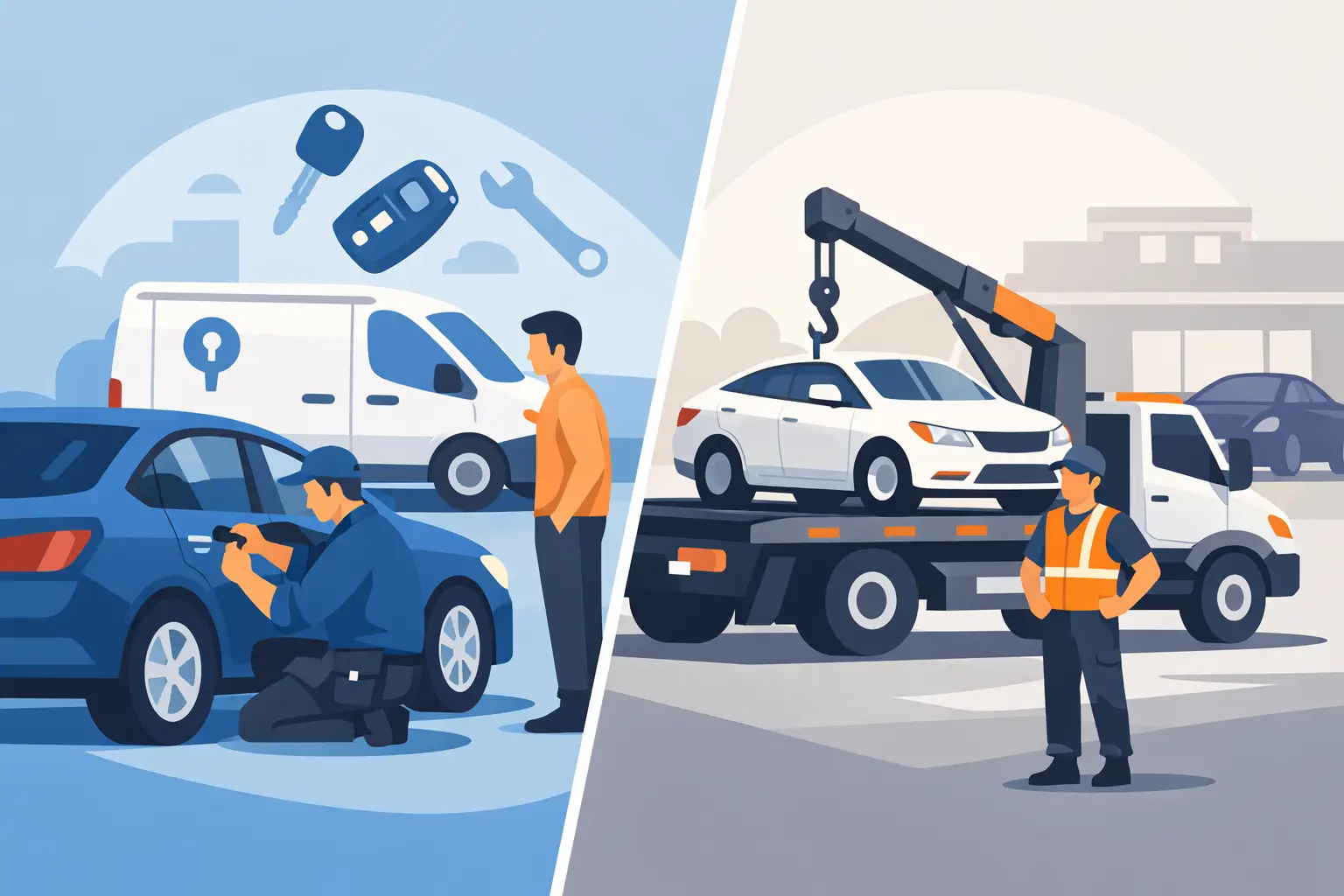
When all keys are missing, the biggest problem is often simple logistics. You cannot drive the car anywhere, and many owners assume their only option is a tow truck plus a dealership appointment. That route can work, but it is often slower and more expensive than people expect.

A mobile specialist comes to the vehicle, whether it is at home, at work, roadside, or in a public parking area. That saves time immediately. It also removes the hassle of arranging transport for the car and then waiting days for workshop availability.

For many makes and models, on-site service is the more practical choice. The tools used by experienced auto locksmiths are designed for exactly these situations. The work can often be completed the same day, and pricing is usually more realistic than main dealer rates. It depends on the vehicle, the key type, and the level of programming involved, but the convenience alone is often reason enough.

How the process works when all car keys are lost

The first step is confirming the car’s make, model, year, and location. This helps the locksmith bring the right equipment and the correct key stock. Some vehicles are straightforward. Others require advanced programming tools, PIN retrieval, EEPROM work, or direct diagnostic access.

Once on site, the locksmith verifies that you are the legal owner or authorized user of the vehicle. After that, the key is generated and programmed. On older cars, that might be a simpler transponder job. On newer vehicles, the process may involve smart proximity keys, remote syncing, and immobilizer pairing.

If there is damage to the lock, ignition, or key system, that may need to be addressed at the same time. For example, if the last key was already worn and the ignition barrel was failing, replacing the key alone may not fully solve the issue. This is where hands-on diagnosis matters. A good locksmith does not just hand over a key and hope for the best. They make sure the full problem is fixed.

What affects the price

People usually ask about cost right away, and that makes sense. There is no single flat answer because an all keys lost service can range from relatively simple to highly technical.

Older vehicles with basic transponder keys are generally quicker and cheaper to replace. Newer vehicles with push-button start, encrypted systems, or dealer-level security features usually cost more. The make of the car matters too. Some brands are known for straightforward key programming, while others require extra steps, security codes, or specialist equipment.

Location, time of day, and urgency can also affect the final price. Emergency evening callouts may be priced differently from daytime appointments. That said, mobile auto locksmith service is still often more affordable than towing a vehicle to a dealer, paying dealer labor rates, and waiting for parts or coding.

The best approach is simple. Give accurate vehicle details, explain whether the keys are lost or stolen, and ask what is included in the quoted price. You want to know if that figure covers cutting, programming, callout, and testing.

When stolen keys change the job

Not every lost key situation is the same. If you think the keys were simply misplaced somewhere safe, the main goal is getting back on the road. If the keys were stolen, security becomes part of the job.

In those cases, removing old keys from the vehicle system is often the right move. Depending on the car, the locks may also need to be changed or reworked. This is especially relevant if the key had identifying tags attached, or if the theft happened close to your home or workplace.

There is a trade-off here. Adding extra security steps may increase the cost and the time on site, but it can prevent a much bigger problem later. If there is genuine theft risk, speed should not come at the expense of security.

Why experience matters with modern vehicles

Car key work used to be much simpler. Today, even a basic-looking key may contain electronic components that have to communicate correctly with the vehicle. Smart keys, proximity systems, encrypted transponders, and integrated remotes all add complexity.

That is why all keys lost jobs are not ideal for guesswork. A locksmith needs the right diagnostics, key cutting capability, and programming tools, but just as important, they need to know how different systems behave in the real world. Some faults look like key loss but are actually ignition reader issues, steering lock problems, dead remotes, or immobilizer faults.

An experienced mobile specialist can spot that difference on site. That saves time and avoids replacing parts unnecessarily. It also means you are less likely to pay for a key when the real issue sits elsewhere in the starting system.

Choosing the right all keys lost service

When you are stressed and stranded, it is easy to call the first number you see. Still, a few checks can save you a lot of frustration. Look for a specialist who works specifically with vehicle keys and locks, not just general locksmith jobs. Ask whether they can cut and program on site, whether they handle your make and model, and whether they can help if the ignition or remote has related faults.

Clear communication matters too. You should get a straightforward explanation of what the job involves, how long it is likely to take, and what the expected price includes. Vague answers are usually a bad sign.

For drivers in the West Midlands and Warwickshire, Car Key Maker is built around this kind of urgent mobile response – getting to the vehicle quickly, solving the problem on site, and keeping the process simple when you need help fast.

What to do right now if you have lost every key

Start by checking the obvious places once, not ten times. After that, stop losing time. Make sure the vehicle is in a safe location, gather your registration and ID if you have them, and note the exact make, model, and year. If you suspect theft, mention that immediately when you call.

Try not to force the locks, pry doors, or attempt DIY programming with generic tools. That often creates extra damage and a bigger bill. A proper all keys lost service is designed to handle the problem cleanly and on site.

When your only key is gone, the situation feels bigger than it is. In most cases, it is fixable the same day by the right mobile specialist. The fastest way forward is usually the simplest one – get someone out who does this work every day and let them bring the solution to the car.

Can a Locksmith Open Deadlocked Cars?

You press the lock button, shut the door, and a second later realize the keys are still inside. Then comes the next worry – if the car is deadlocked, can a locksmith still get in without damage? The short answer is yes, a locksmith can open deadlocked cars in many cases, but the method depends on the make, model, security system, and what exactly has failed.

This is where experience matters. Deadlocking is designed to stop the doors from being opened from the inside as well as the outside. That makes the job more complicated than a standard lockout, and it also means the wrong approach can damage the vehicle, trigger faults, or waste valuable time.

What deadlocking actually means

Deadlocking is a security feature fitted to many modern vehicles. Once activated, it disables the interior door handles so a thief cannot smash a window, reach in, and open the door from inside. On some cars it activates when you press the remote once or twice. On others it comes on automatically when the vehicle is locked.

For the driver, the problem is simple. If the car is deadlocked and the keys are locked inside, normal entry tricks usually will not work. Methods people imagine might help, such as pulling an inside handle or pressing the central locking button through a gap, often do nothing at all.

That is why deadlocked vehicles need a proper automotive locksmith, not guesswork and not a generic roadside approach.

Can a locksmith open deadlocked cars without damage?

Often, yes. A qualified auto locksmith can open many deadlocked cars using non-destructive entry methods. The key point is that deadlocking does not make the car impossible to open. It just removes some of the simpler entry options.

A trained locksmith will first identify how the car locks, whether the deadlock is factory-fitted, and whether there may be a separate electrical fault. Some vehicles allow entry through specialist picking techniques at the door lock. Others may need a more technical approach using vehicle-specific tools and procedures.

What should not happen is forced entry as a first step. If someone goes straight for the window, wedges the frame too hard, or starts trying random methods, that is usually a sign they are not an automotive specialist.

Why deadlocked cars are harder than standard lockouts

A standard lockout is usually straightforward. The keys are inside, the car is locked, and a locksmith can use the right tools to operate the lock or gain controlled access. Deadlocking changes that.

With deadlocking active, interior release points are disabled. On many vehicles, even if a tool reaches inside the cabin, the usual door controls will not release the lock. That means the locksmith has to work with the vehicle’s actual locking system rather than around it.

There is also more variation from car to car. One brand may have a lock that responds well to decoding or picking. Another may have tighter anti-theft protections, shielded lock mechanisms, or software-related complications if the remote has failed. The phrase “deadlocked car” sounds like one problem, but in practice it covers several different situations.

When opening a deadlocked car depends on the fault

This is where the answer becomes, it depends.

If the keys are locked inside and the locking system is working normally, entry is often possible with the right method. If the battery in the key fob is dead but the mechanical key still works, the locksmith may simply use the physical lock and then deal with the remote issue separately.

If the car battery is flat, things can change. Some vehicles behave differently when there is no power. The external lock may still work. On others, the lock may be damaged, seized, or not connected in the way the owner expects. If the door lock has failed and the car is deadlocked, the job becomes more technical.

Then there are cases where the deadlock is not the main issue at all. A failed actuator, damaged lock barrel, worn key blade, broken remote, or prior repair can all change the entry process. That is why a proper assessment on-site matters more than a quick promise over the phone.

How an auto locksmith approaches the job

A good automotive locksmith starts by confirming ownership and checking the vehicle details. After that, the priority is the safest entry method for that specific car.

In some cases, the locksmith may pick or decode the door lock. In others, they may use specialist access tools designed for modern vehicles. If the problem is linked to a failed key or remote, they may move straight into key repair, emergency key creation, or programming once access is gained.

This matters because getting into the car is sometimes only half the job. If all keys are lost, if the only key is locked in the trunk, or if the immobilizer is involved, the customer usually needs the vehicle running again, not just opened.

That is where a mobile auto locksmith has a clear advantage over a general locksmith. The tools, key data, programming equipment, and ignition knowledge are all focused on vehicles rather than household locks.

Can every deadlocked car be opened on-site?

Not every single one, and any honest locksmith should say that.

Some vehicles have severe lock damage. Some have already been tampered with. Some high-security systems take longer, require key data access, or involve a fault that prevents straightforward entry. There are also cases where previous bodywork or aftermarket alarms complicate the process.

But many deadlocked vehicles can be opened on-site without towing and without replacing half the car. That is especially true when the job is handled by a locksmith who deals with vehicle lockouts, key replacement, and ignition issues every day.

The biggest delays usually happen when the wrong person is called first. A standard recovery service may get to the car quickly but not have the tools to deal with deadlocking. A dealership may eventually solve the problem, but often with more cost, more waiting, and a tow in between.

What you should do if your car is deadlocked

First, do not keep trying random fixes. If the car is double-locked, pulling handles, prying the top of the door, or poking at switches through a gap usually does more harm than good.

Second, check the basics calmly. Make sure the keys are definitely inside. If you have a spare key, test whether the issue is a lockout or a key fault. If the main battery is dead, mention that when you call. If the key snapped, the remote stopped responding, or the lock feels jammed, say so right away. Those details help the locksmith prepare properly.

Third, call an automotive locksmith, not just any locksmith. There is a real difference. Vehicle entry, key programming, immobilizer systems, and ignition faults all sit in the same problem chain. The more complete the service, the faster the solution.

Why speed matters in deadlock situations

A deadlocked car is not just inconvenient. It can stop the school run, delay a work job, leave tools trapped inside a van, or strand someone in a parking lot late at night. In some cases, medication, documents, or house keys are locked in the vehicle too.

That is why fast response matters as much as technical skill. A locksmith who can come to the vehicle, assess the problem, gain entry safely, and deal with the key issue on-site saves time at every stage. For drivers in a rush, that practical difference matters more than theory.

Car Key Maker handles exactly these kinds of urgent callouts, with mobile service built around fast arrival and realistic pricing rather than dealership delays.

The real answer to can a locksmith open deadlocked cars

Yes, in many cases they can – and they can often do it without damage. But the job is more specialized than a normal lockout, and the result depends on the vehicle, the condition of the locks, and whether there is a deeper key or electrical fault involved.

If your car is deadlocked with the keys inside, the safest next step is to stop experimenting and get a proper auto locksmith to assess it. The right hands can usually save you time, stress, and a much bigger repair bill. When your car will not let you in, a calm, experienced response is what gets the day moving again.

How Roadside Key Programming Works

You walk out to your car, press the remote, and nothing happens. Or worse, the car opens but will not start because the immobilizer does not recognize the key. That is usually the moment people start asking how roadside key programming works – and whether it can really be done at the side of the road, at home, or in a work parking lot.

The short answer is yes, in many cases it can. Modern vehicles do not just need a key cut to fit the lock. They also need the electronics inside the key or fob to match the car’s security system. A mobile auto locksmith can often handle that on-site, which saves the time, cost, and hassle of towing the vehicle to a dealer.

How roadside key programming works on-site

Roadside key programming is the process of pairing a new or replacement key, transponder chip, remote, or smart fob to your vehicle while the technician is with the car. The programming tells the vehicle’s immobilizer system that the key is authorized to start the engine. If the remote functions are included, it can also sync lock, unlock, trunk release, and panic functions.

The exact process depends on the make, model, and year. Some vehicles allow relatively straightforward programming through the diagnostic port. Others require security codes, specialist software, PIN retrieval, or manufacturer-specific steps. That is why roadside work is not guesswork. It depends on the right tools, current vehicle data, and experience with different systems.

In practical terms, the technician arrives, confirms ownership, checks the vehicle’s condition, identifies the correct key type, cuts the emergency blade if needed, and then programs the chip or fob so the car accepts it. If the old key is lost or stolen, the job may also include deleting missing keys from the system so they can no longer start the car.

Why modern keys need programming

Older car keys were mostly mechanical. If the cuts matched the lock and ignition, the car would usually start. Most modern vehicles are different. They use transponder chips, proximity systems, encrypted communication, and immobilizers to reduce theft.

That added security is useful, but it also means a basic copy of the blade is not enough. Even if a newly cut key turns in the ignition, the car may still refuse to start if the chip has not been programmed correctly. In push-to-start vehicles, the fob often needs to be recognized by multiple modules before the car will respond normally.

This is also why cheap online keys can be hit or miss. Some are the wrong frequency, some are poor-quality aftermarket shells, and some cannot be programmed to certain vehicles at all. A proper roadside service starts by making sure the replacement key is actually compatible before programming begins.

What a technician actually does during the job

Most customers picture someone plugging in a tool and pressing a few buttons. Sometimes it is that simple. Often it is not.

The first step is identification. The locksmith confirms the vehicle details, key type, and security system. On some jobs, that means checking the VIN, reading lock information, or decoding an existing key if one still works. If all keys are lost, the technician may need to create a key from scratch before any programming can happen.

Next comes key cutting if the replacement includes a physical blade. For many vehicles, that blade still matters because it opens the door or acts as the backup if the fob battery dies. Mobile locksmiths use specialist machines in the van to cut the key accurately on-site.

After that, the programming equipment is connected to the vehicle. This is usually done through the onboard diagnostic port, though the exact method varies. The tool communicates with the car’s immobilizer, body control module, or smart system. Depending on the vehicle, the technician may need to retrieve security data, enter a PIN, place the vehicle into learning mode, or follow a timed sequence.

Once the new key is accepted, every function is tested. That includes locking, unlocking, remote buttons, proximity features, and most importantly, starting the engine. If the job includes deleting old keys, the technician checks that only the current keys remain active.

When roadside key programming is usually needed

This service is not just for people who have lost a key. It is used in a range of everyday problems.

A common one is all keys lost. In that situation, the vehicle cannot be driven anywhere, so mobile help makes the most sense. Another is a spare key that was never programmed properly. You may have a blade that opens the door but does not start the engine. Sometimes the issue is a damaged fob, a failed chip, water damage, or an intermittent immobilizer fault where the car suddenly stops recognizing a key that used to work.

It is also common after theft or a security concern. If a key has gone missing and you do not know who has it, programming a replacement without deleting the missing key is only half a fix. A proper roadside service can often remove lost keys from memory so they no longer work with the vehicle.

What can affect whether it works at the roadside

This is where the honest answer matters. Roadside key programming is possible for many vehicles, but not all jobs are identical.

Some makes and models are straightforward. Others have stronger encryption, restricted security access, or module faults that complicate the process. If the vehicle battery is flat, the ignition barrel is damaged, the immobilizer module has failed, or there is existing electrical damage, programming may not be the only repair needed.

There is also a difference between programming a second spare key and solving an all-keys-lost situation. A spare key job is often quicker because an existing working key can help with identification and access. All-keys-lost jobs usually involve more steps, more equipment, and more time.

The quality of the replacement key matters too. Good programming cannot fix a faulty transponder, incorrect board, or poor-quality shell. That is one reason experienced mobile locksmiths supply tested parts rather than relying on whatever the customer found online.

Dealer vs roadside service

For many drivers, the alternative is a dealership. That route can work, but it often means recovery costs, longer waits, and less flexibility if the vehicle cannot move.

Roadside service is built around the fact that a car key problem usually feels urgent. If you are stuck at home before work, in a supermarket parking lot, or outside a customer site with a van full of tools, you need the problem fixed where the car is. A mobile locksmith brings the cutting equipment, diagnostics, and programming tools to you.

There are trade-offs. Some dealer-only systems can still be more restricted, and there are occasional cases where a module replacement or factory-level intervention is required. But for a large number of common key and fob issues, on-site programming is faster and more practical.

How long roadside key programming takes

People usually want one thing answered first – how soon can I drive again?

The time varies by vehicle and by problem. A straightforward remote or transponder programming job may take less than an hour. An all-keys-lost situation can take longer because the key has to be cut, programmed, and tested from scratch. Smart keys, European models, and vehicles with added security steps may take more time than a basic transponder key.

A good technician will usually tell you early on whether the job looks routine or more involved. Clear expectations matter, especially when you are already stressed.

What you should have ready

If you need help fast, a few details make the process smoother. The technician will usually need your vehicle make, model, year, location, and a clear description of the problem. If you have any working or damaged keys left, keep them nearby. Proof that the vehicle is yours is also important because legitimate locksmiths do not program keys for vehicles without verifying ownership or authority.

If the car has other issues, mention them upfront. A key that will not program may actually point to a deeper fault with the ignition, antenna ring, body module, or battery condition. The more accurate the picture, the faster the right solution can be prepared.

Why experience matters more than people think

Roadside key programming is not just about owning a scan tool. It is about knowing when the problem is the key, when it is the vehicle, and when a so-called simple programming job is actually a security or electrical issue.

That hands-on judgment is what saves time. An experienced mobile specialist can tell the difference between a dead remote battery, a failed transponder, a worn ignition issue, and an immobilizer problem that needs a different fix entirely. That is the difference between changing parts at random and getting the car running properly.

If you are stuck with a car that will not recognize the key, the best roadside help is direct, honest, and set up to solve the problem where you are. That matters most when your day has already stopped and you just need a reliable way to get moving again.

How to Fix Sticky Ignition Fast

You turn the key, it resists, and suddenly a simple school run or work trip turns into a problem. If you are searching for how to fix sticky ignition, the first thing to know is this: forcing it usually makes it worse. A sticky ignition can go from annoying to fully jammed very quickly, especially if the key or ignition barrel is already worn.

Most sticky ignitions start with one of three causes. The key is worn, the steering lock is putting pressure on the cylinder, or the ignition barrel has dirt, wear, or internal damage. The right fix depends on which of those you are dealing with. Some cases are simple enough to sort on the spot. Others need a locksmith before the key snaps or the ignition fails completely.

Why an ignition gets sticky in the first place

Your ignition is a lock, and like any lock, it relies on very small internal parts lining up properly. Over time, the cuts on the key wear down. That means the pins inside the ignition no longer line up as cleanly as they should. The result is a key that only works after a wiggle, works only in one direction, or feels rough when turning.

There is also the steering lock to consider. If the wheel is turned hard against the curb or under tension, it can put pressure on the ignition mechanism. In that case, the key feels stuck, but the real issue is not the key itself.

Then there is internal wear. Ignition barrels handle years of daily use, and eventually springs, wafers, and other small parts start sticking or wearing unevenly. Dirt and old lubricant can make that worse. If the problem has been building for weeks or months, that wear is often the real cause.

How to fix sticky ignition without making it worse

Start with the safest checks first. Do not yank the key, do not hammer it, and do not spray random household lubricants into the ignition. Those quick fixes often create a bigger repair.

Check for steering lock pressure

If the steering wheel feels locked, place one hand on the wheel and gently move it left and right while lightly turning the key with your other hand. Do not force either one. You are trying to release pressure, not overpower the lock.

This works surprisingly often. If the wheel was under tension, the ignition may turn normally as soon as that pressure comes off.

Inspect the key carefully

Look at the key blade in good light. If it appears rounded off, bent, cracked, or heavily worn, that may be your problem. A worn key can still open the door but struggle in the ignition because the ignition often has tighter wear points.

If you have a spare key, try that next. If the spare works smoothly, stop using the worn key. This is one of the clearest signs that the key is the issue rather than the ignition barrel.

If you do not have a spare, a proper new key cut to the correct standard usually works better than another copy made from an already worn key. That distinction matters. A bad duplicate can keep the problem going.

Try gentle key movement only

Insert the key fully, then ease it back by a tiny amount and try turning again. Sometimes the key is bottoming out slightly differently than the wafers expect, especially on a worn ignition. A very light wiggle can help, but this should be controlled and minimal.

If you have to fight with it, stop. Repeated twisting can snap the key in the ignition, and that turns a repair into an extraction job.

Use the right lubricant, if any

If the ignition feels dry or gritty, a graphite-based lock lubricant or a specialist product designed for locks can help. Use a small amount. More is not better.

Avoid heavy oils and general-purpose sprays that leave residue behind. They may free it up for a day, but they also attract dirt and can gum up the internal parts. That is a common reason a slightly sticky ignition turns into a badly jammed one later.

Check for dirt or debris on the key

It sounds basic, but keys spend time in pockets, bags, vans, and glove boxes. Dirt on the blade can transfer into the ignition over time. Wipe the key clean and try again. If the key has burrs or visible damage, do not file it down unless you know exactly what you are doing. Removing metal from the wrong area can make the key unusable.

Signs the ignition barrel itself is failing

If you are still dealing with the same problem after trying the basics, the barrel may be worn internally. That is especially likely if the key only turns after several attempts or if it sticks in certain positions.

Common warning signs

A failing barrel often shows itself in patterns. The key may go in but not turn. It may turn part way and stop. It may need to be jiggled every time. In some cases, the key gets stuck when you try to remove it, or the dash powers up inconsistently.

Another red flag is when the problem happens with more than one key. If both your main key and spare struggle in the same way, the ignition is usually the culprit.

At that stage, you are past the point of a simple quick fix. The goal shifts from freeing it up today to preventing a full failure.

When not to keep trying

There is a point where more effort does more harm than good. If the key is bending, if it feels like it might snap, or if the ignition has completely seized, stop trying to force it. Broken keys inside ignitions are common, and once that happens, the repair becomes more involved.

The same applies if your car uses a transponder key and you are also seeing immobilizer issues. A sticky ignition and an electronic key problem can happen at the same time, but they are not the same fault. Swapping parts or guessing can waste time and money.

When a locksmith is the smarter fix

This is where experience matters. A qualified auto locksmith can tell whether the issue is the key, the barrel, the steering lock, or a mix of them. More importantly, they can usually deal with it on-site instead of sending you down the towing and dealership route.

For a lot of drivers, that is the real difference. If your ignition is sticking outside work, at home, or in a parking lot, you do not need theory. You need the car moving again without making the problem worse.

An automotive locksmith can cut and test a proper replacement key, repair or replace the ignition barrel, remove a broken key, and check whether the fault is mechanical or tied to the immobilizer system. If you are in the West Midlands or Warwickshire area, a mobile specialist such as Car Key Maker can often do that same day at your location, which is a lot easier than arranging recovery.

How to prevent a sticky ignition from coming back

Once the issue is sorted, a few habits help prevent a repeat. Use a good key, not a worn-out copy that has been struggling for months. Keep your keyring light if possible, since heavy keychains can add wear over time. If the ignition starts feeling rough again, deal with it early instead of waiting for a total failure.

It also helps to pay attention to patterns. If it sticks more when the wheel is turned sharply, steering lock pressure may be part of it. If it is getting worse week by week regardless of wheel position, internal wear is more likely.

That difference matters because prevention is cheaper than emergency repair. A key cut at the right time or an early barrel repair is usually far less hassle than dealing with a car that will not start at all.

A few fixes people try that usually backfire

People often reach for the nearest spray can, twist harder, or keep retrying until the key finally turns. That can work once or twice, but it is not a real fix. It just buys time while the wear gets worse.

Another common mistake is having a new key copied from a badly worn original. If the source key is already inaccurate, the copy often repeats the same problem. That is why a properly decoded or correctly cut key is often a better long-term answer.

And if your key is already cracked near the head or blade, do not keep using it in a sticky ignition. That is exactly how keys snap under load.

The practical answer to how to fix sticky ignition problems

If the wheel is locked, release the steering pressure first. If the key is worn, use the spare or get a proper replacement. If the ignition feels dry, use only a lock-safe lubricant in a small amount. If it still sticks, or if it has been getting worse for a while, treat it as an ignition barrel problem and get it looked at before the car leaves you stranded.

A sticky ignition is one of those faults that gives warnings before it fails completely. That is the good news. The helpful move is to act while the key still comes out and the car still starts, because that is usually the point where the fix is quickest, cheapest, and least disruptive.

Guide to Emergency Car Unlocking

You notice it the second the door shuts. Your keys are on the seat, in the cup holder, or still in the ignition, and now you are standing outside the car with no easy way back in. A good guide to emergency car unlocking starts with one fact: speed matters, but doing the wrong thing can turn a simple lockout into a damaged door, broken glass, or an expensive repair.

When people get locked out, the first instinct is usually force. A coat hanger, a screwdriver, a wedge from the garage, or a hard pull on the top of the door feels like a quick fix. In reality, modern vehicles are much less forgiving than older cars. Side airbags, tighter weather seals, electronic deadlocks, alarm systems, and painted trim all raise the risk. What looks like a five-minute shortcut can leave you with a bent frame, scratched paint, a ruined seal, or a lock that no longer works properly.

That is why the best approach is calm, methodical, and focused on safe access first.

Guide to emergency car unlocking: what to do first

Start by checking the obvious without rushing. Look at every door, including the rear doors and trunk, because one may still be open. If your car uses keyless entry, test whether the system is actually responding or whether the key fob battery has failed. In some cases, the car is not fully locked at all, and the problem is simply that the usual door is not opening.

Next, think about safety and urgency. If a child, pet, or vulnerable passenger is inside the vehicle, the situation changes immediately. Heat builds fast, even on a mild day, and waiting too long is not an option. The same applies if the car is stopped in a dangerous place, such as the shoulder of a busy road, a dark parking lot, or a live work site. In those cases, getting professional help fast is more important than experimenting with a DIY method.

If there is no immediate danger, take a minute to rule out the simplest answer. Check your pockets, bag, jacket, and anywhere you may have placed a spare key. Call someone who may have access to your extra set if that can be done quickly. It sounds basic, but lockouts often happen when people are distracted, carrying groceries, managing kids, loading tools, or switching cars.

Why emergency car lockouts happen

Most lockouts are not dramatic. They are routine mistakes made at the worst possible time. A key gets left on the driver seat while unloading the trunk. The fob is in a gym bag that ends up in the back seat. The central locking system activates automatically. A worn key stops turning smoothly, so the driver tries another door, closes the first one, and suddenly everything is locked.

Electronic keys have reduced some old problems and created new ones. Keyless systems can be convenient, but they also make people less aware of where the key actually is. Weak fob batteries, signal issues, or intermittent locking faults can create situations that look like a simple lockout but are really part of a bigger key or immobilizer problem.

That matters because the right solution depends on the cause. If the keys are visible inside the car, entry may be straightforward. If all keys are lost, broken, or no longer recognized by the vehicle, opening the door is only the first step.

The risks of DIY entry methods

Online advice makes car entry look easier than it is. Many tricks you see were designed for older vehicles with simple vertical locks and fewer internal components. Most late-model cars do not respond the same way, and some methods can make professional entry harder afterward.

Trying to pry the top of the door can distort the frame enough to create wind noise or water leaks later. Forcing tools between the glass and weather stripping can tear seals or damage tint. Fishing blindly inside the door area can interfere with wiring, linkage, and side curtain airbag components. Smashing a window is usually the worst option unless there is a genuine emergency where immediate entry is the only safe choice.

There is also the issue of cost. People often try to avoid paying for lockout help, then end up paying for a window, a new seal, bodywork, or a replacement lock. A clean, non-destructive entry is almost always the cheaper route.

When a mobile locksmith is the right call

A professional locksmith is usually the right choice when the vehicle is deadlocked, the keys are inside, the spare is not available, or you are dealing with a modern car that uses a transponder or smart key. The value is not just opening the car. It is opening it without creating a second problem.

A proper emergency response should begin with identity and vehicle ownership checks, then move to the safest entry method for that make and model. That matters because different vehicles have different lock designs, tolerances, and access points. What works safely on one car can damage another.

For many drivers, the biggest advantage of a mobile service is that the problem can be handled where the car is parked. There is no need to arrange towing, wait days for a dealership appointment, or figure out how to move a locked vehicle that will not start. If the issue turns out to be more than a basic lockout, a qualified auto locksmith can often deal with the key, remote, or ignition problem on-site as well.

Guide to emergency car unlocking for newer vehicles

Newer cars need a more careful approach because the lockout may be tied to electronics, not just the physical lock. If the key fob battery has died, there is often still a manual key blade hidden inside the fob. Many drivers do not realize it is there until they are already stuck. That blade may open the door, but if the immobilizer or push-to-start system is also affected, you may still need further assistance to get the car running.

Some vehicles also enter a security mode after repeated failed attempts, especially if the alarm has been triggered or the system thinks an unauthorized key is being used. In that case, random button pressing and repeated lock cycling can make the situation more confusing. A proper diagnosis saves time.

This is where experience matters. A locksmith who works with automotive systems every day can usually tell the difference between a straightforward lockout, a failed remote, a damaged key blade, and a deeper programming issue. That means you are less likely to pay for the wrong fix.

What to expect during emergency car unlocking

If you need urgent help, the process should be clear. You explain the vehicle make, model, year if known, your location, and what has happened. The locksmith confirms whether the key is inside, lost, broken, or not working. From there, they can give you a realistic idea of response time and what the job may involve.

On arrival, the goal should be non-destructive entry whenever possible. Once the vehicle is open, the next step depends on the original problem. If the keys were simply locked inside, the job may end there. If all keys are lost or the fob has failed, you may need key cutting, programming, remote repair, or ignition work.

That is why choosing a specialist matters more than calling the first generic roadside number you find. A general service may open the door, but if the key itself is the issue, you still may not be back on the road.

How to reduce the chance of another lockout

The best prevention is simple, but it has to be consistent. Keep one working spare key in a separate place, not inside the same bag or vehicle. Replace weak fob batteries before they fail completely. If your key is worn, cracked, sticking in the lock, or only working some of the time, get it checked before it becomes an emergency.

Drivers who rely on their car for work should be especially careful. One lockout can cost more than the locksmith call when it means missed jobs, delayed deliveries, or lost time waiting in a parking lot. Families feel the same pressure when school pickup, appointments, or childcare are involved. In real life, the price of delay is often higher than the price of fixing the problem properly.

If you are in the West Midlands or nearby and need fast, on-site help, a specialist mobile service such as Car Key Maker can often save a lot of time compared with dealer routes or trial-and-error roadside fixes.

A car lockout feels urgent because it is urgent. The smart move is not the fastest-looking trick. It is the option that gets you back into the vehicle safely, protects the car from damage, and solves the actual problem instead of adding a new one. When that moment happens, stay calm, avoid force, and choose the fix that gets you moving again with the least hassle.

8 Best Reasons to Choose a Mobile Locksmith

You notice the problem at the worst possible moment. The keys are missing, the fob stops responding, or the ignition will not turn when you are already late. That is exactly when the best reasons choose mobile locksmith service become obvious. You do not need a lecture. You need someone who can get to your vehicle, fix the issue on-site, and get you moving again without dragging the day out.

A mobile auto locksmith is not just a more convenient version of a shop. In many cases, it is the faster, more practical option, especially when the car cannot be driven at all. If you are dealing with a lockout, a broken key, an all-keys-lost situation, or a remote that suddenly quits, mobile service solves the real problem – getting stranded – instead of adding another step.

Best reasons to choose mobile locksmith service

The biggest reason is simple: the locksmith comes to you. If your vehicle is stuck at home, in a parking lot, outside work, or at the side of the road, there is no need to arrange towing or wait days for dealership availability. A qualified mobile locksmith can reach the vehicle, assess the issue there and then, and often complete the job in one visit.

That matters more than people realize. A lost car key is not just a key problem. It can stop school runs, jobs, appointments, deliveries, and weekend plans in one hit. Mobile service is built around that urgency. It is meant for real-life situations where standing still is not an option.

Faster help when the problem cannot wait

When you are locked out or all keys are gone, speed matters more than anything else. A mobile locksmith is set up for response. Their workday is based around dispatching to vehicles, not asking customers to bring the problem into a workshop.

That usually means quicker action for emergency jobs. Instead of waiting for a tow truck, then waiting again at a dealer or shop, the locksmith comes directly to your location with the equipment needed to cut keys, program remotes, open vehicles, or inspect ignition faults. The exact turnaround depends on the vehicle make, model, and issue, but the process is usually far more direct.

There is a trade-off here. Some very new or high-security vehicles can involve extra steps, security checks, or specialist parts. But even in those cases, starting with a mobile auto locksmith often gets you answers faster and avoids wasted time.

On-site service saves a full chain of delays

A non-starting vehicle creates a domino effect. First you confirm the key is dead, broken, or missing. Then you look at towing. Then you deal with transport while the car is off the road. A mobile locksmith cuts out most of that chain.

For busy drivers, that is not a small detail. It can be the difference between losing a whole day and getting back behind the wheel the same afternoon.

Lower hassle than a dealership route

Dealerships have their place, but they are not built around roadside urgency. If your car is outside your house with no working keys, the dealership process can quickly become expensive and slow. You may need towing, appointments, proof of ownership checks, and wait time for parts or coding.

A mobile locksmith focuses on solving the situation where the car sits. That is why one of the best reasons to choose a mobile locksmith is not just price, but the amount of hassle you avoid. There are fewer moving parts in the process, fewer handoffs, and usually a clearer path from problem to fix.

In many cases, pricing is also more realistic than main dealer alternatives. That is especially true for common issues like spare keys, replacement keys, key duplication, lockouts, remote repair, and ignition barrel work. It depends on the car and the fault, of course, but for many drivers the mobile option makes financial sense as well as practical sense.

Better suited to emergency car key problems

Not every locksmith handles vehicle work well. Car key systems are more specialized than many people expect. Modern vehicles can involve transponders, remote locking systems, immobilizer programming, laser-cut blades, and ignition components that need careful diagnosis.

A mobile auto locksmith who works on vehicle problems every day is usually better prepared for these situations than a general lock service. They know the difference between a worn key and a failing ignition. They can spot when the remote shell is damaged but the internal chip still works. They understand that an all-keys-lost job is very different from duplicating a working spare.

That practical experience matters because it reduces guesswork. If the job is diagnosed correctly from the start, it is more likely to be fixed properly on the first visit.

Why specialization matters

A car key that turns poorly may look like a simple key-cut issue, but the real fault could be inside the ignition lock barrel. A vehicle that will not start after a key snaps may have an immobilizer problem rather than just a broken blade. These are the situations where specialist mobile service earns its keep.

You are not paying for theory. You are paying for someone who has seen the fault before and knows the quickest safe route to a fix.

Mobile locksmiths handle more than lockouts

A lot of drivers only think about locksmiths when the keys are locked inside the car. That is a common callout, but it is far from the full picture. Mobile auto locksmiths can often help with replacement car keys, duplicate keys, remote fob repair, broken key extraction, worn key problems, ignition repairs, and security-related work after keys are lost or stolen.

That wider scope is another reason mobile service works so well. You may think you need one thing and find out the real issue is something else. A key that will not start the car could be a failed transponder. A remote that stopped working may need repair rather than full replacement. A stolen key situation may require deleting old keys from the system for security.

Having someone on-site who can handle the full problem, not just one part of it, saves time and prevents repeat visits.

Less disruption for work, family, and daily driving

Most people do not lose a car key on a free afternoon with nothing else going on. It happens before work, on the school run, during shopping, at the gym, or when you are trying to get home. Mobile service fits around that reality.

If the locksmith comes to your driveway, workplace, or parking area, you can often stay near the vehicle and keep the situation under control instead of arranging transport across town. For families, that means less stress. For tradespeople and business vehicle users, it can mean getting a van or company car back on the road before the whole day is lost.

This is where the service model makes a real difference. It is not only about fixing the key. It is about reducing downtime.

Clearer answers in a stressful moment

When drivers panic, they usually want three things fast: can this be fixed, how long will it take, and what will it cost? A good mobile locksmith gives direct answers because they deal with these situations every day.

That reassurance matters. Stress makes small problems feel bigger, and car key issues rarely happen at a convenient time. A no-nonsense technician who explains the likely fault, the next step, and the realistic timeline can take a lot of pressure out of the situation.

For drivers in the West Midlands and Warwickshire, that local response can be especially valuable because getting a vehicle moving again quickly is often more important than shopping around for the cheapest possible quote. Speed, communication, and showing up when promised count for a lot.

Security help when keys are lost or stolen

One of the strongest reasons to call a mobile auto locksmith is when the problem is not just inconvenience, but risk. If your keys are stolen, or you lose them somewhere they could be traced back to your car, replacing the key alone may not be enough.

In some cases, the safer move is to remove old keys from the system and secure the vehicle properly. That is the kind of practical, security-focused response a specialist mobile locksmith can advise on and carry out. The right fix depends on the car and the circumstances, but the point is simple: this is not just about access. It is about control over who can use your vehicle.

That is one reason many drivers choose a mobile specialist over a generic service. You want someone who sees the whole picture, not just the lock in front of them.

Best reasons choose mobile locksmith over waiting it out

People sometimes delay calling because they hope the spare key will turn up, the remote will suddenly work again, or the ignition issue will sort itself out. Sometimes that happens. Often it does not, and the delay just costs more time.

If the vehicle is central to your day, quick action usually wins. Mobile locksmith service is designed for exactly that moment – when waiting is no longer practical and you need someone to come out, assess the fault properly, and sort it on-site if possible.

Car Key Maker is built around that kind of response: fast help, real vehicle key expertise, and on-the-spot solutions without the dealership runaround.

When your car key fails, the best option is usually the one that gets your vehicle and your day back under control with the least delay possible.

Remote Central Locking Repair Explained

Your car locks worked fine yesterday. Today, the remote does nothing, one door stays shut, or the alarm starts acting up for no clear reason. When that happens, remote central locking repair becomes less of a convenience issue and more of a get-me-back-on-the-road problem.

The tricky part is that central locking faults do not all come from the same place. A dead remote battery can look like a failed key. A weak car battery can cause strange locking behavior. A faulty door lock actuator can make it seem like the whole system has failed when the issue is only in one door. That is why guessing usually costs more time than it saves.

What remote central locking repair actually covers

Remote central locking repair is not one single job. It is a broad fix for any fault that stops your vehicle from locking or unlocking properly from the remote, the key, or the interior controls.

In some cases, the repair is focused on the remote itself. The fob may need a battery, new buttons, soldering work, reprogramming, or a full replacement shell if the internals still work but the casing is damaged. In other cases, the problem sits inside the vehicle, such as a failed actuator, damaged wiring in a door loom, a blown fuse, a body control module issue, or water damage affecting the locking circuit.

That distinction matters because a remote problem is often quicker and cheaper to fix than a vehicle-side fault. But from the driver’s point of view, both feel the same – you press the button and nothing useful happens.

Common signs you need remote central locking repair

Some faults are obvious. Others start small and get worse over time. If your remote works only at very close range, only unlocks some doors, works intermittently, or stops working after the car battery went flat, there is usually an underlying issue worth checking before you end up locked out.

A few patterns show up again and again. One is the remote flashing but the car not responding. That often points to a syncing issue, a weak signal, or a fault in the car rather than the remote battery alone. Another is one door refusing to lock or unlock with the rest. That usually suggests an actuator or mechanical fault in that specific door.

You may also notice the locks cycling repeatedly, the alarm going off unexpectedly, or the key working in the ignition but not operating the remote locking. These symptoms can overlap, which is why proper testing matters more than swapping parts at random.

Why these systems fail

Modern locking systems are convenient, but they rely on several parts working together. The remote has to send a clean signal. The car has to receive it. The control unit then has to trigger each door lock correctly. If one part in that chain fails, the whole system can appear unreliable.

Wear and tear is a big factor. Remote buttons get pressed thousands of times. Circuit boards can crack. Door actuators wear out internally. Wiring in the door hinge area flexes every time the door opens and closes, and over time those wires can break.

Battery issues are another common cause. A weak remote battery can reduce range or stop communication entirely. A weak vehicle battery can confuse electronic systems and create odd symptoms that look like a locking fault. Water ingress is also a regular problem, especially in older vehicles or cars with known drainage issues. Moisture and electronics do not get along.

Then there is programming. If a remote loses sync after a battery change, after electrical work, or after a replacement key is introduced, the fix may be simple reprogramming. But it depends on the make and model. Some cars allow basic resync steps. Others need specialist equipment.

Can you fix it yourself?

Sometimes, yes. But only up to a point.

If your remote central locking has stopped working, the first sensible step is the obvious one – check the remote battery. If the battery is old or the range has been getting worse, replacing it is a low-cost starting point. It is also worth checking whether the spare remote works. If the spare works fine, the fault is likely in the main fob rather than the car.

You can also look for simple clues. If only one door is affected, the problem is less likely to be the remote itself. If the car battery has recently gone flat, charging or replacing that battery may restore normal locking behavior. If a fuse has blown, replacing it may solve the issue, though you still need to ask why it blew in the first place.

Where DIY tends to fall apart is diagnosis. A remote that looks dead may actually be transmitting. A lock that seems jammed may be an actuator fault. A programming issue may need diagnostic tools. Without testing equipment and experience, it is easy to replace the wrong part and still have the same problem.

When a mobile locksmith is the better option

If the car will not lock securely, will not unlock properly, or leaves you relying on the mechanical key alone, speed matters. This is where a mobile auto locksmith usually makes more sense than waiting days for a dealership slot or arranging recovery.

A proper remote central locking repair service should be able to test the key, inspect the lock operation, check whether the remote is transmitting, identify whether the fault is in the fob or the vehicle, and carry out many fixes on-site. That can include replacing remote batteries, repairing damaged remotes, cutting and programming replacement keys, re-syncing remotes, and dealing with some lock and ignition-related faults without the car moving an inch.

That mobile approach is especially useful if the car is stuck at home, in a work parking lot, or outside a store with a fault that showed up without warning. You are not adding towing costs or wasting half a day getting to a dealer. You get the problem looked at where the car already is.

What affects the cost of remote central locking repair

There is no honest one-price answer because the fault could be simple or more involved.

If the issue is just a remote battery or a damaged shell, the fix is usually straightforward. If the remote needs internal repair, replacement, or programming, the cost goes up. If the problem is in a door actuator, wiring, or control unit, labor and parts will vary by vehicle. Some cars are quick to diagnose and repair. Others need more strip-down time or brand-specific programming.

Vehicle make also matters. Basic systems on older cars are often simpler than newer models with encrypted keys, smart entry, integrated alarm systems, and multiple control modules. That does not always mean newer is harder, but it often means there are more variables to test.

The key point is this: paying for accurate diagnosis first is usually cheaper than buying parts based on guesswork.

Dealer or locksmith?

It depends on the fault, but for many drivers, a locksmith is the faster and more practical first call.

Dealerships are fine when the job clearly needs dealer-only parts or software, but they are rarely built around urgency. If you need same-day help, on-site service, or a realistic answer on whether the problem is the key, the lock, or the vehicle electronics, a specialist auto locksmith is often better positioned to help quickly.

A good locksmith also works with the problem as it is, not just with the replacement route. Sometimes a remote can be repaired instead of replaced. Sometimes a lock issue can be isolated to one failed component rather than turning into a bigger bill than necessary. That practical mindset matters when you just need your car working again without the drama.

How to avoid the same problem happening again

Not every fault is preventable, but a few habits help. Replace remote batteries before they fully die, especially if range starts dropping. Keep the remote dry and avoid heavy keychains that put strain on the ignition and key housing. If you notice one door locking slowly or inconsistently, get it checked early before it fails completely.

It also helps to have a spare key that is tested, not just stored in a drawer and forgotten. A spare that actually works can save a lot of stress when your main remote starts failing.

If you are dealing with remote central locking problems now, the best move is not to wait until you are fully locked out or unable to secure the car. Most faults start as warnings. Catch them early, get the right diagnosis, and the fix is usually simpler than leaving it until the day the car decides it is not cooperating at all.

Car Immobilizer Key Problem? What to Do

You turn the key or press the start button, the dashboard lights up, and then nothing useful happens. The engine may crank and cut out, or it may not start at all. If that sounds familiar, a car immobilizer key problem is often the reason. It is frustrating because the car looks alive, but the security system is blocking the start.

This usually happens at the worst possible time – before work, on the school run, outside a store, or when you are already late. The good news is that an immobilizer issue does not always mean a major fault with the vehicle. Quite often, the problem is with the key, the chip inside it, the remote casing, or the way the car is reading the transponder.

What a car immobilizer key problem actually means

Most modern vehicles have an immobilizer system designed to stop theft. Inside the key or fob, there is a transponder chip. When you try to start the car, the vehicle checks that chip. If it recognizes the coded signal, the engine is allowed to start. If it does not, the system keeps the car immobilized.

That is why you can have a key that still turns in the ignition, still unlocks the door, or still works the remote, yet the car will not start. The mechanical part of the key and the electronic authorization are two different things. One can work while the other fails.

In plain terms, the car is not saying the key does not fit. It is saying the key is not authorized.

Common signs of an immobilizer key issue

The symptoms vary by make and model, but most drivers notice the same pattern. The immobilizer warning light may flash or stay on. The car may crank without starting, or it may start for a second and then shut off. Sometimes the remote works for locking and unlocking, but the engine still will not fire.

You may also notice the issue comes and goes. That can happen when the chip is damaged, the key casing is loose, or the ignition antenna ring is reading the signal inconsistently. Intermittent faults are especially common with worn flip keys, damaged smart keys, and keys that have been dropped more than once.

Why car immobilizer key problems happen

A damaged transponder chip is one of the most common causes. If the key has been crushed, soaked, dropped, or repaired badly, the chip may no longer transmit properly. Sometimes the chip is missing altogether after the key shell has been replaced.

A flat fob battery can also confuse the situation, though it depends on the vehicle. On some models, the battery mainly affects remote locking. On others, especially certain proximity systems, a weak battery can stop the car from detecting the key reliably. That is why battery issues should never be dismissed too quickly.

Then there is key wear. A heavily used key can develop both mechanical and electronic problems over time. The blade may become worn, the buttons may collapse, and the internal chip may shift inside the casing. What starts as an occasional no-start can become a complete failure.

Vehicle-side faults are possible too. The antenna around the ignition barrel, the push-to-start receiver, wiring faults, or programming issues can all stop the key from being accepted. Less often, the car may lose synchronization with the key after electrical problems or module replacement.

What to check before calling for help

First, try your spare key if you have one. This is the quickest way to narrow the problem down. If the spare starts the car normally, the original key is the issue. If neither key works, the fault may be with the vehicle, the immobilizer reader, or the programming.

Next, pay attention to the dashboard. An immobilizer icon, security light, or message about key recognition gives a strong clue. If the remote has gone weak, replace the battery if your key type uses one. It is a small check, but it can save time.

If you use a smart key, hold it close to the start button or follow the emergency start procedure in the owner manual. Many vehicles have a backup way to detect a weak or failing key. It is not a proper fix, but it may get you moving once.

What you should not do is keep forcing the ignition, keep cranking the car over and over, or start taking the key apart if you are not sure what you are looking at. That often turns a repairable key into a full replacement job.

When the problem is the key, not the car

A lot of immobilizer jobs come down to the key itself. The transponder chip may have failed, the casing may be broken, or the key may simply need to be reprogrammed or cloned, depending on the system. In many cases, a mobile auto locksmith can test the key, confirm whether it is transmitting properly, and cut and program a working replacement on-site.

That matters because towing the car to a dealer is often the slowest and most expensive route, especially when the vehicle is stuck at home, at work, or in a parking lot. If the issue is key-related, there is usually no reason to move the car at all.

This is also where experience counts. Immobilizer systems are not all the same. Some vehicles allow straightforward programming. Others require specialist diagnostics, PIN code retrieval, EEPROM work, or careful syncing procedures. A guess-and-hope approach wastes time.

When the car is part of the problem

Not every car immobilizer key problem is solved by making another key. If the immobilizer antenna ring is faulty, if the ignition barrel has internal damage, or if the vehicle has communication faults between modules, the key may be fine and the car still will not start.

That is why proper diagnosis matters before any parts are ordered. A good locksmith will usually check whether the key is being detected, whether the transponder data is valid, and whether the immobilizer system is responding as it should. If the fault points to the vehicle rather than the key, you need to know that early instead of paying for the wrong fix.

There is a trade-off here. A dealer may be better placed for deep module replacement on some newer or rarer vehicles. But for many everyday immobilizer faults, especially failed keys, lost keys, damaged remotes, and ignition-related issues, a specialist mobile locksmith can sort it faster and at a more realistic price.

How a mobile locksmith typically fixes it

The first step is identifying whether the key is dead, damaged, wrongly programmed, or no longer matched to the car. From there, the fix may involve replacing the transponder key, repairing the existing fob, cutting a new blade, programming a new key to the vehicle, or deleting old keys from the system for security.

If you have lost all keys, the job is more involved but still very common. The vehicle can usually be accessed, a new key cut, and the immobilizer programmed on-site. In security-sensitive situations, such as a stolen key, the old key data can often be removed so it no longer starts the car.

For drivers in the middle of a breakdown, the biggest advantage is speed. A mobile service comes to the vehicle, tests the fault where it sits, and handles the work there and then. That is often the difference between losing a whole day and getting back on the road quickly.

How to avoid the same issue again

If your only working key is cracked, taped together, or only starts the car on the second or third try, it is already on borrowed time. Getting a spare made before total failure is usually cheaper and less stressful than waiting until the car is fully immobilized.

It also helps to replace worn key shells early, keep keys dry, and avoid heavy keychains that put strain on ignition components. For smart keys, change batteries before they are completely dead. Small preventive steps make a real difference because immobilizer issues tend to build gradually, then fail all at once.

If your car has already shown signs of intermittent key recognition, do not ignore it. These faults rarely fix themselves. They usually get worse, and they always seem to pick the most inconvenient moment.

When your car refuses to start and the security system is in the way, the priority is not theory – it is getting a correct diagnosis and a working key without delay. In many cases, that can be done where the car is parked, with no towing, no guesswork, and no unnecessary waiting.

Car Key Repair vs Replacement

Your key worked yesterday. This morning it will not unlock the car, the buttons are hit or miss, or the blade is bent enough that you are forcing it in the ignition. That is usually when the question becomes urgent: car key repair vs replacement – which one actually makes sense, and which one just wastes time?

The short answer is that it depends on what failed. Some problems are worth repairing because the fix is quick, practical, and cheaper. Others are signs that the key is no longer reliable, and replacing it is the smarter move before you end up stranded in a parking lot, outside your home, or late for work.

Car key repair vs replacement: what changes the answer?

The biggest factor is not the age of the key. It is the type of fault.

If the issue is limited to a worn case, a damaged button pad, a weak battery contact, or a snapped shell on a remote key, repair is often a good option. In those cases, the electronics may still be fine. A skilled auto locksmith can move the internal board and transponder into a new housing, restore button function, and test the key on-site. That gets you back on the road without paying for a full new key if you do not need one.

Replacement becomes more likely when the blade is badly worn, the transponder chip is missing or damaged, the remote board has failed, or the key has stopped communicating properly with the vehicle. If the car will not recognize the key, or if the key works one day and completely fails the next, reliability becomes the issue. A repaired key that still leaves doubt is not much help when you depend on the car every day.

There is also the security side. If a key has been stolen, lost somewhere public, or you have no way of knowing who may have access to it, replacement is often only part of the job. In some cases, the old key should be deleted from the system, and locks may need to be changed. Repair is not the right answer when security is the real problem.

When repair is the better option

Repair makes the most sense when the key still has a sound core. Think of the outside parts failing before the inside parts do.

A very common example is a flip key with broken buttons or a cracked hinge. The remote may still lock and unlock the car, and the chip may still start the engine, but the shell is falling apart. That is often repairable. Another example is a key that only needs a new battery terminal or housing because the board is loose inside. These are practical repairs that can extend the life of the key without changing the programming.

Repair can also be the right move if you want to keep a working original key from getting worse. A small crack in the shell, a loose blade, or a remote button that only works when pressed hard may not seem urgent. But these faults tend to get worse quickly. Fixing them early is cheaper than waiting for total failure.

This is where mobile service matters. If the car still starts but the key is clearly on borrowed time, having a locksmith come out and repair it on-site is often the least disruptive option. There is no towing, no waiting around at a dealer, and no guessing whether the problem will sort itself out.

When replacement is the better option

Sometimes a key is simply past the point where repair is worth it.

If the blade is so worn that it no longer turns smoothly in the door or ignition, replacing it is usually the safer call. A worn blade can damage the lock over time, and forcing it can leave you with two problems instead of one. The same goes for a key that has snapped, especially if the break has affected the chip or internal board.

Replacement is also the better option when the transponder has failed. Many drivers think the battery is the issue because the remote buttons stop responding, but the bigger problem may be that the car no longer detects the chip that authorizes starting. If the immobilizer system is not reading the key consistently, that is not something to gamble with.

Then there is the all-keys-lost situation. At that point, repair is off the table. You need a new key cut and programmed to the vehicle, and in some cases you may also want old keys erased from memory. For drivers dealing with urgent vehicle downtime, especially families, commuters, and tradespeople, speed matters more than trying to rescue a key that is already gone.

Cost matters, but so does risk

A lot of people start with price, which is understandable. Repair is usually cheaper than replacement. But the cheaper option is only cheaper if it solves the problem properly.

If a repair gives you another year or two of dependable use, that is good value. If it saves a little money today but leaves you with a key that still sticks, still cuts out, or still feels fragile, you may end up paying twice. That is why the real comparison is not just repair cost versus replacement cost. It is repair cost versus the cost of another breakdown, another callout, missed work, or being unable to use the car when you need it.

A good locksmith will tell you plainly when repair is worth doing and when replacement is the better use of your money. That kind of honesty matters more than being quoted the lowest number first.

Car key repair vs replacement for modern keys

Modern car keys are not just pieces of metal. They often combine a cut blade, remote locking functions, a transponder chip, and sometimes proximity or push-to-start technology. That makes diagnosis more important than guesswork.

With older basic keys, repair was limited because there was not much to fix beyond the blade. With modern fobs and smart keys, some faults are repairable and some are not. A damaged case can be repaired. A failed battery contact can often be repaired. Water damage to the electronics might be repairable, but not always. If the board is corroded or the chip is dead, replacement is usually the only reliable path.

This is also why dealership assumptions are not always helpful. Many dealers go straight to replacement because it fits their process. A specialist auto locksmith can usually assess whether the existing key can be saved, duplicated, or rebuilt on-site. That gives you more options, and often a faster one.

Signs you should not wait

A key rarely fails without warning. Most of the time, there are signs.

If you need to jiggle the key to get it to turn, if the remote only works from very close range, if the casing is split open, or if the blade is bent or loose, do not wait for a complete failure. The same applies if you only have one working key left. A single worn key is a risk. If it stops working, the job becomes more urgent and usually more expensive.

Drivers often put this off because the car still starts. That is understandable, but it is usually how routine key wear turns into an emergency. The better move is to deal with it while the problem is still manageable.

The practical way to decide

If the electronics and chip are still healthy and the damage is mainly external, repair often makes sense. If starting reliability, blade wear, security, or chip failure are involved, replacement is usually the smarter option.

That is the real answer to car key repair vs replacement. It is not about choosing the cheaper service by default. It is about choosing the option that gets you a dependable key, protects the vehicle, and avoids a bigger problem later.

For most drivers, the best next step is a proper assessment from a locksmith who handles vehicle keys every day and can do the work where the car is. If you are in the West Midlands or nearby and the key is already showing signs of trouble, getting it checked now is a lot easier than dealing with a dead key when you are already in a rush.

A worn key always picks the worst possible moment to quit. Sorting it early gives you one less thing to worry about when the day is already busy.

Auto Key Replacement Without the Hassle

Losing your car key rarely happens at a convenient time. It usually hits when you are already late, parked somewhere awkward, or stuck with a car that will not start. That is why auto key replacement is not just about getting another key cut. It is about getting back on the road quickly, safely, and without paying more than you should.

For most drivers, the first question is simple: can this be sorted today? In many cases, yes. The answer depends on the type of key, the make and model of the vehicle, and whether you still have a working key. What matters most is using someone who can come to the vehicle, identify the fault properly, and complete the job on site instead of turning a key problem into a towing problem.

What auto key replacement actually involves

A lot of people assume replacing a car key is the same as replacing a house key. It is not. Modern vehicle keys often include a transponder chip, remote locking buttons, and security programming linked to the car’s immobilizer system. Even when the metal blade looks simple, there is usually more going on behind the scenes.

If your key is lost, broken, stolen, or suddenly stops working, the right fix depends on the exact failure. Sometimes the solution is a full new key. Sometimes it is remote repair, reprogramming, a battery issue, or a worn blade that no longer turns the ignition or door lock cleanly. A good locksmith will not force a full replacement if a repair is the smarter option.

That is where many drivers waste money. They hear the word replacement and assume they need the most expensive route. In reality, a proper diagnosis comes first. If the shell is damaged but the electronics are still fine, the key may be rebuilt. If the remote has failed but the transponder still starts the car, only part of the key may need attention. If all keys are gone, the process is more involved, but it can still often be handled at your location.

When you need auto key replacement fast

Some key problems are annoying. Others stop your day completely. If you have locked the keys in the car, snapped the blade, lost the only working key, or your immobilizer is refusing to recognize the key, speed matters.

The biggest advantage of a mobile auto locksmith is that the work happens where the vehicle is. That means no waiting for recovery, no organizing transport to a dealership, and no dragging out a problem that should be fixed in one visit. For busy drivers, families, commuters, and anyone who depends on their vehicle for work, that convenience is not a luxury. It is the difference between a bad day and a solved problem.

Urgent situations also need calm handling. If a key has been stolen, replacing the key alone may not be enough. In some cases, the old key should be deleted from the vehicle’s system so it cannot still be used. That is the kind of detail that matters far more than a basic copy.

Lost all keys

This is the situation most drivers dread, and it is one of the most common emergency callouts. When all keys are gone, a replacement key usually has to be cut to the lock and then programmed to the vehicle. Depending on the car, the system may also need to be updated so missing keys are no longer recognized.

It sounds complicated, but for a specialist it is standard work. The key point is that it should be handled by someone equipped for all-keys-lost jobs, not just basic duplication.

Broken or worn keys

Keys wear down gradually, which is why people often miss the warning signs. If the key starts sticking, needs wiggling in the ignition, or only works after a few tries, the blade may be worn. Keep using it long enough and it can snap.

A broken key does not always mean major damage, but it should be addressed quickly. If part of the blade is stuck in the lock or ignition, forcing it usually makes the repair bigger and more expensive.

Remote stops working

Not every failed remote needs a full replacement. It could be a dead battery, damaged buttons, internal circuit failure, or a programming issue. The problem for drivers is that these symptoms can overlap. One day the remote is unreliable, the next day you are manually unlocking the door and hoping the car still starts.

That is why testing matters. A specialist should be able to tell whether the fault is in the key, the remote section, the vehicle receiver, or the immobilizer system itself.

What affects the cost of auto key replacement

Price matters, especially when the problem has come out of nowhere. The cost of auto key replacement depends mostly on the vehicle and the type of key system involved. A basic older key is usually straightforward. A smart key, proximity fob, or advanced transponder setup will take more equipment and programming.

Whether you still have a working key also changes the job. Duplicating from an existing key is usually simpler than creating a new one from scratch. An all-keys-lost situation takes more time and more technical work. If the locks or ignition have damage, that can also affect the final price.

The cheapest quote is not always the best one. Some prices look low until extra charges appear for programming, emergency response, callout, or cutting the blade. Clear pricing matters because most people calling for help are already stressed. They need a straight answer, not guesswork.

Locksmith vs dealership

For many drivers, the dealership feels like the obvious choice. Sometimes it is a valid route, but it is rarely the quickest one when you are stranded. Dealer replacement often means waiting for an appointment, arranging recovery if the car cannot move, and paying dealership rates for programming and parts.

A mobile auto locksmith is usually the more practical option when speed matters. The work can often be completed on site, on the same day, and with less disruption. That is especially useful if the car is parked at home, at work, or in a place where leaving it is a problem.

There are trade-offs. Some very new or unusual vehicles may have tighter security systems that limit what can be done outside dealer networks. But for a huge range of everyday vehicles, a qualified automotive locksmith can handle the job fully and professionally without the extra delay.

How to avoid making the problem worse

When a key fails, most bad outcomes come from forcing things. If the key is not turning, do not twist harder. If the blade is cracked, do not keep using it for another week. If the remote only works occasionally, do not assume it will sort itself out.

A small issue often becomes a bigger one when it is ignored. Worn keys can damage ignitions. Broken cases can let internal electronics shift or fail. A weak remote can leave you locked out at the worst time. Fast action usually means a simpler repair and a lower bill.

It also helps to think beyond the immediate emergency. If you only have one working key, getting a spare made before it fails is usually the cheapest decision you can make. People tend to wait until that last key disappears, then the job becomes far more involved.

Choosing the right auto key replacement service

This is not a job for guesswork. You want someone who deals with vehicle keys and locks every day, not a general service that only covers the basics. Experience matters because modern car security systems are not all the same, and the right fix depends on understanding the vehicle, the key type, and the fault.

Look for clear communication, realistic arrival times, and someone who explains what is actually wrong before starting extra work. If the issue is urgent, same-day response and mobile capability should be standard, not a bonus. In busy areas across the West Midlands and Warwickshire, that local fast-response approach can save hours compared with waiting on dealer schedules.

Car Key Maker is built around exactly that kind of callout work – getting to the vehicle, solving the problem on site, and keeping the process straightforward for drivers who need their car back now.

The best auto key replacement service does more than hand over a new key. It gets you moving again, checks that everything works properly, and gives you confidence that you will not be dealing with the same issue again next week.

If your key is lost, broken, stolen, or simply not doing its job anymore, the smartest move is usually the quickest one. Get it checked before a frustrating problem turns into a stranded vehicle.