
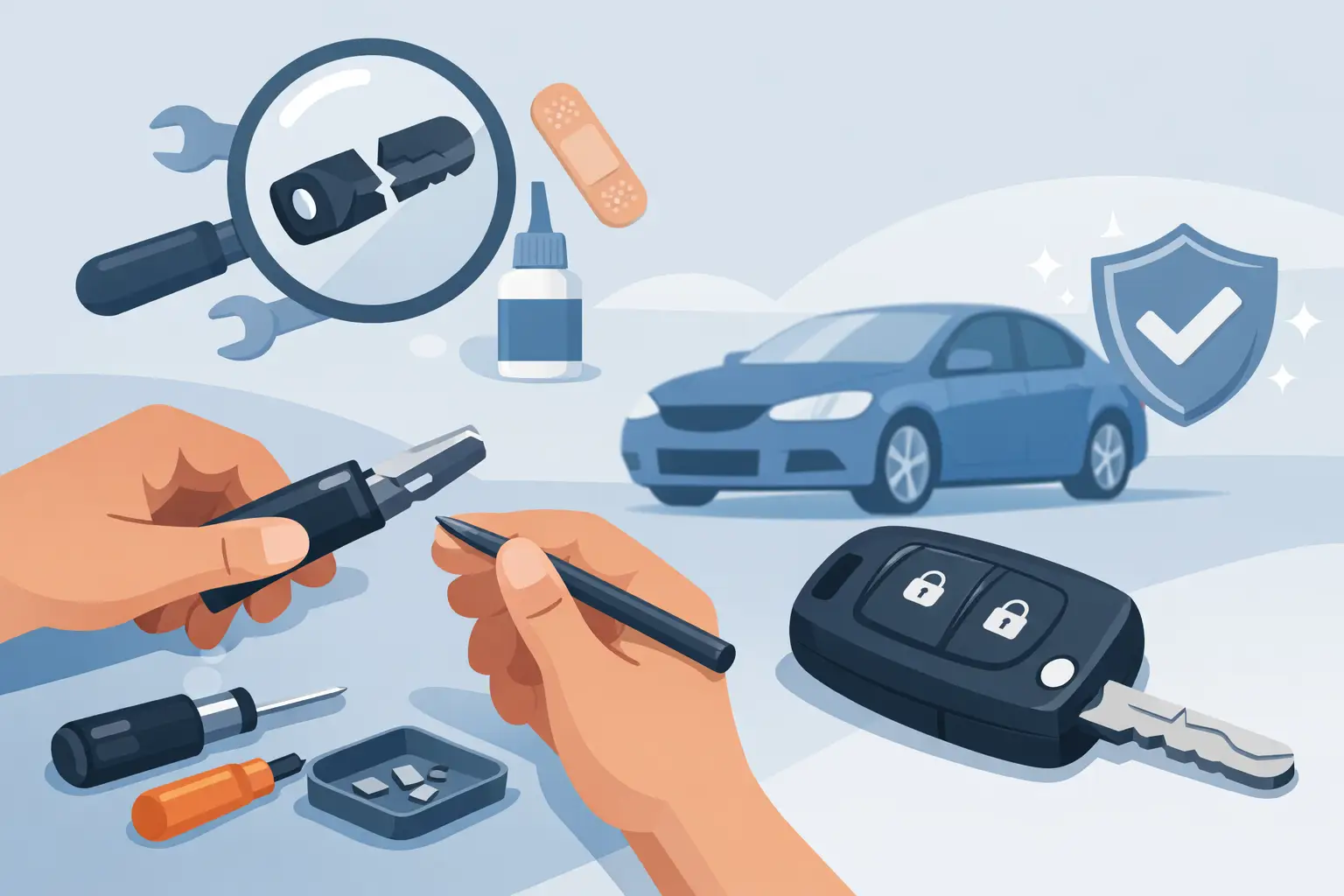
A car key rarely snaps at a convenient moment. It usually happens when you are late for work, loading the kids into the car, or stopped somewhere you cannot leave the vehicle. Knowing how to fix snapped car key trouble starts with one rule: do not force either piece. A quick improvised repair can damage the ignition, leave metal lodged in the lock, or turn a simple replacement into a larger repair.
The right solution depends on where the key broke, what type of key your vehicle uses, and whether you have a working spare. Modern vehicle keys are not just shaped pieces of metal. Many contain a transponder chip, remote electronics, or both, so getting the blade back together does not necessarily mean the car will start.
First, check where the key snapped
If the key broke outside the vehicle, keep both pieces. Put them somewhere safe and avoid trying to tape or glue the blade back together for use in the ignition. A glued key may turn once, then break again under pressure and leave the tip inside the ignition cylinder. That can prevent the vehicle from starting even after a replacement key has been made.
If the key snapped while it was still in the ignition, door lock, trunk lock, or fuel cap, do not turn the remaining piece with pliers. Pliers can distort the blade, scratch the lock, and push the broken section farther in. Avoid pouring oil, household lubricant, or superglue into the keyway as well. Superglue is particularly risky because it can bond the broken blade to internal lock components.
Look closely at the break. If a good length of the key blade is sticking out and the vehicle is parked safely, it may be possible for a locksmith to remove it cleanly using specialist extraction tools. If the broken tip is flush with the opening or deep inside, it should be treated as an extraction job rather than a DIY project.
How to fix snapped car key issues safely
There are three common situations, and each has a different practical fix.
The key broke but both pieces are out
This is usually the simplest outcome. Keep both pieces, along with any spare key you have. A mobile auto locksmith can often use the original blade profile to cut a replacement accurately, even if the old key is badly worn. For a transponder or remote key, the replacement may also need programming before it will start the vehicle.
Do not assume a hardware-store copy is enough. Some cars will unlock with an unprogrammed key but will not start because the immobilizer does not recognize the chip. Others have remote buttons that need separate programming. The exact process depends on the make, model, and year.
If you have a working spare, use it gently until a proper replacement is made. A spare is a temporary way to stay mobile, not a reason to ignore the broken key. If the original snapped because the blade was worn or the ignition was stiff, the spare may be under the same strain.
The blade is stuck in the ignition or lock
A broken blade inside the ignition needs careful removal. The lock has small internal parts that align with the cuts on the key. Digging into it with a paperclip, screwdriver, tweezers, or a broken-key extractor bought online can damage those parts or push the blade deeper.
A qualified auto locksmith will assess whether the key can be extracted without removing the ignition. In many cases, it can. Once the piece is out, the locksmith can cut and program a replacement on-site. If the ignition cylinder has been damaged, worn, or is causing keys to bind, it may need repair or replacement too.
This is one situation where stopping early saves money. Calling for help before the lock is damaged is normally faster and less expensive than forcing a key out and needing an ignition repair afterward.
The plastic key head or remote casing broke
Sometimes the metal blade is intact, but the plastic head, flip-key hinge, or remote shell has cracked apart. This can be less urgent, but it still deserves attention. If the transponder chip falls out or is damaged, the vehicle may crank but not start. With some keys, the chip is a tiny separate component inside the casing and is easy to lose.
If the blade and electronics still work, a replacement key shell may be an option. However, the chip must be transferred correctly, and the blade may need moving or recutting. If the remote buttons, circuit board, or chip are damaged, a full replacement and programming may be the safer choice.
Why car keys snap in the first place
Keys usually give warning signs before they break. The blade may look rounded, thin, bent, or cracked near the plastic head. It may need wiggling before it turns, feel unusually tight in the ignition, or work in one door but not another. Those are signs to arrange a replacement before you are stranded.
Wear is especially common with older metal keys. Every time a worn key enters the ignition, it puts additional strain on the blade and the internal pins. Heavy key rings can make the problem worse by adding weight and movement while driving. A sticky ignition can also put excessive twisting force on a perfectly good key.
The key is not always the only fault. If a replacement key also sticks, turns roughly, or starts to show fresh wear quickly, the ignition lock cylinder may need attention. Replacing keys without dealing with a damaged ignition can lead to the same breakdown again.
When a spare key is enough and when it is not
A working spare can get you home or keep your day moving, but it does not solve every snapped-key problem. If the broken blade is completely out and the spare starts the car normally, you can usually arrange a replacement at a convenient time. Keep the spare separate from the broken pieces and do not wait until it is your only key.
You need prompt professional help if the car will not start, the broken blade is stuck, the key has snapped in the ignition, or the vehicle uses a smart key that is no longer detected. The same applies if you have lost the transponder chip, have no spare at all, or suspect someone may have access to a lost portion of the key.
For security-sensitive situations, an auto locksmith may be able to delete missing or stolen keys from the vehicle’s memory and program new keys. That is different from simply cutting a blade, and it can provide useful peace of mind when the key has not just broken but gone missing.
What a mobile auto locksmith can do on-site
The biggest advantage of a mobile service is that the work comes to the vehicle. There is no need to arrange a tow because the key is stuck in the ignition or wait for a dealership appointment simply to get a usable key.
A properly equipped auto locksmith can identify the key type, extract a broken blade where possible, cut a new key, transfer or replace the transponder, and program the key to the vehicle. They can also assess an ignition that is causing the key to bind. Pricing depends on the vehicle, the key technology, whether all keys are lost, and whether an extraction or ignition repair is required, but you should always ask what work is included before it begins.
For drivers across the West Midlands and Warwickshire, Car Key Maker provides mobile help for broken keys, replacement keys, programming, and ignition faults. The aim is straightforward: get the vehicle working again without adding unnecessary delay or damage.
Avoid these mistakes while you wait
Do not try to drive with a key that has been taped, glued, or clamped back together. Do not start taking apart dashboard panels around the ignition, and do not force a spare key if the ignition feels tight. These actions can turn a key problem into a lock, ignition, or electrical problem.
Instead, keep every piece of the broken key, make a note of the vehicle make, model, year, and location, and have proof of ownership available. If the car is in an unsafe position, prioritize getting yourself and any passengers somewhere secure before arranging assistance.
A snapped key is frustrating, but it does not have to mean a lost day. Leave the lock alone, protect the broken pieces, and get the right help before a small break becomes an expensive ignition repair.