
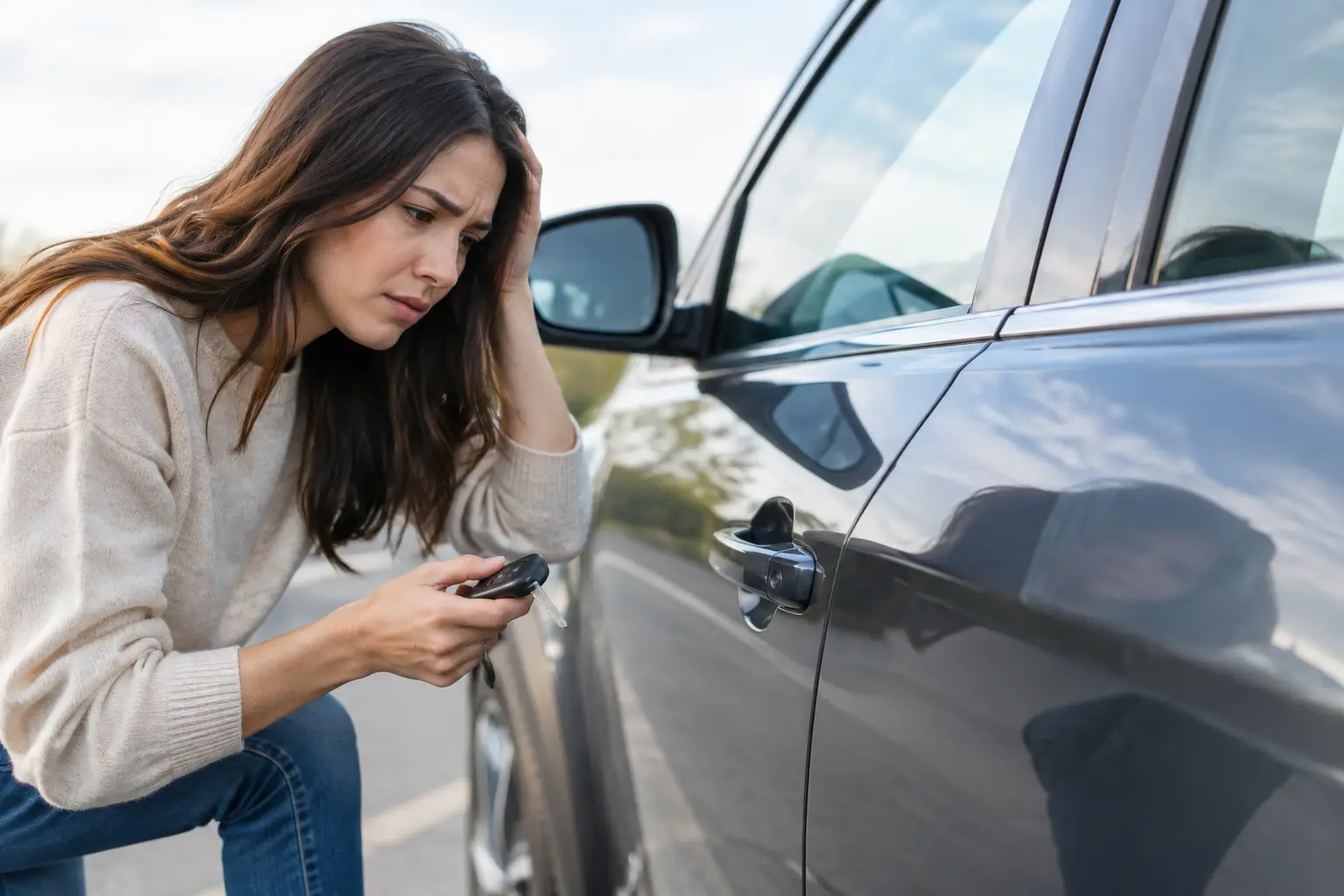
You have shut the door, heard the locks engage and seen your keys sitting on the seat or in the boot. It is a frustrating moment, especially when you are heading to work, collecting children or parked somewhere unfamiliar. Locked keys in car – what are my options? The right answer depends on where you are, who is with you and whether there is any immediate risk, but forcing entry is rarely the solution.
Deal with immediate danger first
If a child, vulnerable person or animal is locked inside the vehicle, treat it as an emergency. Call 999 straight away if there is any risk from heat, cold, distress or a medical condition. Tell the operator your location, the vehicle details and why the person inside may be in danger.
Do not spend valuable time trying random methods while someone is at risk. Emergency services can decide the safest response. If you need to break a window to protect life, choose the window furthest from the person inside where possible, but only when there is no safer alternative and the situation genuinely requires it.
If nobody is trapped and the vehicle is secure, take a breath before acting. Check that you are somewhere safe, particularly if you are on a busy road, motorway hard shoulder or poorly lit area. Move away from traffic and call for professional help from a safe position.
Locked keys in car: what are my options?
For most drivers, there are four sensible routes: use a spare key, use an approved connected-car app if it was already set up, call a mobile auto locksmith or arrange recovery. The best choice is the one that gets you back into the vehicle without damaging the locks, glass, trim or electrical systems.
A spare key can be the quickest solution when it is genuinely close by. A family member may have one at home, or you may have left one with a trusted neighbour. Before asking someone to travel across town, consider their journey time and whether you will still be safely parked when they arrive.
Some newer vehicles can be opened through the manufacturer’s app or remote services. This only works if you registered the car, activated the service and have a working phone signal and account access. It is worth checking, but do not rely on it as your only plan. App services can be unavailable, subscriptions may have expired and not every model supports remote door opening.
For a straightforward lockout, a mobile auto locksmith is usually the most practical option. A qualified locksmith can travel to the vehicle, gain entry using suitable non-destructive methods and help you get moving again. If the key has been lost rather than simply left inside, they may also be able to produce and programme a replacement key on site.
Recovery can be useful when access is only one part of a bigger problem, such as a vehicle that will not start after entry is gained. However, a recovery provider may not always be equipped to open modern vehicles or deal with immobiliser and key programming faults. It can turn one problem into a longer wait for another specialist.
Why forcing the door is a bad idea
A coat hanger, screwdriver, wire or improvised wedge may look tempting when the keys are in sight. In reality, modern vehicles are not designed to be opened this way. The risks go well beyond a scratched door.
Forcing a gap around the frame can bend the door, damage the seal and create wind noise or water leaks that appear later. Prodding inside the door can catch wiring, side-impact components or locking mechanisms. Breaking a small window may seem faster, but leaves glass in the cabin and creates a security issue until it is repaired.
You can also make a simple lockout harder to resolve. Damaged locks, a bent frame or a failed central-locking mechanism may require additional repairs before the vehicle is secure again. Professional entry methods are designed to protect the vehicle while restoring access.
What a mobile auto locksmith can do at the roadside
A specialist does more than try a door handle. They identify the vehicle, assess the lockout and use the appropriate tools and technique for that make and model. The aim is to gain access without harming the vehicle, then check that the lock and central locking still operate as they should.
If your keys are visible inside, the job may be limited to non-destructive entry. If they are in the boot, the approach may differ depending on the vehicle and whether the boot release can be operated safely from inside the cabin. If the key has snapped, stopped communicating with the car or will not turn in the ignition, the locksmith can assess the underlying fault rather than treating it as a basic lockout.
Many modern keys contain transponders, remote electronics and immobiliser programming. A key can look intact but fail to start the car because its chip is damaged or no longer recognised. Car Key Maker provides mobile assistance across the West Midlands and Warwickshire for lockouts, replacement keys, remote issues and ignition lock barrel faults, so the right work can be completed where the vehicle is parked.
Be ready to prove the vehicle is yours
A reputable auto locksmith will need to confirm that you are authorised to access the vehicle. This protects you, the vehicle owner and the locksmith. Have photo identification available, along with your vehicle registration document, insurance details or another document that connects you to the car where possible.
Do not worry if every document is locked inside. Explain that when you call. There are often other ways to verify ownership, and the locksmith can tell you what will be needed before work starts. Clear information helps avoid delays once they arrive.
When making the call, give the registration, make, model, year if known and your exact location. Mention whether the keys are on a seat, in the boot, in the ignition or completely missing. Also explain if the vehicle has keyless entry, an alarm that may sound or a known fault with the lock. These details help the locksmith arrive prepared.
When the problem is more than keys left inside
Sometimes a lockout exposes another issue. The central locking may have failed and locked the car unexpectedly. A worn key blade may no longer turn the door lock. On keyless vehicles, a flat key-fob battery can prevent normal access even though the emergency blade is still available.
If you have lost your only key, do not assume a dealership visit and tow are your only options. A capable automotive locksmith can often create a new key, programme it to the vehicle and remove lost keys from the system when security is a concern. That matters if the keys were stolen or may have been dropped near the car.
A key that opens the door but will not start the vehicle could point to an immobiliser issue, a damaged transponder, a faulty remote or an ignition problem. Tell the locksmith exactly what happened before the failure. For example, whether the key was dropped, got wet, became difficult to turn or worked intermittently. Those details can save time and lead to the correct repair.
Reduce the chance of another lockout
Once you are back in the car, take a few simple precautions. Keep a properly working spare key somewhere secure, rather than hidden on the vehicle. Replace a weak key-fob battery before it leaves you relying on the emergency blade. If your key is cracked, worn or occasionally fails to respond, arrange a replacement before it becomes an urgent problem.
For drivers who share a vehicle, agree who holds the spare and where it is stored. Tradespeople and business vehicle users should be especially careful: a lockout can interrupt a full day of jobs, delay deliveries and leave valuable equipment inaccessible in the boot. A tested spare key is a small safeguard with a real practical benefit.
Being locked out is stressful, but it does not have to turn into vehicle damage or a long disruption. Stay safe, resist improvised entry methods and choose help that can deal with the vehicle in front of you, not just open a door.