
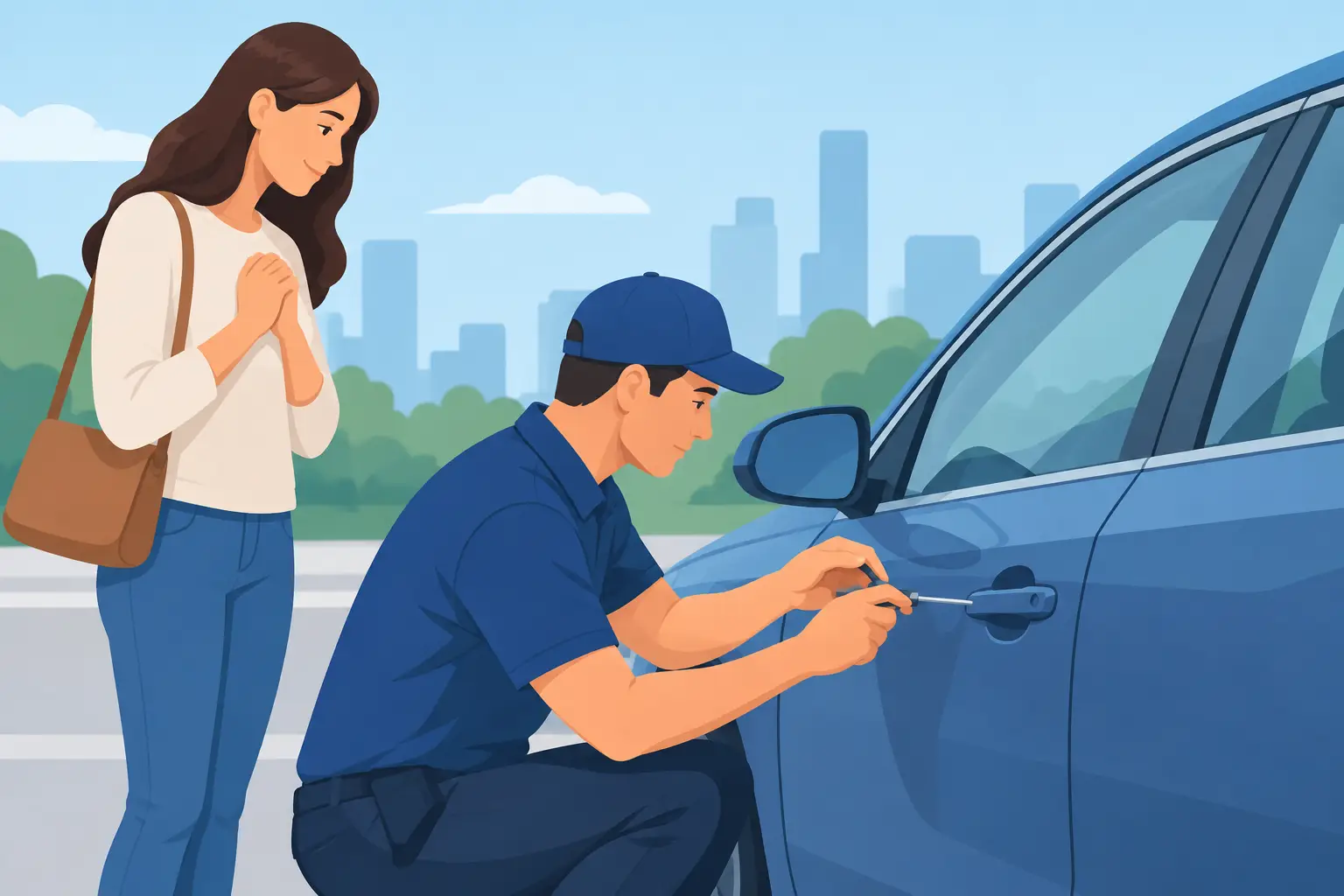
A vehicle lockout can turn an ordinary school run, commute or work call-out into a stressful stop. One moment the keys are on the seat, in the boot or missing altogether. The next, you are outside the vehicle with no safe way to get back in. The right response is not to force a door or break a window. It is to protect yourself, protect the vehicle and get a proper solution moving quickly.
For most drivers, a mobile auto locksmith is the practical answer. A specialist can come to your location, gain entry without unnecessary damage and assess whether the issue is simply access or part of a wider key, remote, immobiliser or ignition fault.
What to do first during a vehicle lockout
Start by checking the obvious without repeatedly pulling handles or pressing the remote. Check every door and the boot, particularly if you have central locking that may have behaved unexpectedly. If you have a spare key at home, consider whether someone can bring it to you. That can be useful when you are safely parked nearby, but it is rarely the best option if you are stranded far from home, on a busy road or need the vehicle urgently.
Your location matters. Move away from traffic if you can do so safely, keep visible in poor weather or darkness, and do not leave children or vulnerable passengers exposed to the cold. If a child, pet or person is locked inside the vehicle and is in distress or danger, call 999 immediately. A locksmith can assist with access, but an emergency service response is the priority where life or health could be at risk.
Once everyone is safe, take a moment to establish what happened. Were the keys visibly left inside? Has the remote stopped working? Did the key snap in the lock? Has the vehicle locked itself with the engine running? These details help a locksmith arrive prepared for the job.
Why forcing entry is rarely worth the risk
It is tempting to try coat hangers, wedges, screwdrivers or online tricks when you are locked out. Modern vehicles are not built like older cars, and improvised entry attempts often create a second problem. Door frames can bend, weather seals can tear, airbags and wiring can be affected, and locking mechanisms can be damaged behind the door skin.
Even when a DIY method appears to work, it can leave behind wind noise, water leaks, warning lights or a lock that no longer operates correctly. Some vehicles also deadlock, meaning an internal handle or simple reach-through method will not release the door. Others have laminated glass, protected mechanisms and electronic security systems that make forced entry a poor choice.
A professional vehicle lockout service uses specialist methods suited to the vehicle and the situation. The aim is controlled, non-destructive entry wherever possible, followed by checks to make sure the lock, remote and central locking still work as they should.
If the keys are locked in the boot
Keys in the boot can be more complicated than keys on a seat, especially when the boot release is electronic or the vehicle has deadlocking. Do not force the boot lid or attempt to pry around the number plate area. A mobile locksmith can assess the vehicle’s access points and open it using the correct approach, without turning a simple lockout into bodywork or electrical damage.
If the key is lost rather than locked inside
A lost key is not always a straightforward entry job. You may need the vehicle opened, a replacement key made and programmed, and the lost key removed from the vehicle’s memory where security is a concern. This is particularly relevant if you do not know where the key was lost or believe it may have been stolen.
The vehicle can often be dealt with on-site, saving the inconvenience of arranging recovery or waiting for a dealership appointment. Identification and proof that you are entitled to access the vehicle will be required. This protects you as well as the vehicle.
When a lockout points to a key or remote fault
Not every apparent lockout is caused by leaving keys inside. Sometimes the vehicle will not respond because the remote battery is flat, the key blade is worn, the remote buttons are damaged or the key has lost synchronisation. You may be able to unlock the door mechanically, but still be unable to start the vehicle.
A warning light, a message about the key not being detected, or an engine that turns over but will not start can point to an immobiliser-related issue. In other cases, a worn ignition lock barrel may make the key difficult to turn or trap it in the ignition. These faults require a proper diagnosis rather than repeated force on the key.
An experienced auto locksmith can look at the whole problem. That may mean getting you into the vehicle, testing the key and remote, cutting a replacement blade, repairing a remote, programming a new key or dealing with an ignition barrel fault. Handling the cause as well as the immediate lockout can prevent the same problem happening again at the next stop.
What a mobile auto locksmith needs from you
Clear information helps speed up the response. When you call, have the vehicle make, model, registration and approximate year ready if possible. Explain whether the keys are inside, lost, broken or not responding, and say where the vehicle is parked. A driveway, supermarket car park, roadside lay-by and workplace may each need a slightly different approach.
You will also need proof of ownership or authority to access the vehicle. This may be your driving licence, vehicle registration document, insurance details or other suitable identification. If those documents are inside the locked vehicle, say so when booking. A legitimate locksmith will explain what is needed and work with you sensibly, while keeping security at the centre of the job.
It also helps to mention any previous work or unusual symptoms. For example, tell the locksmith if the key has been sticking for weeks, the remote only works at close range, the car battery is weak, or the vehicle has recently had accident repairs. Small details can make diagnosis faster once access is gained.
Preventing the next vehicle lockout
You cannot prevent every problem, particularly when a key fails without warning. But a few habits reduce the chance of being stranded. Keep a spare key somewhere secure away from the vehicle, rather than hidden inside it. If your main key starts needing repeated button presses, feels loose, has a cracked case or becomes hard to turn, arrange for it to be checked before it fails completely.
Avoid keeping a heavy bundle of keys on the ignition key, as extra weight can contribute to wear over time. Protect electronic keys from water damage and do not ignore intermittent remote faults. A key that works only occasionally is giving you useful warning.
For families and businesses with several drivers, decide who holds the spare and make sure everyone knows how to reach them. Tradespeople who rely on a van for daily work should be especially alert to worn keys and failing remotes, because a lockout can stop the whole day.
Fast help where you are
Being locked out does not mean you need to tow the vehicle or wait around for a dealership solution. Car Key Maker provides mobile vehicle lockout assistance across the West Midlands, Warwickshire and nearby areas, bringing specialist equipment directly to the vehicle. The focus is simple: gain access carefully, identify any related key or lock issue, and help get you back on the road.
If your keys are inside, lost, broken or no longer recognised by the car, avoid making the situation worse with forced entry. Get somewhere safe, have your vehicle details ready, and arrange qualified help. A calm, professional response is often the quickest route from standing outside your car to carrying on with your day.