
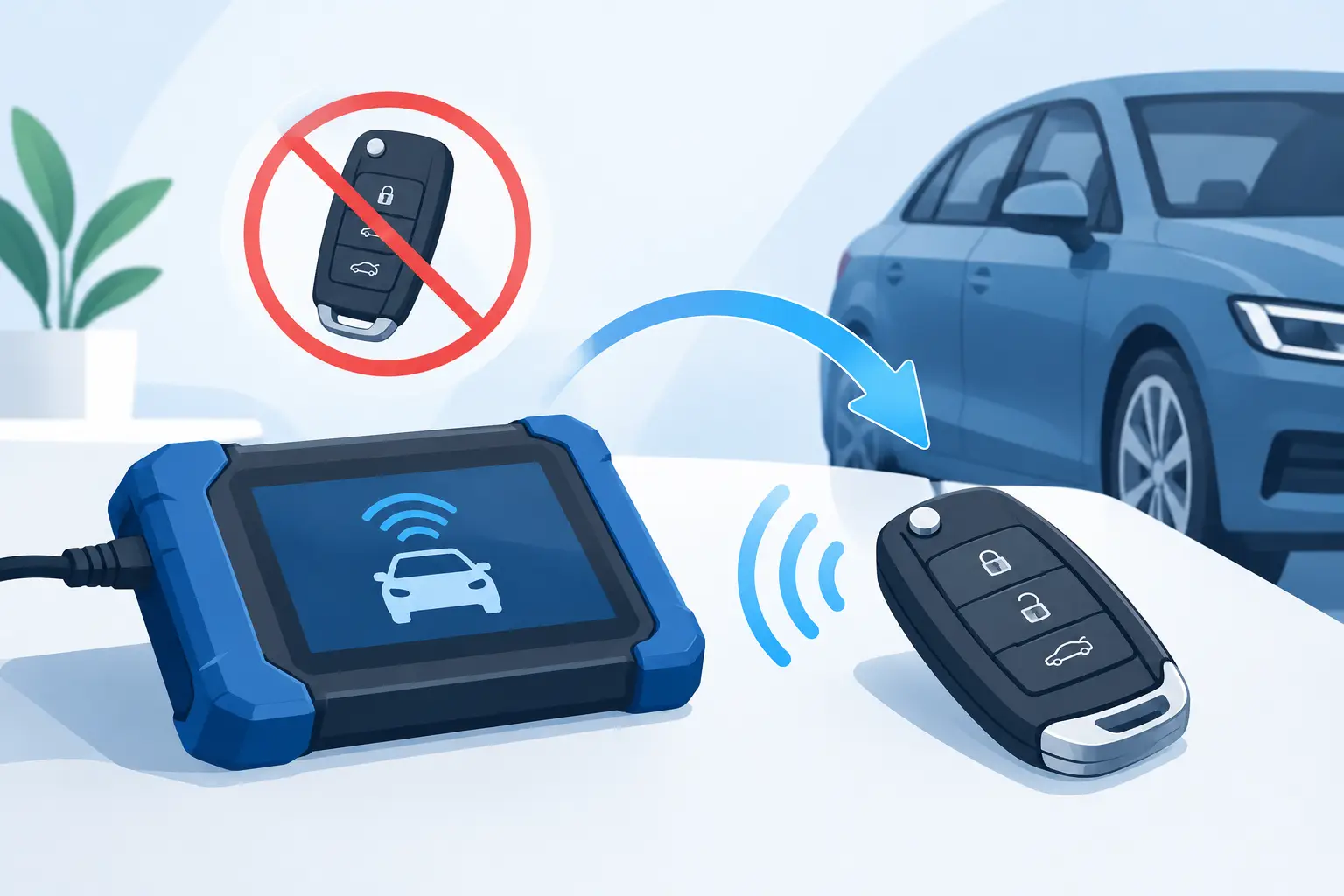
Losing your only car key can stop your whole day in its tracks. The good news is that, in many cases, can you programme a car key without the original? Yes – a qualified auto locksmith can often create and programme a working replacement key even when every original has gone missing.
The exact method depends on the vehicle, its age, the type of key and the condition of its locks and electronics. This is not simply a case of cutting a new metal blade. Most modern vehicles need a key that is correctly cut, fitted with the right transponder chip or remote, and matched to the car’s immobiliser before the engine will start.
Can You Program a Car Key Without the Original?
For most cars, vans and many commercial vehicles, the answer is yes. An experienced automotive locksmith can produce a replacement from scratch using specialist diagnostic equipment, key-cutting machinery and vehicle-specific programming methods.
The original key is useful, but it is not always essential. When a working key is available, it can provide information that makes duplication quicker. Without it, the locksmith has to identify the correct key profile, access the vehicle’s key or immobiliser data where appropriate, cut a new blade or emergency key, then programme the replacement to communicate with the vehicle.
This is commonly known as an all-keys-lost job. It is a routine type of call-out for a properly equipped mobile auto locksmith, although some vehicles are more involved than others.
Older cars with a basic mechanical key can be straightforward. Cars with a transponder chip need the chip coded to the immobiliser. Remote and flip keys need both the starting function and the remote locking functions checked. Keyless entry and push-button start vehicles can require more advanced programming and, in some cases, additional security procedures.
What Has to Be Done When All Keys Are Lost?
A replacement only counts as a proper solution when it opens the car and starts it reliably. The work usually involves several stages, completed at your vehicle rather than requiring a trip to a dealership.
First, the locksmith confirms ownership and identifies the vehicle correctly. You should expect to provide photo identification and proof that you are entitled to have a key made. This protects you and helps prevent keys being supplied to the wrong person.
Next comes the physical key. Depending on the vehicle, this may involve decoding an existing door lock, using authorised key data, or removing and reading a lock component where necessary. The blade is then precision-cut to suit the vehicle. A key that turns poorly, sticks in the ignition or only works in one lock is not a job finished properly.
The electronic side is just as important. Modern keys contain a transponder, which sends a coded signal to the immobiliser. If that signal is missing or incorrect, the dashboard may light up but the engine will not start. A locksmith programmes the correct transponder or smart key to the vehicle, then tests the starting function, central locking and remote buttons where fitted.
On certain models, the process may also involve adding the new key through the vehicle’s diagnostic system. Some cars have security gateways or manufacturer-specific systems that require the right equipment, current knowledge and careful handling. Trying shortcuts can leave a car unable to start or trigger further faults.
The Type of Key Makes a Difference
Not all lost keys are alike. The vehicle may use a simple metal key, a chipped ignition key, a remote flip key, a proximity fob or a key card. Each has different parts and programming requirements.
A plain mechanical key mainly needs accurate cutting. It may get you into the car, but it will not start a vehicle fitted with an immobiliser unless the correctly programmed chip is present too. This catches out many drivers who assume a copied blade alone will solve the problem.
With a transponder key, the chip must be matched to the immobiliser. With remote keys, the buttons also need to operate the doors, boot and alarm as intended. With proximity keys, the vehicle must detect the fob inside the cabin before allowing the engine to start. These jobs need specialist tools and the correct key for the exact vehicle specification.
Even two cars of the same make and year may not take the same key. Trim level, engine variant, market specification and previous repairs can all affect the required part and procedure. That is why a reliable locksmith will ask for the registration, make, model, year and, where available, the vehicle identification number before attending.
When Programming Without the Original Can Be More Difficult
Most all-keys-lost situations can be resolved, but there are circumstances that can add time or require extra investigation. Water damage, an aftermarket alarm, a replacement engine control unit, a damaged ignition barrel or previous poor-quality key work can all complicate matters.
A vehicle with a worn or damaged lock may also need attention before a replacement key can be cut accurately. If the key has snapped in the ignition, the broken section needs removing safely. Forcing it out with unsuitable tools can damage the barrel and create a larger repair.
Some newer vehicles have stronger anti-theft protection, particularly keyless models. This is there for a good reason. A professional locksmith works through the correct process, verifies ownership and uses equipment designed for the vehicle rather than attempting a risky workaround.
Occasionally, the issue is not actually the key. A flat vehicle battery, failed remote battery, faulty aerial ring, damaged wiring or immobiliser fault can look like a programming problem. Proper testing matters because making a new key will not repair an electrical fault elsewhere in the car.
Why DIY Programming Often Goes Wrong
There are online guides and low-cost programming devices that promise a quick fix. They can be tempting when you are stranded, but modern vehicle security is not designed for trial and error.
The biggest problem is buying the wrong blank or remote. It may look identical but contain an incompatible chip, frequency or circuit board. Some used keys cannot be reused on another vehicle without specialist preparation, while others are locked to the car they came from.
There is also a risk of corrupting key data or putting the vehicle into a state where it will not recognise any key. A remote may appear to programme successfully yet still fail to start the engine. Conversely, a transponder may start the car but leave the locking buttons inoperative. These are separate functions on many vehicles.
If you have a working spare, keep it safe and have it checked before it becomes your only option. If all keys are already lost, calling a mobile specialist is generally the safest route to getting the vehicle back in use without unnecessary disruption.
Should Old Keys Be Deleted After a Key Is Lost or Stolen?
If a key has been stolen, deleting it from the vehicle is often just as important as making a new one. Cutting and programming a replacement gets you moving again, but the missing key may still be recognised by the immobiliser or remote system if it is not removed from the car’s memory.
A locksmith can assess whether old keys can be erased and ensure the keys you still hold are the only ones authorised to start the vehicle. Where there is a concern that someone knows where the car is kept, lock or ignition work may also be worth discussing. The right response depends on the vehicle and the circumstances, not a one-size-fits-all answer.
What to Have Ready for a Mobile Locksmith
To avoid delay, have your vehicle registration, make, model, approximate year and location ready when you call. Let the locksmith know whether every key is lost, one key is broken, the key is locked inside, or the car is showing an immobiliser warning. If you have the vehicle identification number or documents available, that can also help confirm the correct replacement.
Car Key Maker provides mobile vehicle key help across the West Midlands and Warwickshire, bringing the equipment needed to cut, programme and test replacement keys at the roadside, at home or at work. The aim is simple: deal with the actual fault and get you back to using your vehicle properly.
If your only key has disappeared, do not keep forcing the locks or repeatedly trying a damaged fob. Keep the vehicle secure, gather your proof of ownership and get specialist help. A missing original key does not automatically mean a long wait or a dealership visit.