
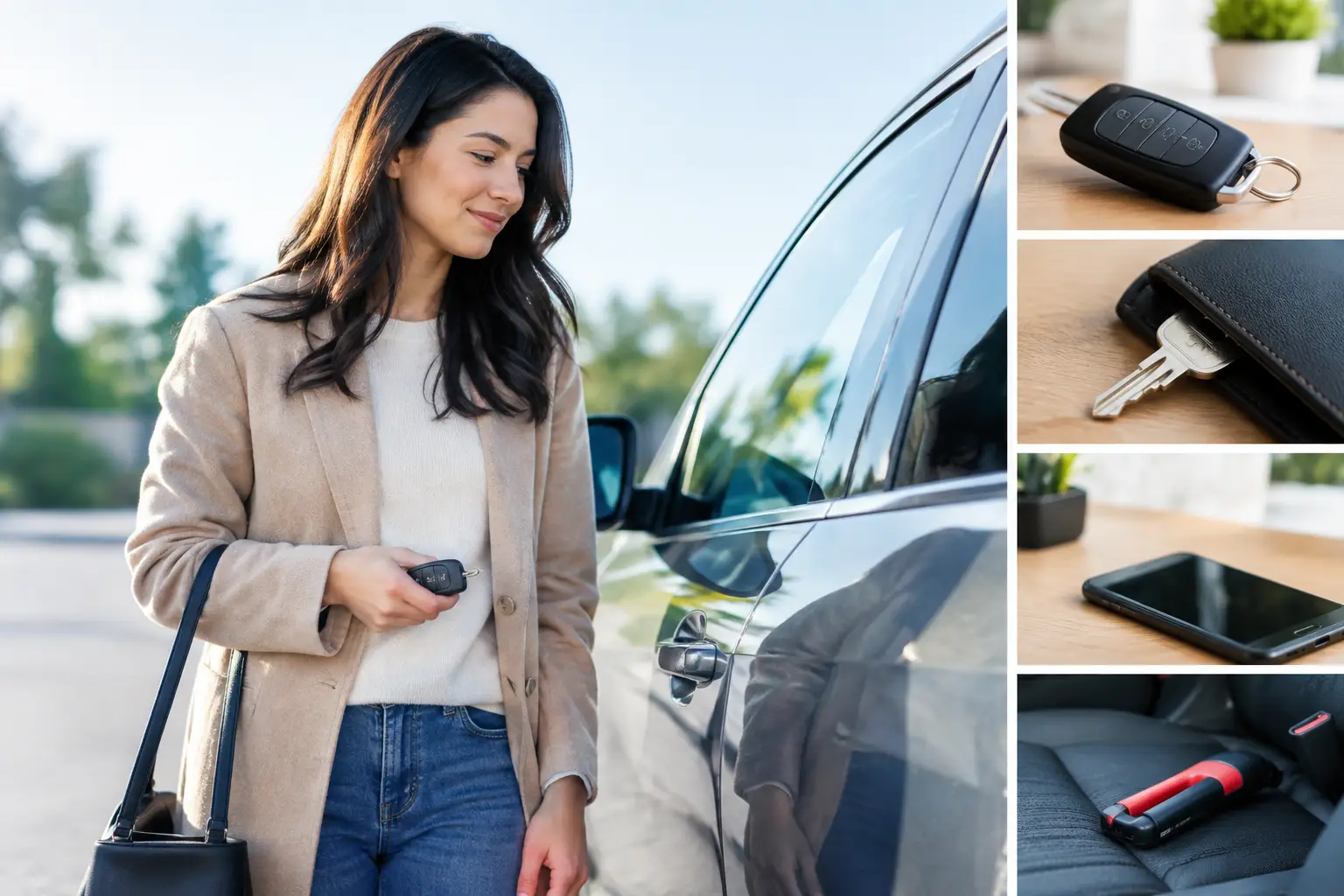
A car lockout rarely happens when you have time to spare. It is usually outside the house on a wet morning, at the petrol station, on a school run or halfway through a working day. The good news is that a few simple routines can prevent car lockouts before they leave you stranded beside your vehicle.
Modern cars make everyday driving easier, but keyless entry, dead fobs and automatic locking can create new ways to lose access. A spare key helps, but prevention is more than putting one in a drawer. It means knowing how your own vehicle behaves, noticing early signs of key trouble and having a sensible backup plan.
1. Make one place for your keys
Most lockouts start before you reach the car. Keys get left on a kitchen worktop, put in a coat pocket that is not being worn, or picked up alongside shopping bags and then set down somewhere unexpected.
Choose one visible place at home for all vehicle keys. A hook, bowl or tray near the door works well, provided it is not in easy reach of a letterbox or window. When you return home, put the key there straight away. When leaving, take the key before coats, bags and everything else.
This sounds basic, but routine beats memory when you are rushing. If two people share the vehicle, agree on the same place. A spare key cannot help if nobody knows where it was last seen.
2. Do not leave keys in the car while loading
It takes only seconds to put bags in the boot, strap in a child or return a trolley. That is also enough time for a vehicle to lock itself, particularly if the key is inside and a door or boot has been closed.
Keep the key on your person until you are in the driver’s seat. A zipped pocket, handbag compartment or belt pouch is safer than placing it on a seat, in a cup holder or on the boot floor while loading. For tradespeople, this matters even more when tools, materials and several vehicle doors are being opened and shut throughout the day.
Be especially careful with keyless cars. Some models will warn you that the fob is still inside, but a warning is not a guarantee. The vehicle may behave differently if the battery is weak, another fob is nearby or the boot is shut separately from the doors.
3. Learn your car’s locking behaviour
Automatic locking is useful until it catches you out. Some cars re-lock after a short period if no door is opened. Others can lock when the driver’s door is shut, while certain vans and older vehicles have their own quirks.
Take five minutes to check your handbook or test the locking behaviour safely at home with a window open and the key in hand. Find out whether the car locks itself after you unlock it, whether the boot can be opened independently, and how it responds when a keyless fob is left inside.
You should also know whether your physical emergency key can open the driver’s door. Many remote fobs have a concealed metal blade, but owners are often unaware of it until the remote battery fails. Knowing where the release catch is and how the blade works can save a stressful wait later.
4. Replace weak key fob batteries early
A remote key does not normally stop working without warning. You may notice that you need to stand closer to the car, press the button more than once or aim the fob directly at the vehicle. Keyless entry may become inconsistent, or the dashboard may show a low key battery message.
Do not ignore these signs. Replace the battery with the correct type before it fails completely, and check that the fob works afterwards. If you are unsure how to open it without damaging the case, get advice first. Forcing a fob apart can crack the casing, damage the buttons or dislodge small internal parts.
A new battery will not fix every fault. If the remote remains unreliable, the problem could be worn buttons, damaged circuit boards, water ingress or an issue with the vehicle rather than the fob. Dealing with it early is far easier than finding out the key will not communicate with the car when you are away from home.
5. Keep a spare key, but store it properly
A working spare key is one of the best protections against a lockout, provided it is accessible when you need it. Keeping both keys in the same bag, drawer or glovebox defeats the point. If they are lost or locked inside together, you have no backup.
Store the spare securely at home, ideally with someone you trust having access if you are often away. For a family car, make sure the other driver knows where it is and can recognise it. For a business vehicle, set a clear process for who holds the spare and when it is returned.
Avoid hiding a key on or underneath the vehicle. Apart from the security risk, dirt, moisture and road grime can damage it, and a thief knows the usual hiding places. A hidden key is not a reliable spare key.
It is also worth checking the spare occasionally. A key that has sat untouched for years may have a flat battery, worn blade or remote fault. Test both locking and starting functions, particularly before a long journey or holiday.
6. Treat a sticking key or ignition as an early warning
A key that feels rough in the door, sticks in the ignition or needs wiggling to turn is asking for attention. It may be a worn key blade, a tired lock barrel, dirt in the mechanism or damage developing inside the ignition.
Do not keep forcing it. A snapped key blade or seized ignition can leave you unable to secure the car, get into it or start it. Avoid using excessive pressure, pliers or lubricants that are not intended for vehicle locks. Those quick fixes can push debris deeper into the lock or cause further damage.
If your key has bent, cracked, split at the head or lost part of its blade, arrange a replacement before it becomes an emergency. The same applies if a key only starts the vehicle after several attempts. That is not normal wear to put off indefinitely.
7. Build a lockout check into your day
The most effective way to prevent car lockouts is a short check before every door closes. It should become automatic: key in pocket, key in hand or key safely in the ignition. Never rely on the thought that you probably put it somewhere safe.
For parents, make the check after unloading children and before closing the final door. For delivery drivers and tradespeople, check before shutting the side door or boot. For anyone with a keyless car, physically touch the fob in your pocket before closing up. That small action takes a second and prevents a great deal of disruption.
If you have recently changed bags, coats or routines, be more deliberate for a few days. Lockouts often happen during these small changes, not because the driver is careless, but because their usual habit has been interrupted.
When prevention is not enough
Even careful drivers can be locked out. A fob can fail without warning, a key can break, a child can press the central locking button, or the car can develop an electrical fault. If it happens, do not try to force a door, bend the frame or break a window. Modern vehicles can be damaged quickly, and attempted entry can affect locks, weather seals, wiring and alarms.
Stay somewhere safe, check whether a spare key can realistically be brought to you, and use a qualified auto locksmith who can assess the vehicle properly. A mobile specialist can help gain entry without unnecessary damage and deal with a failed key or lock if that is the underlying issue. Car Key Maker provides on-site help across the West Midlands and Warwickshire when a lockout cannot wait.
The best habit is simple: before the final door shuts, know exactly where your key is. It is a small pause that keeps a routine journey from turning into a long, frustrating delay.