
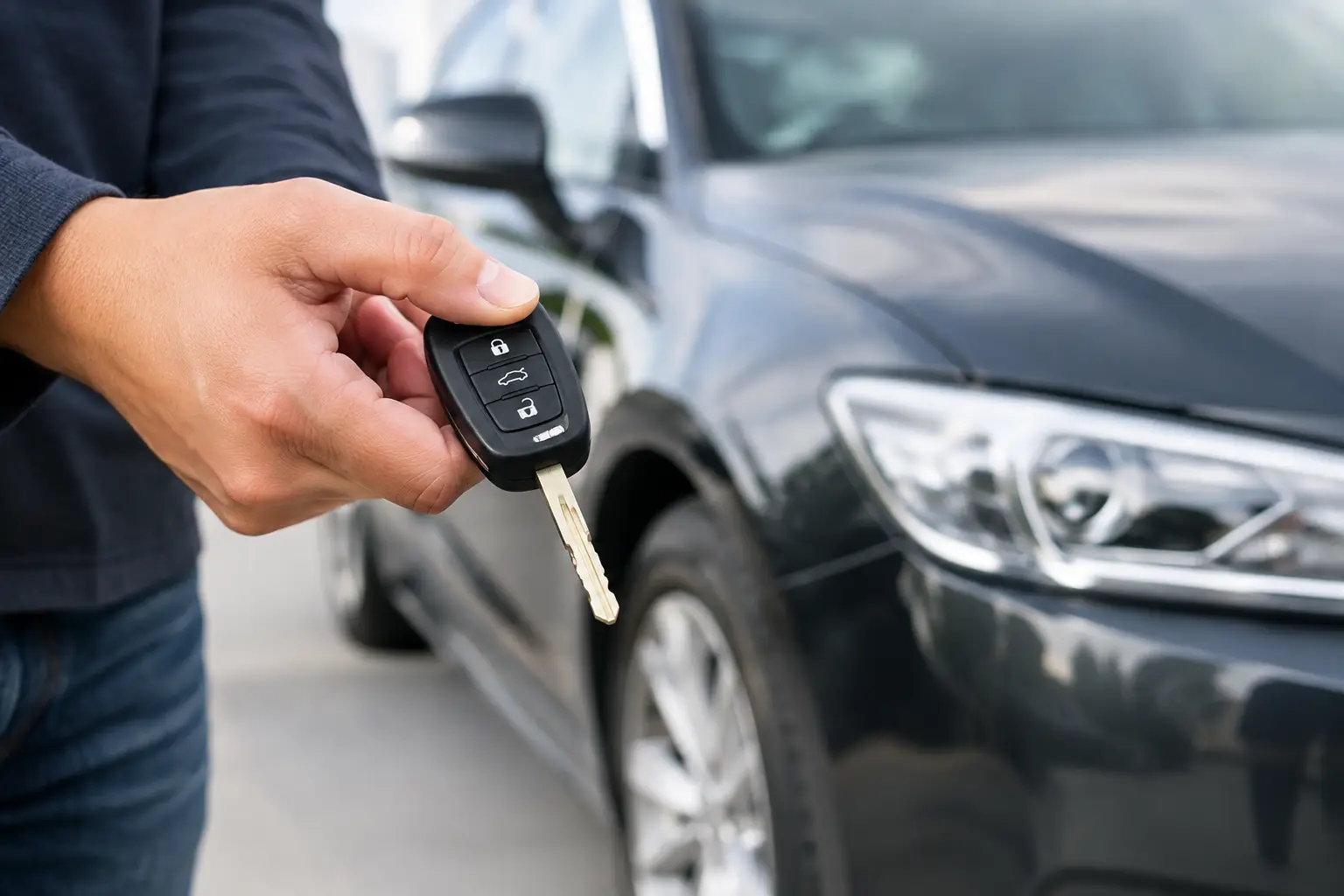
A stolen car key is not the same as a misplaced one. If somebody has taken your keys, they may have access to your vehicle, its contents and potentially your home address too. The best stolen key precautions are about acting quickly: secure the car, stop the stolen key from starting it and remove anything that helps a thief find you again.
Whether the key was taken from a bag, stolen during a burglary or disappeared with a set of work keys, do not wait to see if it turns up. Treat it as a security issue from the first moment.
Secure the vehicle before anything else
If the car is parked where the thief may be able to find it, move it to a secure location if you can do so safely. A locked garage, monitored car park or a trusted driveway is better than leaving it in its usual spot outside your home or workplace.
Do not leave the vehicle unattended with a spare key inside, even briefly. Check the car for documents, house keys, work passes, garage remotes, tools and anything displaying your address. If your registration document or insurance paperwork was in the car, remove it straight away.
If the stolen key was taken with identification, the risk is higher. A thief does not need to guess which car is yours when your driving licence, work badge or paperwork points them in the right direction.
Avoid using the stolen key’s usual routine
Thieves often rely on routine. If the key was taken near your workplace, gym, school run or regular parking spot, avoid leaving the car there for the next few days. Change where you park when practical and let other drivers in your household know what has happened.
This is not about panic. It is about making your vehicle harder to locate while the security issue is being resolved.
The key step: erase the stolen key from the car
Getting another key cut is useful, but it does not automatically make the stolen one harmless. Most modern cars use an immobiliser transponder or remote system. If the stolen key is still stored in the vehicle’s memory, it may still start the engine.
A qualified auto locksmith can programme a replacement key and delete the missing key from the car’s system. Once removed, the stolen key should no longer be recognised by the vehicle. This is one of the most effective stolen key precautions because it deals with the real risk, rather than simply giving you a new key to use.
The work required depends on the make, model and age of your car. Some vehicles need diagnostic programming, while others may need additional security steps. Older cars with conventional blades can present a different problem: the thief may be able to physically open the door or turn the ignition even if an immobiliser prevents the engine from starting.
When locks or the ignition may need attention
If a thief has the actual mechanical blade for your car, changing the vehicle’s lock barrels may be the right option. This is particularly worth considering when the key was stolen alongside documents showing where the car is kept, or when you have reason to believe the theft was targeted.
The ignition barrel matters too. In some cases, it can be reworked or replaced so the stolen blade no longer operates it. The right solution depends on your vehicle and the circumstances. A proper assessment is better than assuming key programming alone covers every risk.
Report the theft and keep a clear record
Report a stolen key to the police, particularly if it was taken during a burglary, theft from a vehicle or mugging. Keep the crime reference number. You may need it for your insurer, your employer or any later investigation.
Contact your motor insurer as soon as possible and explain that the keys were stolen. Be clear about whether the thief has any documents, address details or access to the vehicle. Follow the instructions they give you and keep notes of who you spoke to, along with the date and time.
If the key was a company key, tell your manager or fleet contact immediately. A van full of tools, a company car or a shared vehicle can require a faster response because it may affect other people as well as you.
Check what else was taken with the keys
The key itself is only part of the problem. Look carefully at the keyring and the bag, pocket or jacket it came from. Common items that create extra risk include:
- House keys, flat keys or garage keys
- A key fob labelled with a registration number or address
- Driving licence, vehicle paperwork or work identification
- Gate remotes, parking permits and access fobs
- Spare keys stored in the same bag or vehicle
If your home keys were stolen with car keys and the thief can identify your address, arrange to secure your home as well. Do not put this off because the car is the more immediate concern. A labelled keyring is convenient until it falls into the wrong hands.
For future use, keep keyrings anonymous. Avoid writing your registration number, postcode, full name or address on a tag. If keys are lost, a phone number can help an honest finder return them, but it can also give away personal information. A key recovery service or an unidentifiable tag is usually a safer compromise.
Do not rely on a spare key as the full solution
Many drivers take out the spare key and carry on as normal. That may get you moving, but it does not secure the car if the stolen key is still active in its memory or can still operate the locks.
Use the spare key only to keep the vehicle accessible while you arrange the necessary security work. Keep it with you rather than hiding it in the car, under a wheel arch or in a magnetic box. Thieves know the usual hiding places.
If all keys have been stolen, a mobile auto locksmith can usually attend the vehicle, create a working replacement key and deal with programming on site. That avoids leaving the car stranded or arranging a trip to a dealership when time matters most.
Keyless entry needs a few extra precautions
Keyless systems are convenient, but they deserve extra care after a theft. If your keyless fob has gone missing, have it removed from the vehicle’s authorised key list rather than assuming its signal will be unusable.
At home, keep remaining keyless fobs away from doors and windows. A signal-blocking pouch or box can reduce the risk of relay theft, where criminals extend the fob’s signal to open and start a nearby vehicle. It is a sensible preventative measure, although it will not solve the problem of a key that has already been stolen.
Check your vehicle settings as well. Some cars allow you to disable passive entry, change locking behaviour or switch off a lost digital key through an app. These features vary by manufacturer, so use them as an added layer rather than a replacement for deleting the stolen fob.
Best stolen key precautions for the next few days
After the immediate work is done, stay alert without letting the incident take over your week. Watch for unfamiliar people near where the car is parked, unexpected messages about the key, or signs that someone has tried the vehicle. If you are concerned, move the car again and report suspicious activity.
Make sure every driver in the household knows which key is safe to use and that the missing one has been cancelled. Test the replacement key properly before the locksmith leaves: central locking, remote buttons, boot release and engine starting should all work as expected.
Car Key Maker provides mobile help across the West Midlands and Warwickshire for stolen keys, replacement keys, key programming and vehicle lock concerns. The aim is straightforward: get you mobile again while making sure the missing key is no longer a threat.
A stolen key creates a short window where fast, practical action makes a real difference. Secure the car, remove the old key from its system and deal with any address or home-security risk at the same time. That is how you turn a stressful theft into a problem that is properly contained.