
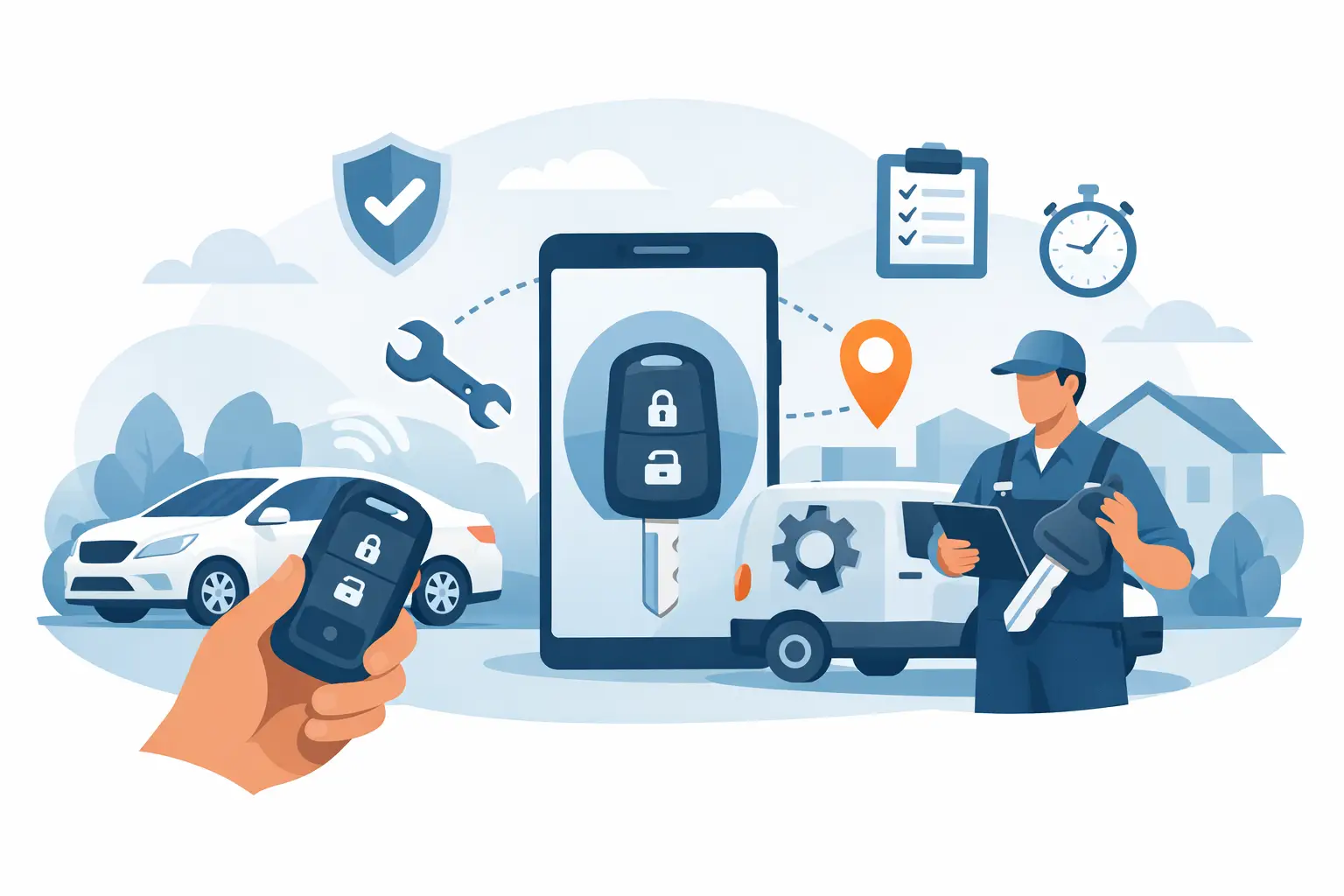
A lost, broken, or non-starting car key can stop your whole day in minutes. The mobile key replacement process is designed to get the right key made, programmed, and tested where your vehicle is parked, without the added delay and cost of towing it to a dealership.
For most drivers, the priority is simple: get back into the car and get it starting again. A qualified mobile auto locksmith brings the diagnostic equipment, key-cutting tools, remotes, and programming capability needed to deal with the problem on-site. The exact work depends on your vehicle and what has happened to the key, but the goal stays the same – a working, reliable key and a vehicle you can use.
What Happens During the Mobile Key Replacement Process
The process usually starts before the locksmith arrives. When you call, you will be asked for the vehicle make, model, year, registration details, your location, and a clear explanation of the problem. If you have a spare key, say so. If all keys are lost, the key is stuck in the ignition, or a remote has stopped responding, that information helps the locksmith arrive prepared.
Proof of ownership is also essential. A professional auto locksmith must confirm that you are authorized to access and receive keys for the vehicle. This protects you, the vehicle owner, and everyone else involved. Have your photo ID and vehicle ownership documents available where possible.
Once on site, the locksmith assesses the vehicle, the existing key if you have one, and the locking or starting fault. This is the point where hands-on experience matters. A key that will not start a car is not always a key problem. It may be a damaged transponder chip, a failed remote battery, a worn ignition lock barrel, a faulty key blade, or an immobilizer issue.
After identifying the fault, the locksmith can explain the required work and price before moving forward. In many cases, a replacement key can be cut and programmed during the same visit. For more unusual vehicles, damaged ignition systems, or keys requiring special parts, the job may take longer or need a follow-up appointment. Clear advice is better than guessing and leaving you with a key that only works sometimes.
Cutting the New Key
If your vehicle uses a physical key blade, the new blade needs to match the locks and ignition accurately. This can be done by copying an existing working key, decoding a lock, or using approved vehicle information and specialist tools when all keys have been lost.
Precision matters here. A badly cut key can turn roughly, damage the lock, or fail to operate the ignition. If your original key has become worn over years of use, copying that wear can create another poor key. A skilled locksmith will assess whether the key should be copied or whether the vehicle lock needs to be decoded for a cleaner result.
Programming the Chip, Remote, or Smart Key
Most modern car keys are more than a shaped piece of metal. They may contain a transponder chip that communicates with the immobilizer, remote buttons for locking and unlocking, or proximity technology for keyless entry and push-button start.
Programming connects the replacement key to your vehicle’s security system. The locksmith uses diagnostic equipment to communicate with the car, add the new key, and test whether it starts the engine and operates the central locking correctly. A key may physically turn in the ignition but still fail to start the vehicle if its chip has not been programmed correctly.
For keyless vehicles, the process can involve programming a smart fob and checking functions such as locking, unlocking, trunk release, and keyless start. The exact procedure varies between manufacturers, which is why vehicle-specific equipment and experience are so important.
When All Car Keys Are Lost
Losing the only key is stressful, especially when you are away from home, outside work, or responsible for getting children or equipment where they need to be. It does not automatically mean your car must go to a dealer.
A mobile locksmith can often create a new key from scratch at the vehicle. The work generally involves gaining entry without causing damage, cutting the correct blade where needed, programming the new transponder or smart key, and confirming that the car starts properly.
This is normally more involved than duplicating a working key, so the time and price can differ. The vehicle’s age, make, model, security system, and key type all affect the job. Older vehicles may use a straightforward transponder key, while newer models can require more advanced diagnostics and security access.
If the missing key was stolen rather than simply misplaced, tell the locksmith. In some cases, old keys can be removed from the vehicle’s memory so they no longer start it. Depending on the vehicle and your security concerns, lock changes may also be worth considering. Replacing a key gets the car moving; removing a stolen key from the system helps reduce the risk of someone using it later.
A Replacement Key Is Not Always the Whole Fix
A key can be blamed when the real problem is inside the vehicle. For example, if the key will not turn, feels loose, snaps in the ignition, or only works after repeated attempts, the ignition lock barrel may be worn or damaged. Forcing it can turn a manageable repair into a more expensive one.
Likewise, if the remote buttons stop working but the car still starts, the issue could be the remote casing, battery contacts, buttons, or internal electronics. Repairing the remote may be the sensible option when the key blade and transponder are still working properly.
A good mobile locksmith looks at the full fault rather than selling a replacement key by default. Sometimes you need a new key. Sometimes you need remote repair, key extraction, ignition repair, or a combination of services. Getting the diagnosis right saves time and avoids paying for work that does not solve the problem.
Mobile Locksmith vs. Dealership: What Is the Difference?
Dealerships can supply replacement keys, but the route is not always practical when the vehicle cannot be driven. You may need to arrange towing, wait for an appointment, and leave the car with them while the key is ordered or programmed.
A mobile auto locksmith comes to the vehicle, which is particularly useful for lockouts, all-keys-lost situations, broken keys, and vehicles stranded at home, work, or roadside. In many cases, the work is completed the same day. Pricing can also be more realistic because there is no tow truck or dealership overhead added to the problem.
That said, it depends on the vehicle. Some very new, rare, or specialist models may have key systems that require dealer-only parts or manufacturer processes. An honest locksmith will tell you when that is the case rather than promising an instant fix that cannot be delivered.
How to Make the Visit Faster
Before help arrives, keep the vehicle safe and accessible. If possible, move away from traffic and make sure the locksmith can reach the driver’s door and ignition area. Have your ID, registration, and any remaining keys or key fragments ready.
Avoid trying to force a damaged key into the ignition or using makeshift tools to open the car. A bent blade, broken key, or damaged lock can complicate the repair. If the key is locked inside, do not break a window unless there is an immediate safety emergency.
If you use a fleet vehicle, company car, or leased vehicle, check that you have the relevant authorization available. This prevents avoidable delays when ownership details need to be confirmed.
Car Key Maker provides on-site help for drivers across the West Midlands, Warwickshire, and nearby areas when a key problem has left them stuck. Whether you have lost every key, snapped one in the ignition, or need a spare before the remaining key fails, acting early is usually cheaper and less stressful than waiting for a complete breakdown.
If your key is becoming unreliable, do not keep hoping it will get you through one more week. Arrange a replacement while the car is still accessible and you still have a working key to copy. That small bit of planning can save you from being stranded when you least have time for it.