
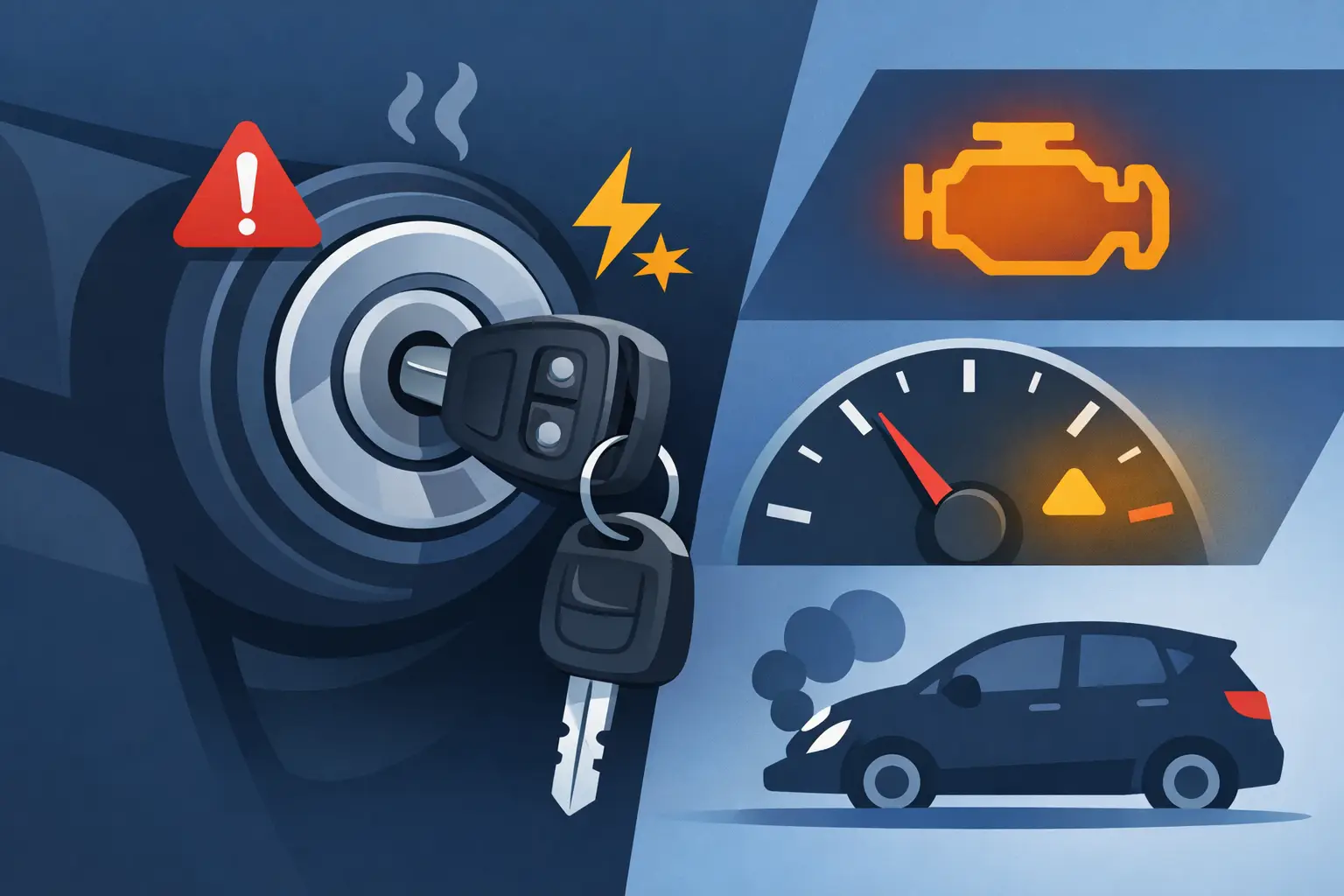
Your key turns normally for weeks, then one morning it sticks, catches, or will not turn at all. That is the point where a small ignition issue becomes a missed appointment, a stranded work van, or a car that cannot be moved. Knowing the top signs an ignition lock is failing gives you a chance to deal with it before the key gets stuck in the ignition or the vehicle will not start.
An ignition lock, also called an ignition cylinder or ignition barrel, is the mechanical part that reads the cuts on your key and allows it to turn through the accessory, ignition, and start positions. It takes daily wear, especially on older vehicles and cars with a heavy key ring. When it begins to fail, forcing it can turn a repairable problem into a broken key or a vehicle immobilized on your driveway.
Top Signs Your Car Ignition Lock Is Failing
The key is difficult to insert or remove
A healthy key should slide into the ignition smoothly and come back out without a fight. If you have to wiggle it, pull it back slightly, or try several times before it seats properly, the internal pins in the lock may be worn, dirty, or damaged.
Do not assume the lock is automatically at fault. A worn key blade can create the same symptom because its cuts no longer lift the pins accurately. If a spare key works better than your everyday key, the key is likely the main issue. If both keys stick, the ignition lock needs closer attention.
You need to wiggle the key to make the car start
Many drivers first notice a failing ignition lock when the key has to be held at a particular angle before it will turn. You might jiggle it left and right, lift it slightly, or push it inward while turning. It may work eventually, but it is not normal and it rarely improves on its own.
This often points to worn wafers or pins inside the ignition barrel. Continuing to use the same trick puts more pressure on the key and lock. A key can snap under that strain, leaving part of it trapped inside the cylinder.
The key turns, but the dashboard does not come on
If the key rotates but the dash lights, accessories, or ignition do not respond consistently, the problem may be more than the mechanical lock. Depending on the vehicle, it could involve the ignition switch behind the cylinder, worn internal components, wiring, or an electrical fault.
The distinction matters. A battery issue usually affects other electrical functions too, while an ignition-related fault may appear only when you turn the key. A qualified auto locksmith can assess the lock and key side of the problem on-site, but electrical diagnosis may be needed if the cylinder is operating correctly.
The key will not turn from the locked position
A key that refuses to turn can feel like a complete failure, but there are a few possible causes. The steering wheel lock may be under tension, particularly if the wheels were turned against a curb when the engine was switched off. Try applying light pressure to the steering wheel in both directions while gently turning the key. Do not force it.
If the steering lock is not binding and the key still will not rotate, a worn key or failing ignition cylinder becomes more likely. Repeatedly twisting harder is the wrong move. It can bend or break the key, damage the lock further, and make an on-site repair more involved.
The key gets stuck in the ignition
A key that will not come out can leave your vehicle vulnerable and disrupt your day just as much as a no-start problem. On automatic vehicles, first make sure the selector is fully in Park and the parking brake is applied. Some vehicles will retain the key if the transmission interlock does not recognize Park correctly.
If the vehicle is in Park and the key still will not release, the ignition cylinder or related mechanism may be worn. Do not use pliers or pull aggressively. Bending the key can make removal harder and may damage the key head, transponder, or remote housing.
The key feels loose or has excessive movement
Some movement in a key is normal, but a key that feels unusually loose, droops, or moves around significantly inside the ignition should not be ignored. It can mean the cylinder has worn internally or is no longer holding the key correctly.
This is especially common in vehicles that have covered high mileage or have had a large bunch of keys, fobs, tools, and tags hanging from the ignition over many years. Reducing the weight on your key ring can help limit future wear, but it will not restore an ignition lock that is already damaged.
The problem comes and goes
Intermittent ignition trouble is still trouble. If the key works perfectly one day but sticks or refuses to turn the next, do not wait for it to become a permanent no-start. Internal wear can be unpredictable. Temperature changes, dirt in the lock, and the exact position of worn components can all affect whether it works on a particular attempt.
This is the best time to arrange a repair. You still have access to the vehicle, the key is not broken, and the problem can often be addressed before it turns into an emergency call.
What Causes an Ignition Lock to Fail?
Normal wear is the most common cause. Every time a key enters, turns, and comes out, it wears very slightly against the internal parts of the lock. Over years of use, the key cuts and lock components lose their precise fit.
A worn or copied key can accelerate the damage. Low-quality duplicates may not match the original key accurately enough, and a key that is bent, cracked, or heavily worn can catch inside the cylinder. Dirt, liquid spills, and attempted theft damage can also affect the ignition lock.
Modern vehicles add another layer. Your mechanical key may turn the lock while the car still refuses to start because the transponder chip is not being recognized by the immobilizer. That is not always an ignition cylinder failure. It is why guessing, replacing random parts, or buying an unprogrammed key online can waste time and money.
What to Do When Your Ignition Starts Playing Up
Start with the simple checks. Use a spare key if you have one, and remove unnecessary weight from the key ring. If the steering wheel is locked, relieve the tension gently while turning the key. Make sure an automatic vehicle is fully in Park before trying to remove a stuck key.
After that, stop if the key is resisting. Do not spray random lubricants into the ignition, force the key with tools, or keep turning it harder. Some lubricants attract dirt and can make the issue worse over time. More importantly, a broken key inside an ignition lock creates a more urgent and potentially more expensive repair.
A mobile auto locksmith can inspect the key, ignition barrel, and vehicle starting behavior at your location. The right solution depends on the fault. It may be a properly cut replacement key, ignition lock repair, removal of a broken key, or replacement of the ignition barrel. Where immobilizer programming is involved, the replacement key must also be correctly programmed to the vehicle.
For drivers who need their car for work, school runs, or daily travel, mobile assistance avoids arranging a tow and waiting for a dealership appointment. Car Key Maker provides on-site ignition and key assistance across the West Midlands, Warwickshire, and nearby areas, helping get the right repair completed where the vehicle is parked.
When It Is Time to Call for Help
Call for professional help straight away if the key will not turn, is stuck, has cracked or bent, or you can see that the blade is beginning to split from the key head. The same applies if the vehicle starts only after repeated attempts or the ignition has become noticeably loose.
A failing ignition lock usually gives warnings before it stops working altogether. Treat those warnings as a chance to fix the problem on your terms, rather than at the side of the road when you have somewhere to be.