
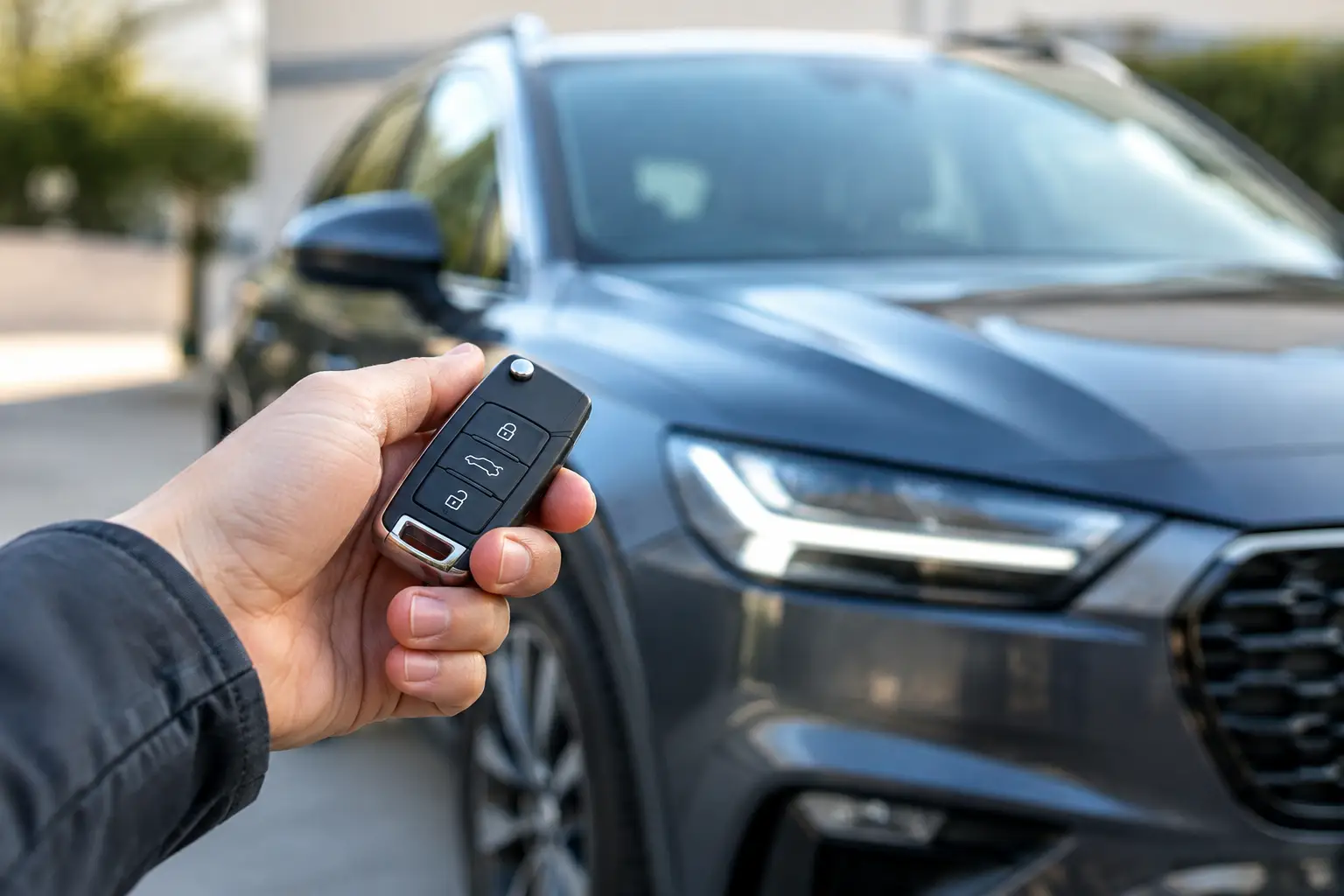
A car can be sitting safely on your drive, with its doors locked and the key inside your house, yet still be targeted. Keyless theft is a real concern for drivers with keyless-entry vehicles because criminals may try to exploit the signal between the car and its fob rather than forcing a lock or smashing a window.
The good news is that a few sensible habits can reduce the risk significantly. You do not need to become an expert in vehicle security. You just need to understand where the weak points are and take practical action before there is a problem.
What is keyless theft?
Most modern keyless-entry cars recognise a fob when it is nearby. As you approach, the vehicle detects the key and allows the doors to open. In many vehicles, the engine will also start when the fob is inside the car.
Keyless theft, often called a relay attack, can involve criminals attempting to extend or relay the signal from a key fob inside a property to the vehicle outside. The car may then believe the genuine key is close enough to unlock. It is quick, quiet and can happen without obvious damage to the vehicle.
This does not mean every keyless car is an easy target, and vehicle security varies by manufacturer, model and age. Newer fobs and vehicles may use motion sensors, sleep modes or improved encryption. However, it is still worth treating the key fob as part of your vehicle security, not simply something you leave by the front door.
Keep your key fob away from doors and windows
The easiest change is often the most effective. Do not leave a keyless fob on a hallway table, kitchen worktop or windowsill close to the front of the property. Move it deeper into the house, ideally away from external walls, doors and ground-floor windows.
If your car is parked directly outside the front door, even a small change in where you store the key can make a difference. This is particularly relevant for homes with a short driveway or on-street parking immediately outside.
A signal-blocking pouch or box can add another layer of protection. These are designed to prevent the fob’s signal from being detected outside the container. They are useful, but only if they work properly. Test one by placing the fob inside, standing beside your vehicle and checking that the doors will not respond. A worn, damaged or poorly made pouch may not provide the protection you expect.
Check whether your car key has a sleep mode
Many newer keyless fobs have a motion-sensitive sleep mode. When the fob has not moved for a period of time, it stops transmitting until it is picked up again. This can help reduce the chance of relay theft while the key is left at home.
The method for activating this feature differs between manufacturers and models. Some fobs enter sleep mode automatically, while others require a particular button sequence. Check your vehicle handbook or ask a specialist if you are unsure. Do not assume that a newer car automatically has this feature enabled.
If your fob is older, damaged or intermittently working, have it checked. A weak battery does not normally make a key safer, and a faulty remote can leave you dealing with a separate problem at exactly the wrong time.
Protect the vehicle as well as the key
A keyless fob is only one part of the picture. Visible physical security can make a car less attractive to target and create an extra obstacle if someone gains access. A steering wheel lock, for example, is a straightforward visual deterrent that adds time and difficulty.
Where possible, park in a well-lit area and use a driveway, garage or location covered by a camera. Good lighting will not prevent every offence, but it can make suspicious activity easier to spot. If you have a doorbell camera or CCTV, make sure it covers the vehicle rather than only the path to the front door.
For higher-risk vehicles, a professionally fitted immobiliser, tracker or alarm may be worth considering. The right option depends on the vehicle, where it is parked and how you use it. A family car kept in a locked garage faces different risks from a van left overnight on the road for work.
Do not overlook ordinary key security
Keyless theft gets attention because it can be discreet, but many vehicle thefts still begin with stolen, copied or carelessly handled keys. Keep spare keys secure and do not leave them in a vehicle, even if the car is on your own drive.
Be cautious when handing keys to anyone you do not know well, including during private vehicle sales, repairs or short test drives. If you buy a used vehicle, it is sensible to establish how many keys are in circulation. A missing spare key may not just be inconvenient – it can be a security concern.
If a key is lost or stolen, act quickly. Depending on the vehicle, old keys can often be removed from the car’s memory so they will no longer start it. In some cases, lock changes may also be appropriate. Waiting to see whether the key turns up can leave your vehicle exposed, especially if it was lost near your home, workplace or regular parking spot.
Signs that need prompt attention
Not every keyless issue is a theft attempt. A fob that works only occasionally may have a flat battery, worn buttons, water damage or an internal fault. A vehicle that fails to detect the key could also have a problem with the car’s receiver, immobiliser system or key programming.
Treat unexplained behaviour seriously, particularly if it happens after a key has been lost, stolen or handled by someone else. Repeated unlocking alerts, unusual warning messages, damage around locks or signs that someone has been near the vehicle should not be ignored.
Avoid repeatedly pressing buttons or forcing a damaged key into an emergency lock barrel. That can turn a manageable key issue into a broken lock or a vehicle that will not start. A proper diagnosis is quicker and safer than guessing.
If you think someone has targeted your car
First, make sure the vehicle is locked and that every key is accounted for. If a key is missing, stolen or suspected to be compromised, arrange for it to be deleted from the vehicle system as soon as possible. If there has been attempted theft or damage, document what you find and report it through the appropriate channels.
If your key has stopped working or you need old keys removed after a security concern, a mobile auto locksmith can assess the situation at the vehicle. Car Key Maker provides on-site key, remote, immobiliser and lock support across the West Midlands and Warwickshire, helping drivers get secure and mobile again without the added disruption of transporting the car elsewhere.
A few habits that make a real difference
The strongest approach is not one expensive gadget. It is a combination of everyday habits: keep the fob away from the front of the house, use a tested signal-blocking pouch where suitable, secure the vehicle visibly, and deal with missing keys without delay.
Keyless convenience should not come at the cost of peace of mind. Put the fob somewhere safer tonight, check the security features your vehicle already has, and act promptly if a key or remote starts behaving differently.