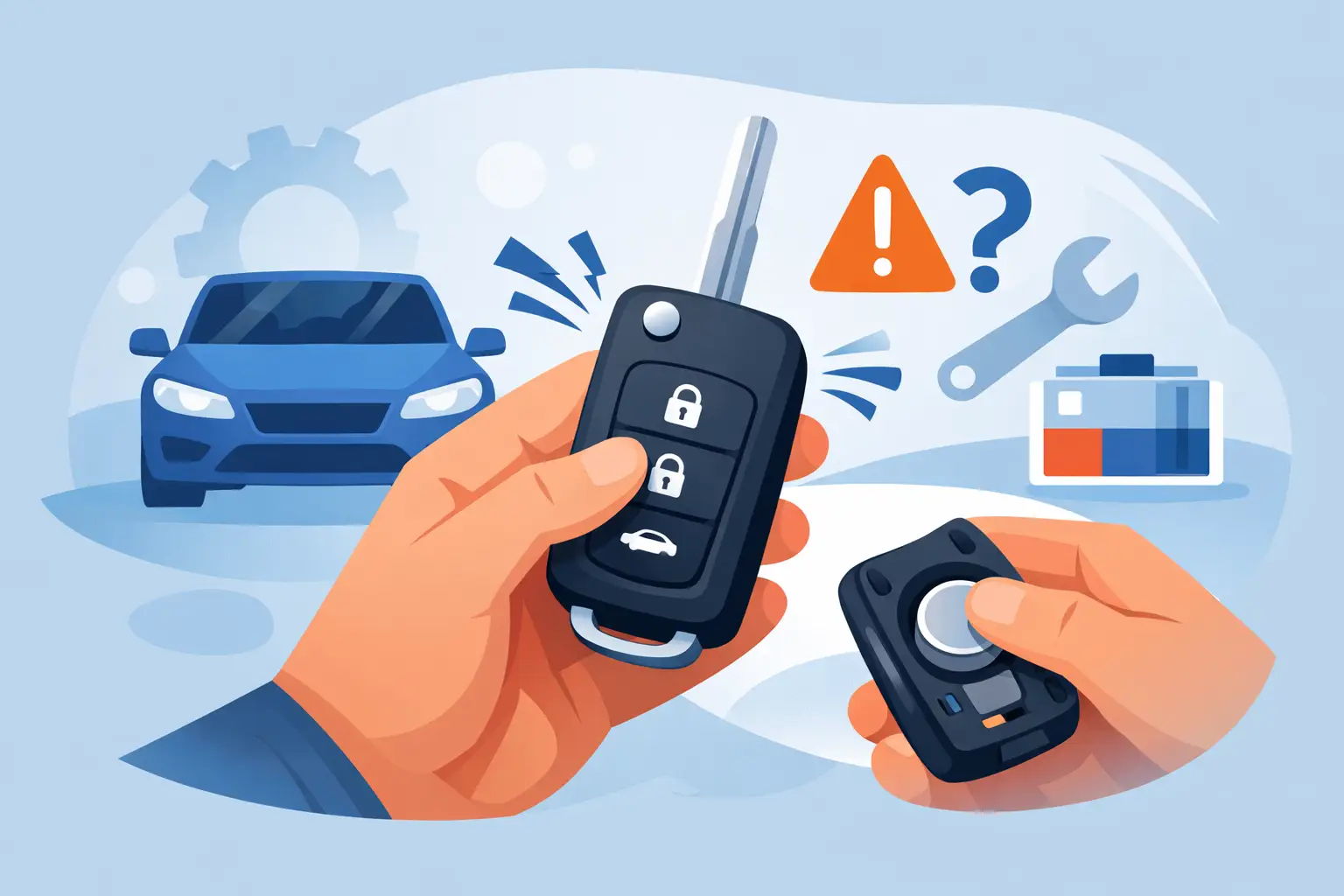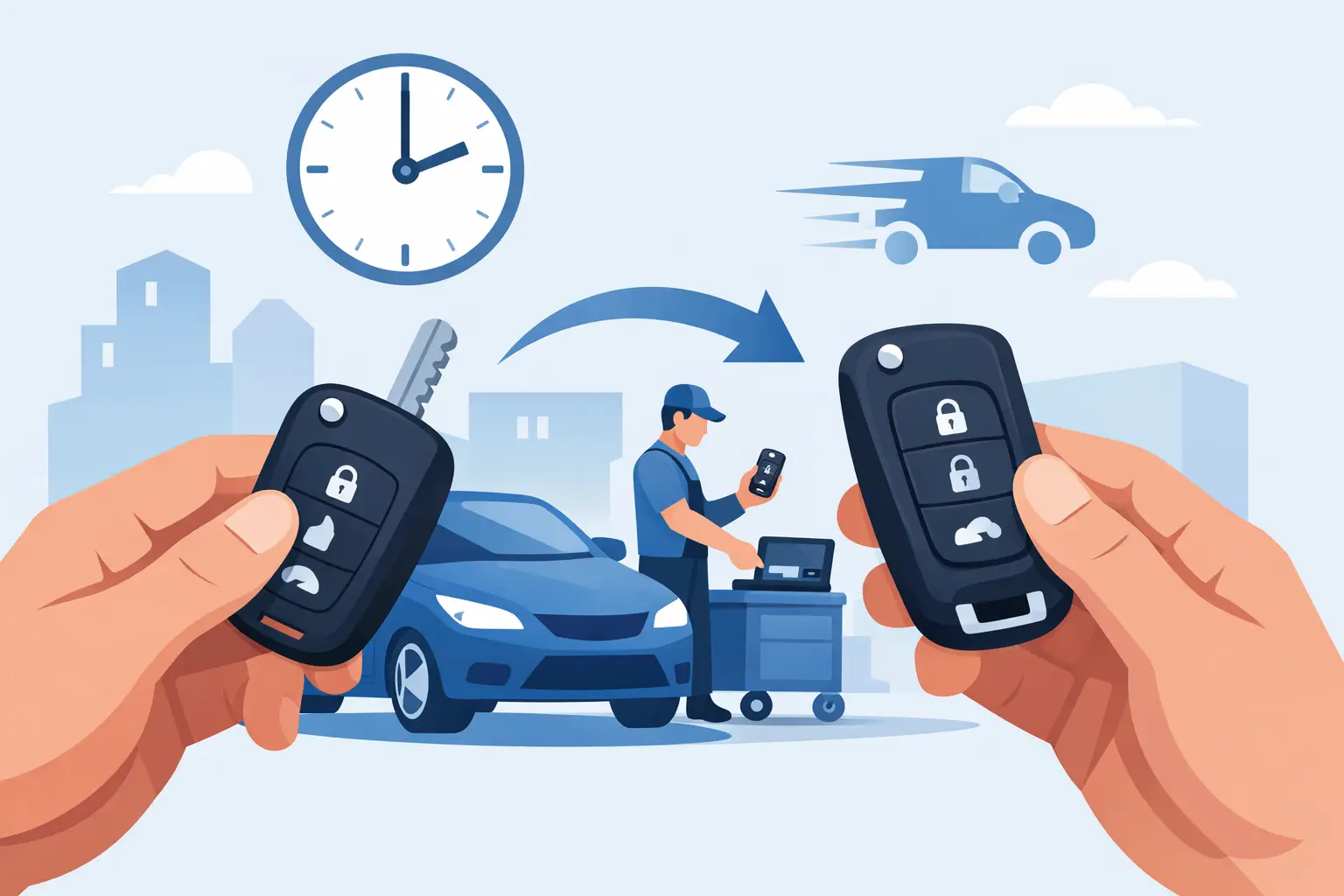
When to Call a Mobile Auto Locksmith

When to Call a Mobile Auto Locksmith

You notice the problem at the worst possible moment. The key will not turn, the fob suddenly stops responding, or you shut the door and see your keys sitting on the driver’s seat. That is usually when a mobile auto locksmith stops being a service you vaguely know exists and becomes the fastest way to get your day back on track.

For most drivers, the real question is not what a locksmith does. It is whether they can fix the problem there and then, without a tow truck, without a long wait at a dealership, and without turning a bad day into a lost weekend. In many cases, the answer is yes.

What a mobile auto locksmith actually does

A mobile auto locksmith comes to your vehicle and handles key, lock, remote, and ignition problems on-site. That matters because car key issues are rarely convenient. If your only key is lost, snapped, or locked inside the vehicle, you may not have any practical way to get to a shop.

A proper mobile service is set up to deal with the problem where the car is parked. That can mean cutting and programming a replacement key, opening a locked vehicle without damage, repairing a faulty remote, or diagnosing an ignition issue that is stopping the key from turning or starting the car.

This is where mobile service has a clear advantage over the dealer route. A dealership may still be the right fit in some cases, especially for highly specialized manufacturer issues or warranty-related work. But for many everyday key and lock problems, waiting for recovery, arranging transport, and then waiting again for parts or booking slots is simply more disruption than most people need.

The situations where calling a mobile auto locksmith makes sense

The most obvious one is when all keys are lost. This is usually the most stressful scenario because there is no backup plan. A mobile locksmith can often generate a new working key at the vehicle, program it to the car, and get you moving again the same day.

Lockouts are another common reason. If the keys are inside the car, fast entry matters, but so does doing it correctly. Modern vehicles are not designed to be forced open without risk. A trained locksmith uses the right entry methods to reduce the chance of damage to the lock, trim, or weather seals.

Then there are the problems that build slowly before they turn urgent. A worn key that only works after three tries. A flip key with a loose blade. A remote that works intermittently. An ignition barrel that feels stiff or jams at the worst time. These are easy to put off until they fail completely. Calling early is usually cheaper and far less stressful than waiting until you are stranded.

Stolen keys are a different case because security becomes the priority, not just convenience. In that situation, replacing the key alone may not be enough. Depending on the vehicle and system, you may need old keys removed from the car’s memory or the locks changed to protect the vehicle properly.

Why on-site service matters more than people think

When your car will not open or start, the problem is not just the key. It is everything the car was supposed to do that day. School run, work, appointments, deliveries, getting home. That is why on-site service matters. It cuts out steps.

Instead of arranging a tow, waiting at a garage, and trying to fit someone else’s schedule, the locksmith works around yours. If the vehicle is on your driveway, at work, in a parking lot, or stuck outside a store, the solution comes to you.

That also helps with diagnosis. Some issues look like key failure when they are actually ignition problems. Others seem like a dead remote but turn out to be programming faults or damaged buttons. Seeing the vehicle in person makes it easier to identify what has actually failed and fix the right thing first time.

Common problems a mobile locksmith can fix on-site

Many drivers assume locksmiths only open locked cars. In reality, the work is broader than that. A mobile specialist can usually help with lost car keys, spare key cutting, remote and fob repair, broken key extraction, ignition lock barrel issues, and replacement keys for cars that use transponder chips or immobilizer systems.

That said, not every job is identical. Some vehicles are straightforward. Others use more advanced security systems, proximity functions, or unusual key designs that take extra time or specialist equipment. The best locksmiths will be clear about that upfront rather than overpromising on the phone.

If your key has snapped in the lock or ignition, it is worth stopping immediately and calling for help. Trying to dig it out with tools from the kitchen drawer often pushes the broken piece deeper or damages the lock. The same goes for a key that is bending, cracking, or sticking badly. These are warning signs, not minor annoyances.

Mobile auto locksmith vs dealership

For many vehicle owners, this comes down to speed, cost, and hassle. A dealership may be necessary for certain manufacturer-controlled issues, but for a lot of key-related breakdowns, a mobile locksmith is the more practical route.

The main benefit is convenience. Your car stays where it is. The work is done on-site. There is no need to recover the vehicle first just to start the process. That alone can save hours.

The second benefit is responsiveness. If you are locked out or have lost your only key, you are not planning ahead. You need help now. Mobile locksmith services are built around exactly that kind of call.

The third is cost. Dealer pricing often includes higher parts costs, workshop overhead, and extra transport expense if the vehicle cannot be driven. Mobile locksmiths tend to offer a more realistic option for routine and urgent vehicle key work.

There are trade-offs. Some luxury models or very new systems may require dealer involvement. But for a large number of everyday lockouts, key replacements, and ignition faults, mobile service is faster and more direct.

How to choose the right locksmith when you need help fast

When you are stressed, it is easy to book the first number you find. A better approach is to check for a few basics while you are on the phone.

Ask whether they handle your make and model regularly. Ask whether the job can be done on-site. Ask what the likely time frame is and whether pricing is explained clearly before the work starts. If the problem involves a lost or stolen key, ask whether they can deal with programming and security changes, not just cut a blade.

Good locksmiths do not hide behind vague answers. They explain what they can do, what they need to confirm on arrival, and where the limits are. That kind of straight answer matters when you are standing beside a car that will not move.

If you are in the West Midlands or nearby and the issue is urgent, a business like Car Key Maker is built for exactly that kind of callout – direct response, on-site work, and no unnecessary runaround.

What you can do before the problem gets worse

You do not need to be a car key expert to avoid the worst-case scenario. If you only have one working key, getting a spare made before it fails is the smart move. If your remote casing is cracked or the buttons are wearing through, repair it before it stops communicating properly. If the ignition has started sticking, do not keep forcing it and hoping for the best.

Small warning signs often come before total failure. A key that needs jiggling, a remote that only works from inches away, or a blade that looks worn down can all mean trouble is coming. Acting early usually gives you more options and lower cost.

The main thing is simple. When a car key or lock problem stops being a nuisance and starts interfering with your day, waiting rarely improves it. Fast, qualified help on-site is often the difference between a short delay and a full-blown breakdown of your plans.
Can a Locksmith Program Car Keys?

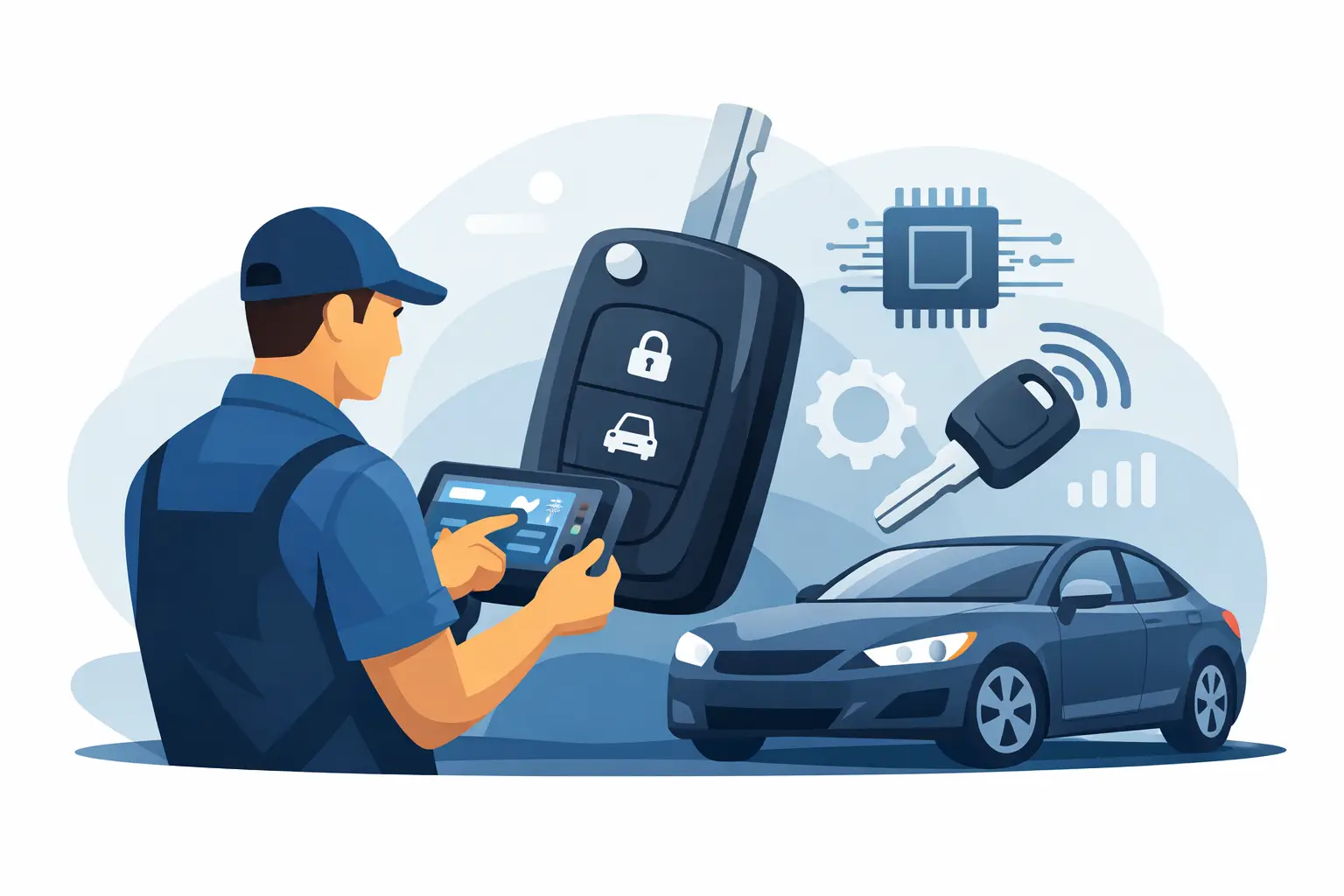
You turn the key, or press the start button, and nothing happens. Maybe the key was lost, snapped, stopped communicating with the car, or the immobilizer suddenly refused to recognize it. In that moment, one question matters fast: can a locksmith program car keys? In many cases, yes. A qualified auto locksmith can often cut, program, and test a replacement key on-site without the delay, towing, or higher cost that usually comes with a dealership visit.

That said, not every vehicle works the same way. Some keys are simple. Others involve encrypted transponders, proximity systems, remote functions, or manufacturer restrictions that change what is possible. If you want a straight answer, the real one is this: a locksmith can program many car keys, but the exact result depends on the vehicle, the key type, and whether all keys are lost.

Can a locksmith program car keys for any vehicle?

Not for every vehicle, and anyone telling you otherwise is oversimplifying it.

Most modern cars use an immobilizer system. That means the car is looking for a correctly coded chip inside the key or fob before it allows the engine to start. A professional auto locksmith with the right diagnostic tools can usually access that system, add a new key, erase old keys if needed, and confirm the replacement works properly.

Where things change is with certain luxury brands, very new models, and vehicles with heavily protected software. Some manufacturers limit programming access or require dealer-level authorization. In those cases, a locksmith may still help with emergency entry, key cutting, remote shell replacement, or diagnosis, but full programming might need brand-specific equipment or a dealer process.

For everyday drivers, though, the answer is often good news. A lot of standard domestic, Asian, and European models can be handled by a skilled mobile auto locksmith at your location.

What kinds of car keys can a locksmith program?

The key itself matters just as much as the car.

Older metal keys with no chip usually do not need programming at all. They only need to be cut correctly. Transponder keys, which are very common, contain a chip that must be paired to the car. Remote head keys combine a cut blade and remote buttons in one unit, and they often need both cutting and programming. Smart keys and proximity fobs are more advanced, allowing push-to-start operation and keyless entry, and these usually require specialized programming equipment.

A qualified auto locksmith can often handle all of these categories, but the process is different for each one. In some cases, the remote buttons can be programmed separately from the chip that starts the car. In others, the whole unit must be introduced to the vehicle in one session.

This is why the right first step is not guessing. It is identifying the exact make, model, year, and key type before any work begins.

When all keys are lost

This is the situation that worries most people, and it is also where a mobile locksmith can be especially useful.

If you have no working key at all, the job usually involves gaining access to the vehicle, decoding or cutting a new key, programming it into the immobilizer, and testing every function. On some vehicles, old lost or stolen keys can also be deleted from the system for security. That matters if you are concerned someone could still access or start the car with the missing key.

Dealerships often require proof of ownership, an appointment, and sometimes towing the car in. A mobile locksmith can often complete the job where the vehicle is parked, which is a major advantage when the car will not start.

Why people call a locksmith instead of the dealer

Speed is the big one.

If your key fails before work, on a school run, outside a store, or late at night, you usually do not want to wait days for a dealer slot. A mobile auto locksmith is set up for urgent situations. They come to the vehicle, carry the cutting and programming equipment with them, and solve the problem on-site whenever the vehicle allows it.

Cost is another reason. Dealer pricing is often higher, especially once towing, parts delays, and programming charges are added. An experienced locksmith typically offers a more practical route, particularly for common key replacement jobs.

Convenience matters too. If the issue turns out not to be the key itself, a good auto locksmith can often spot that quickly. Sometimes the problem is a damaged ignition, a failed remote, worn key blade, or a communication issue between the key and vehicle. Getting the right diagnosis first can save time and money.

What a locksmith needs before programming a key

Programming is not guesswork. The locksmith needs accurate vehicle details and proof that the car belongs to you.

Usually that means the make, model, year, and VIN, plus your location and a clear description of the problem. Is the key lost, broken, stolen, or just not working? Do you still have a spare? Does the remote unlock the doors but not start the car? Those details shape the job.

Proof of ownership is also standard. That protects both you and the vehicle. A legitimate locksmith should ask for it, especially for all-keys-lost jobs or requests to erase old keys.

Can a locksmith program a used key fob?

Sometimes, but not always.

This is one of the most common areas of confusion. Some used fobs can be reprogrammed if the electronics are compatible and the original data can be reset. Others are locked to the first vehicle they were paired with and cannot be reused in a reliable way. Even if the shell looks identical, the internal chip and board may not be correct for your car.

That is why cheap online fobs often create more trouble than savings. A proper locksmith will tell you whether your supplied key is suitable before wasting time trying to force a match that will never work.

When a locksmith may not be able to program the key

There are cases where the job is limited or not possible on-site.

Very new vehicles can have security gateways that block independent access. Some premium brands use encrypted systems that require factory credentials or dealer-only procedures. Water-damaged modules, electrical faults, and prior failed programming attempts can also complicate things. If the car has a deeper immobilizer or ECU issue, the problem may go beyond key programming.

That does not mean calling a locksmith is pointless. In many of these situations, the locksmith can still diagnose the fault, confirm whether the key is the issue, and tell you honestly if dealer involvement is necessary. Good service is not promising everything. It is giving you the fastest realistic path to getting the car moving again.

How to tell if you need programming or just a new battery

Not every dead key means full replacement.

If the remote buttons stopped working but the car still starts, you may only have a weak battery or remote board issue. If the key turns in the ignition but the car will not start and a security light flashes, that points more toward a transponder or immobilizer problem. If push-to-start only works when holding the fob close to the button, the fob battery may be dying.

A worn blade can also cause trouble. The chip might still be fine, but the physical key no longer turns the lock smoothly. In that case, a recut key may solve it without major programming work.

This is where an experienced auto locksmith earns their keep. The best result usually comes from diagnosing the actual fault, not replacing parts blindly.

Choosing the right locksmith for car key programming

Not every locksmith handles automotive programming at a serious level.

You want someone who specializes in vehicle keys and immobilizer systems, not just house locks and basic lockouts. Ask if they can program keys for your exact make and model. Ask if they cut and test on-site. Ask what happens if all keys are lost. Clear answers matter.

It also helps to choose a mobile service that is used to urgent callouts. If your vehicle is stuck at home, at work, or in a parking lot, response time is not a small detail. It is the difference between getting on with your day and losing one.

For drivers who need fast, on-site help, a specialist service like Car Key Maker is built around exactly these situations – key replacement, programming, lockouts, and ignition issues handled where the vehicle is, not after a tow and a long wait.

The short version is simple: yes, a locksmith can often program car keys, and for many vehicles it is the quickest and most practical option. If your key has stopped working, gone missing, or left you stranded, the smartest move is to get the vehicle checked by an auto locksmith who can tell you straight what can be done on-site and get you moving again if it can.

How to Delete Old Car Keys From System

Losing a car key is stressful. Losing one and not knowing whether it can still start your vehicle is worse. If you need to delete old car keys from system memory, the goal is simple – make sure missing, stolen, or unreturned keys no longer work with your car.

For many drivers, this comes up after a key goes missing at work, a spare is never returned, or a used car comes with an unknown number of keys in circulation. In those situations, cutting a new key is only half the job. The security side matters too, especially if there is any chance an old key could still unlock doors or start the engine.

What it means to delete old car keys from system

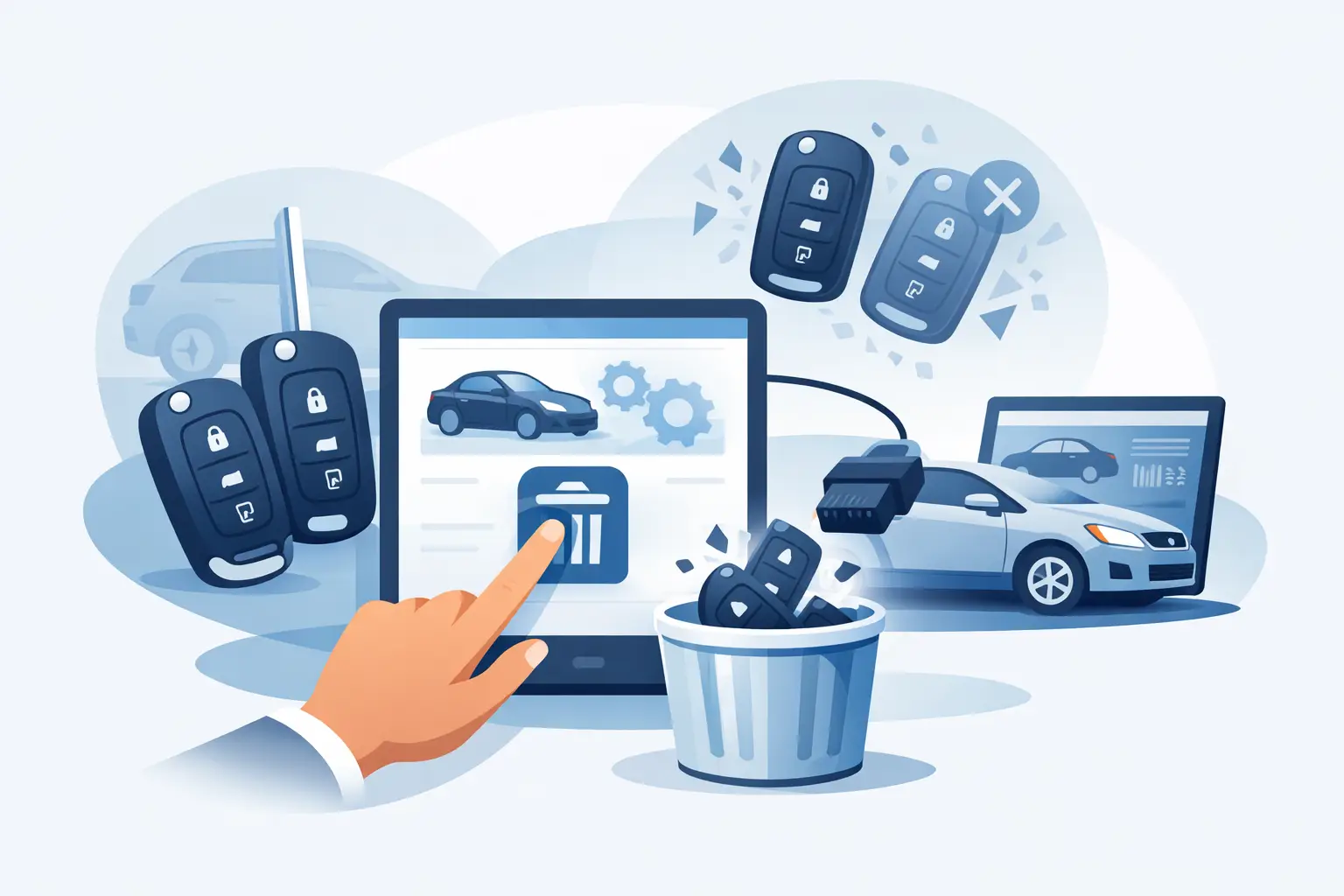
Modern vehicles do not rely on the metal blade alone. Most use a transponder chip, remote, proximity fob, or smart key that is electronically matched to the vehicle. Your car stores approved keys in its immobilizer or body control system. When a locksmith or dealer deletes old car keys from system memory, they remove authorization for keys you no longer want recognized.

That means a deleted key may still physically turn in a lock if the blade matches, but it should no longer start the engine if the immobilizer has been programmed correctly. On some vehicles, remote locking functions can also be removed. On others, the immobilizer and remote system are handled separately, so both need to be checked.

This is why the job needs to be done properly. People often assume that getting a replacement key automatically disables the missing one. Sometimes it does not.

When deleting old keys is the right move

Not every lost key is a security emergency. If you dropped a spare in your own garage and found it ten minutes later, there is no need to erase anything. But there are plenty of cases where deleting keys makes sense.

If a key was stolen, sold with the vehicle by mistake, lost in a public place, or never returned by an ex-partner, former employee, tenant, or buyer, you should treat it as a live security issue. The same applies if you bought a used car with only one key and no clear record of how many others exist. You do not know who still has access.

There is also the practical side. Some vehicles have a limit on how many keys can be stored. If the system is full of old or unknown keys, adding a new one may require clearing unused entries first.

Common situations where key deletion matters

One of the most common is an all-keys-lost job where the vehicle has to be reprogrammed from scratch. Another is theft risk after a handbag, backpack, or work bag goes missing with house and car keys together. Fleet vehicles are another big one. If a driver leaves without returning a key, removing it from the system is often the safest option.

Can every car have old keys deleted?

Usually, yes, but the method depends on the make, model, year, and type of key system. Older vehicles with basic transponder chips are often straightforward. Newer push-to-start systems can be more involved and may require advanced diagnostics, secure access procedures, and key count verification.

Some vehicles let a locksmith identify how many keys are currently programmed and remove missing ones selectively. Others require wiping all keys from memory and programming back only the keys physically present. Neither approach is wrong. It depends on how the manufacturer designed the system.

This is also where online advice can go wrong. There is no universal button sequence that works for every car. If the wrong procedure is attempted, you can waste time, drain the battery, or leave the vehicle immobilized until the system is corrected.

How a locksmith deletes old car keys from system memory

The process normally starts with confirming ownership and checking the exact vehicle details. After that, the locksmith connects specialist diagnostic and programming equipment to the car. This equipment communicates with the immobilizer, BCM, ECU, or relevant control modules, depending on the vehicle.

From there, the locksmith will either read the key data, identify stored keys, and remove unwanted entries, or reset the key memory and reprogram only the keys that should remain active. If you have one working key and one missing key, the missing key can often be erased while the working key is retained and any new key added.

After programming, the locksmith tests starting, locking, remote buttons, and where relevant, passive entry and push-button start. That final testing matters. It is the difference between a key that looks finished and one that is actually verified on the vehicle.

Why on-site programming helps

When the car will not start, towing it to a dealer is often the slowest and most expensive part of the problem. A mobile auto locksmith can usually handle key deletion and replacement where the vehicle is parked, whether that is at home, at work, or in a parking lot.

For drivers dealing with a lost or stolen key, speed matters. The longer an old key remains active, the longer the vehicle stays exposed.

Will deleting a key stop it unlocking the doors?

Sometimes yes, sometimes no. This is one of the biggest areas of confusion.

If your vehicle uses an electronic remote or smart proximity function, those features can often be removed from the system so the missing fob no longer unlocks the vehicle remotely. But if the missing key has a mechanical blade cut to your locks, that blade may still physically open the door unless the locks are changed or reconfigured.

So if the risk is high – for example, a stolen key with your address attached – deleting the key from the immobilizer may not be enough on its own. In those cases, lock changes or rekeying may also be worth considering. It depends on whether you are protecting against unauthorized starting, unauthorized entry, or both.

Dealer or auto locksmith?

A dealer can often perform key programming, but that does not always make it the best option. Dealers commonly require the vehicle to be brought in, and that is a problem when all keys are lost or the car is stuck. Appointments can also take longer, and costs are often higher.

A qualified mobile auto locksmith is usually the more practical choice for urgent cases. The right locksmith can come to you, cut and program replacement keys on-site, and remove old keys from the system during the same visit. That saves time and avoids the extra hassle of recovery or towing.

The trade-off is simple. Not every locksmith covers every vehicle, especially newer high-security systems. So the key question is not dealer versus locksmith in general. It is whether the person attending has the right equipment and experience for your exact car.

Signs you should get this done now, not later

If a key was stolen, missing with identifying documents, or lost near your home or workplace, do not leave it for weeks. The same goes if you suspect someone untrustworthy still has a spare. Delaying does not make the risk smaller.

You should also act quickly if your vehicle is used for work, carries tools, or is needed daily for commuting or school runs. A key security problem can turn into a full breakdown in routine fast.

What to ask before booking

Keep it simple. Ask whether they can program your exact make and model, whether they can delete missing keys from the system, and whether they can test both immobilizer and remote functions on-site. Also ask what proof of ownership you need ready when they arrive.

If you are replacing all keys after theft or loss, ask whether lock changes are necessary or optional based on your vehicle. That helps you make a security decision based on real risk, not guesswork.

For drivers in the West Midlands and nearby areas, Car Key Maker handles this kind of work as a mobile service, which is often the fastest way to secure the vehicle and get moving again without dealer delays.

The real goal is peace of mind

Most people do not call for key deletion because they are interested in programming systems. They call because they want certainty. They want to know the missing key will not start the car tomorrow, next week, or months from now.

That is why this job matters. If a key is lost, stolen, or unaccounted for, replacing it is only part of the fix. Making sure the old one no longer works is what closes the loop and lets you get back to normal with confidence.

Car Key Stolen What to Do Right Away

You reach into your pocket or bag, and the key is gone. Then it hits you – this may not be a simple loss. If you’re searching car key stolen what to do, the main priority is not just getting back into your vehicle. It is protecting the car from unauthorized access, stopping the stolen key from being used, and getting a working replacement as quickly as possible.

When a car key is stolen, speed matters. A stolen key creates a different level of risk than a misplaced one. If someone has your key and knows which vehicle it belongs to, your car can be vulnerable right away. That is especially true if the stolen key was taken with your wallet, registration, work pass, house keys, or anything else that reveals where you live or where the vehicle is usually parked.

Car key stolen what to do first

Start with the basics, but do them in the right order. First, make sure the key was actually stolen and not simply dropped, left at work, or left in another coat or bag. A ten-minute check is reasonable. An all-day wait is not.

Once you believe the key was stolen, move the vehicle if you can. If you still have a spare, park the car somewhere more secure and visible. A locked garage is ideal, but a well-lit area with cameras is still better than leaving it in the same predictable spot. If the stolen key was attached to anything with your address or plate details, treat the situation as urgent.

Next, think about what kind of key was taken. A basic metal key presents one kind of problem. A remote fob, proximity smart key, or push-to-start key presents another. Modern keys can do more than unlock a door. In many vehicles, they can disarm security features and start the engine with little effort.

After that, call a specialist auto locksmith. This is the step many drivers delay because they assume the dealer is the only safe option. It usually is not. A qualified mobile auto locksmith can often come to your location, cut and program a replacement, and in security-sensitive cases remove the stolen key from the vehicle’s system so it no longer works.

Why a stolen car key is different from a lost key

If you dropped a key somewhere random, there is a chance it will never be connected to your vehicle. If it was stolen, there is intent behind it, or at least a clear risk that the wrong person now has access.

That changes the advice. With a simple loss, some people wait and see if the key turns up. With theft, waiting can be a mistake. If someone knows where the car is parked, or can identify it from paperwork, tags, or personal information taken at the same time, the issue becomes a security problem and not just a convenience problem.

There is also the insurance side. Some insurers expect prompt action after a theft risk is discovered. That may mean reporting the theft, protecting the vehicle from further loss, and keeping records of what you did and when.

Should you call the police?

Sometimes yes, sometimes no, but if the key was clearly stolen rather than misplaced, reporting it is usually sensible. If your bag, jacket, or home was broken into and the key was taken, make a police report. If the stolen key was taken along with documents that identify the car or your address, report it.

A police report may help with insurance and creates a record of the theft. It may not get the key back, but it documents the risk and shows you acted responsibly. If the circumstances are unclear and you are not sure whether it was theft or loss, use your best judgment. Either way, your next move should still be to secure the car.

Can the stolen key be disabled?

In many cases, yes. This is one of the most important parts of the job.

For many modern vehicles, the stolen key can be deleted from the immobilizer or vehicle memory so it can no longer start the car. On some vehicles, remote locking functions can also be addressed as part of the programming process. That means the old key may still physically fit a lock in some situations, but it will no longer communicate properly with the vehicle’s security system.

It depends on the make, model, and year. Some vehicles allow straightforward key deletion and reprogramming. Others may require more involved work, and occasionally a lock change is the safer route, especially if there is concern that the mechanical side of the key still creates a risk.

This is where experience matters. The right solution is not always the most expensive one. It is the one that actually removes the security concern.

Do you need to change the locks?

Not always. That depends on what kind of key was stolen and how much exposure there is.

If the stolen key is a modern transponder or smart key and the vehicle can have old keys removed from the system, reprogramming may be enough. If the thief also has access to identifying documents, knows where the car is kept, or the vehicle uses a key blade that could still open the door manually, lock changes may be the safer option.

This is especially relevant if there has been a burglary, a domestic dispute, a workplace issue, or any situation where the person who took the key may come back and try to use it. In those cases, treating it as a full security job is usually better than hoping key deletion alone will cover every risk.

What if you have no spare key?

That makes the situation more urgent, but it is still fixable.

A mobile auto locksmith can usually produce a replacement key from the vehicle on-site, program it, and get you moving without towing the car. That is often far quicker than dealer routes, which may involve recovery, delays, ID checks, and parts ordering. If your only key was stolen, time off the road is often the biggest practical problem, especially if you need the vehicle for work, school runs, or daily travel.

For drivers in the middle of a workday or stranded away from home, mobile service is usually the most practical answer. The ability to handle the job where the car is parked saves time and reduces hassle at the worst possible moment.

Protecting yourself while you wait

If you are waiting for help to arrive, take a few steps to reduce risk. Remove valuables from the vehicle. Keep the car in a busy, visible place if possible. If you still have access, lock it and avoid leaving it unattended for long periods in isolated areas.

If the stolen key was attached to your home keys and your car is parked at home, think bigger than the vehicle. Your home security may now also be compromised. In that situation, it makes sense to address both issues quickly rather than treating them separately.

Also, gather the details the locksmith will need. The make, model, year, and your location will help speed things up. Proof of ownership is normally required, which is exactly as it should be for security reasons.

Dealer or auto locksmith?

There is a time and place for both, but in a stolen key situation, most drivers want the fastest secure fix. That is where a specialist auto locksmith usually has the edge.

A dealer may be able to supply a replacement, but that often comes with more delay, less convenience, and added cost. Many drivers are surprised to learn that a mobile locksmith can often cut and program keys on-site, handle emergency lockouts, deal with immobilizer issues, and advise whether reprogramming or lock changes are the safer option.

The trade-off is simple. Not every provider handles every vehicle equally well, so you want a specialist with real automotive experience, not a general locksmith guessing their way through vehicle electronics. Done properly, the locksmith route is usually faster and more practical.

What to ask when booking help

Ask whether they can delete the stolen key from the system, whether they can make and program a replacement on-site, and whether lock changes are recommended for your vehicle. Also ask about response time and total cost before the work starts.

Clear answers matter. In a stressful situation, vague pricing and vague promises are the last thing you need. A good provider will tell you what can likely be done on your vehicle and what depends on inspection.

Avoid the second mistake

The first problem is the stolen key. The second mistake is putting off the fix because the car is still there. Vehicles are often taken after the moment people relax, not during the initial panic.

If your key has been stolen, act as if the vehicle is exposed until the old key is disabled or the locks are changed. That mindset leads to better decisions and faster protection.

If you are dealing with this now, the practical move is simple: secure the car, report the theft if appropriate, and get a qualified auto locksmith to replace the key and shut the stolen one out. Fast action beats regret every time.

Keys Locked in Car Locksmith: What to Do

You shut the door, hear the lock click, and then see the keys sitting on the seat. That is the exact moment most people search for a keys locked in car locksmith, because the problem goes from annoying to urgent in seconds. If you are trying to get to work, pick up the kids, or finish a job, you do not need theory. You need a safe, fast way back into your vehicle.

A car lockout feels simple from the outside, but there is a big difference between getting the door open and getting it open without damage. Modern vehicles are full of things that can go wrong when the wrong method is used – side airbags in doors, delicate weather seals, electronic deadlocks, painted trim that marks easily, and locking systems that do not respond well to force. That is why the right response is not always the cheapest-looking one. It is the one that gets you back in without creating a more expensive repair.

When to call a keys locked in car locksmith

If your keys are visible inside the car, the battery is dead, the spare key is nowhere nearby, or the vehicle has locked itself with the fob inside, a locksmith is usually the quickest route. The same applies if the car is on double lock, the handle is not responding, or you have a child, pet, or temperature-sensitive items inside. In those cases, speed matters, but so does control.

A professional auto locksmith works differently from a general roadside helper. The focus is on non-destructive entry wherever possible, using the right tools for the make, model, and lock type. That matters more on newer vehicles, where a rushed attempt can turn a lockout into a broken handle, bent door frame, or damaged latch.

There are cases where roadside assistance can help, especially if your policy includes lockout cover and response times are good in your area. But it depends on the vehicle and the urgency. If you need someone who deals with car locks and keys all day, a mobile auto locksmith is often the more direct option.

What a locksmith actually does in a car lockout

People often picture a coat hanger and a bit of luck. That is not how proper entry works on most vehicles now. A trained locksmith will identify the locking system first, then choose an access method designed to avoid damage. On some cars, that means controlled use of specialist entry tools. On others, it may involve decoding the safest route based on how the car deadlocks or how the latch is protected.

The job is not just opening a door. It is opening the right way. If the key fob is inside but the car has gone into a security state, the method may be different than on an older manual lock. If the key is in the trunk rather than the cabin, that changes the approach too.

This is also where experience pays off. Some vehicles are straightforward. Others are known for tight tolerances, awkward shields, or systems that relock unexpectedly. A locksmith who works on vehicle entry every day knows which cars need extra care and which methods should be avoided entirely.

Why DIY lockout methods often cost more

Online advice makes lockouts look easy. Wedges, shoelaces, rods, and improvised hooks all sound quick until they are used on the wrong car. The usual result is scratched glass, torn seals, bent frames, or a lock mechanism that stops working properly after the door is finally opened.

Even when DIY works, there is often a hidden cost. A door that no longer seals properly can create wind noise and leaks. A bent frame can affect window movement. Damage around the handle or trim can be expensive to put right, especially on newer vehicles.

There is also the problem of wasted time. If you spend an hour trying internet tricks and then call a locksmith anyway, the lockout has already cost more than the service call would have. When the weather is bad, you are parked somewhere unsafe, or your schedule is already tight, that delay matters.

How fast can a mobile locksmith help?

That depends on traffic, location, time of day, and how busy the area is, but mobile service is built for exactly this kind of situation. Instead of arranging a tow or trying to get the car to a dealer, the locksmith comes to the vehicle. For a simple lockout, that usually means faster resolution and less disruption.

For drivers in the West Midlands and Warwickshire, that local mobile approach matters. A lockout in a supermarket parking lot, outside your house, or on a work site needs a practical response, not a complicated chain of calls. That is why businesses like Car Key Maker focus on same-day response and on-site help rather than sending customers elsewhere.

There is a trade-off, of course. If you are in a remote spot or calling at peak demand times, response may not be instant. But even then, a mobile locksmith is often still the more practical option because the work is done where the car is.

What to do while you wait

First, check every door and the trunk once, calmly. Some vehicles leave one access point open when others are locked. Do not keep pulling handles aggressively, especially on cars with electronic locking.

Next, make the situation safe. If you are in traffic, at a gas station, or parked somewhere exposed, move yourself and any passengers to a safer spot nearby if you can do so without leaving the vehicle unattended in a risky location. If a child or pet is locked inside and there is any immediate safety concern, call emergency services first.

Have the basics ready for the locksmith. Your location, vehicle make and model, plate number if available, and a clear description of what happened will speed things up. If you have proof of ownership or ID, keep that ready too. A professional locksmith will usually need to verify they are opening the vehicle for the rightful user.

Can a locksmith open any car?

Most cars can be opened by a qualified auto locksmith, but the exact method depends on the vehicle. Older cars with simpler mechanical locks are generally more straightforward. Newer models with deadlocking, shielded latches, or advanced anti-theft systems may take more care and, in rare cases, more time.

That does not mean they cannot be opened. It means the right process matters. A serious locksmith will not guess or force the issue. They will assess the system first and use the least invasive method available.

Cost, damage risk, and what affects the price

People usually ask the same two questions first: how much will it cost, and will it damage the car? Fair questions. Pricing depends on the vehicle type, time of day, location, and how complex the lockout is. A straightforward manual entry is not the same job as a high-security vehicle with a deadlock issue.

As for damage, the goal of professional entry is non-destructive access whenever possible. No reputable locksmith should promise magic before seeing the car, because some situations are more complicated than others. But the whole point of hiring a specialist is to avoid the kind of damage that amateur methods often cause.

The cheapest option on paper is not always the best value. If one service cuts corners, arrives without the right tools, or treats every car the same, you are taking a bigger risk. Real value is fast response, proper entry, and no repair bill after the fact.

How to choose the right locksmith for keys locked in car situations

Look for a business that specializes in auto work, not just general locks. Car entry, key programming, ignition repair, and vehicle security issues all sit in the same lane. A locksmith who handles these problems daily is more likely to solve the issue quickly and cleanly.

Clear communication matters too. You want realistic arrival information, straightforward pricing, and someone who can explain what they expect to do without filling the call with jargon. In a lockout, confidence is helpful. So is honesty.

It also helps if the locksmith can do more than open the door. If your key is also damaged, the remote has failed, or the lockout is tied to a bigger key problem, having someone who can fix that on-site saves another appointment later.

A lockout feels like a small mistake until it ruins your whole day. The good news is that it is usually fixable without drama when the right person handles it. If your keys are staring back at you through the glass, skip the coat hanger, keep the car intact, and get help that is built for the job.

Steering Lock Repair Car Problems Explained

You turn the key, the wheel stays jammed, and suddenly a normal trip turns into a parking lot problem. Steering lock repair car issues usually show up without much warning, and when they do, the car can feel completely dead even though the fault is often limited to the lock, key, or ignition housing.

For most drivers, the frustrating part is not knowing whether this is a simple jam or a bigger failure. That matters, because some steering lock problems can be eased on the spot, while others need proper repair before the vehicle can be used safely again. If you force it, you can turn a manageable job into a broken key, damaged ignition, or a steering column repair that costs far more than it should.

What a steering lock actually does

The steering lock is a security feature designed to stop the steering wheel from turning when the key is removed or the vehicle is off. In older cars, this is usually a mechanical system built into the ignition barrel and steering column. In newer vehicles, the system may be electronic and linked to the immobilizer, start button, or steering column control module.

When it works properly, you barely notice it. You park, remove the key, the wheel locks into place, and the car is harder to steal. When it fails, the wheel may stay locked when you need to drive, the key may stop turning, or the ignition may refuse to switch on at all.

That is why the same symptom can have different causes. A locked wheel does not always mean the lock itself is broken. It can point to key wear, ignition barrel wear, internal lock damage, or an electronic fault.

Common signs you may need steering lock repair car service

A few warning signs tend to appear before total failure, although plenty of drivers only notice the problem once they are stuck. The key may feel stiff going in or turning. The wheel may lock more aggressively than usual. You may have to jiggle the steering wheel and key together every time you start the car. In some vehicles, a dashboard warning appears for the steering lock or ignition system.

Sometimes the key enters the barrel but will not turn. Sometimes it turns partly, then jams. In other cases, the steering wheel remains locked even though the key is in the correct position. With push-button start vehicles, the fault may show up as no ignition response, a steering lock warning, or repeated start failure.

If any of that sounds familiar, get it checked sooner rather than later. Lock components rarely improve on their own. They wear further, stick more often, and eventually fail at the worst time.

Why steering locks fail

Wear is the most common reason. Keys wear down over time, especially if they are old copies or have been used heavily. A worn key does not align the lock wafers cleanly, which puts extra strain on the ignition and steering lock mechanism.

The barrel itself can also wear internally. Tiny components inside the lock housing take a lot of daily use, and once they start sticking or misaligning, the lock may jam or stop recognizing the key position properly.

There is also driver-related strain. Parking with heavy pressure on the front wheels, such as when turned hard against a curb or slope, can load up the steering lock. That pressure can make the wheel feel stuck and the key difficult to turn. In that case, the lock may not be broken, but repeated force over time can contribute to damage.

On newer vehicles, electronic steering lock systems add another layer. Faults can come from the motorized lock unit, steering column electronics, wiring, low voltage conditions, or communication errors between the immobilizer and the start system.

What you can try before calling for repair

If the steering wheel is locked, try turning the wheel gently left and right while turning the key or pressing the start function. The key word is gently. You are trying to relieve pressure, not overpower the lock.

If you have a spare key, test it. A worn main key is a common cause of ignition and steering lock trouble. A better-cut spare may turn the barrel normally and confirm that the issue starts with the key rather than the steering column.

Check the battery condition if the vehicle uses an electronic steering lock or push-button start. Low voltage can trigger strange ignition and lock behavior.

What you should not do is force the key with pliers, spray random lubricants into the ignition, or keep twisting harder because the wheel is in a rush-hour parking spot. Those choices often lead to snapped keys, contaminated lock wafers, or a barrel that now needs full replacement.

When a repair is possible and when replacement makes more sense

Not every steering lock issue means replacing the whole unit. If the problem is key wear, cutting and programming a proper replacement key may solve it. If the ignition barrel is worn but the housing is otherwise sound, the barrel may be repairable or replaceable without changing every component around it.

If the steering lock mechanism has broken internally, replacement is often the safer route. The same goes for electronic steering lock units that have failed outright. In some vehicles, coding or module matching is part of the job, so the repair is not just mechanical.

This is where experience matters. A good auto locksmith or vehicle lock specialist will assess whether the fault sits in the key, barrel, steering lock, housing, or electronic control side before recommending parts. That avoids paying for the wrong fix.

Steering lock repair car service vs dealership repair

Dealerships can handle steering lock faults, especially on newer and more complex vehicles, but that is not always the fastest or most cost-effective route. If the car cannot be started or steered properly, you may need recovery first. That adds time and cost before any diagnosis even begins.

A mobile auto locksmith can often inspect the vehicle where it sits, whether that is at home, at work, or in a parking lot. For many mechanical steering lock and ignition barrel faults, on-site repair is possible. That saves the hassle of towing and can get the car moving much sooner.

There are trade-offs. Some highly integrated electronic systems may still require brand-specific diagnostics or dealer-level programming. But a lot of steering and ignition lock issues are more practical than people think, particularly when the real fault is a worn key, damaged barrel, or failed lock assembly that a qualified mobile specialist handles every day.

What affects the cost

The make and model matters first. Some vehicles use straightforward mechanical systems that are quicker to repair. Others have anti-theft housings, coded barrels, electronic steering locks, or security procedures that increase labor time.

Then there is the actual failure. A new key is very different from an ignition barrel rebuild, and that is different again from replacing an electronic steering lock module. If the key has snapped in the barrel, that adds extraction work before the repair even starts.

Urgency can affect price too. Same-day mobile help, out-of-hours attendance, and emergency callouts usually cost more than a planned daytime appointment. Still, that can be cheaper overall than dealer delays, recovery fees, and lost work time.

How to avoid the problem happening again

Do not ignore early stiffness in the key or ignition. Small symptoms are usually the first warning. Using a fresh, properly cut key instead of a worn copy can reduce strain on the barrel. Avoid heavy keychains that pull on the ignition while driving. When parking, try not to leave the steering loaded hard against a curb if it can be avoided.

If the vehicle has already started sticking once or twice, have it checked before it becomes a no-start problem. That is especially true if you rely on the car daily for commuting, school runs, or work calls. A planned repair is always easier than an urgent one.

When to call a mobile locksmith

If the wheel is locked, the key will not turn, the ignition feels rough, or the vehicle displays a steering lock fault and will not start, it is time to get professional help. The main thing is to stop before force creates extra damage.

A mobile specialist can usually tell quite quickly whether the issue is key-related, barrel-related, or a deeper steering lock failure. In many cases, that means on-site repair and a faster return to normal than most drivers expect. For stressed drivers dealing with a car that suddenly will not cooperate, that practical speed matters more than anything.

If you are dealing with this in the West Midlands or nearby, a fast-response service like Car Key Maker can often save you the cost and delay of towing the car elsewhere. The right fix starts with the right diagnosis, and that is what gets you back behind the wheel without making the problem worse.

A steering lock fault feels dramatic when it happens, but the best next step is usually simple – stop forcing it, get it assessed properly, and fix the real cause before it leaves you stranded again.

Car Ignition Barrel Repair: Signs and Fixes

You usually get one warning before an ignition barrel gives up – the key starts sticking, you have to jiggle it, or the steering lock feels like it is fighting you. Leave it too long, and a small annoyance turns into a car that will not start at all. That is why car ignition barrel repair is often the fastest way to stop a bad day from getting worse.

For most drivers, the problem shows up without much context. The key goes in but will not turn. It turns halfway and jams. It only works if you hold your mouth right and wiggle the wheel. In some cases, the key will not come out. In others, it snaps in the ignition because the barrel was already worn and binding.

What a car ignition barrel actually does

The ignition barrel is the part you insert the key into. Inside it are small wafers or pins that match the cuts on your key. When the correct key lines everything up, the barrel turns and allows the ignition switch to do its job.

That sounds simple, but the barrel sits at the center of a lot of daily wear. Every start, every heavy keyring, every worn key blade, and every rushed twist puts stress on it. Over time, the internal parts wear down. Dirt and metal debris can build up too. Once that happens, the key may stop aligning the wafers properly, and the barrel becomes stiff, unreliable, or fully seized.

Common signs you need car ignition barrel repair

A failing ignition barrel rarely goes from perfect to dead in one step. Most of the time, there are warning signs. The key may feel rough going in, or it may need a second attempt before it turns. You might notice that one key works better than your spare, which often points to key wear as well as barrel wear.

Another common sign is when the steering lock stays engaged longer than it should. Drivers often assume the steering wheel is the problem, but sometimes the barrel is sticking and not releasing cleanly. If the key gets trapped in the ignition, or only comes out when you move it back and forth, that is another red flag.

There is also the issue of inconsistent starting. If the key turns but the car does not always crank, the fault could be deeper than the barrel itself. Some vehicles have a separate ignition switch, immobilizer ring, or electronic module involved. That is why proper diagnosis matters. Not every no-start issue is solved by replacing parts.

Why ignition barrels fail

Wear is the biggest reason. Car keys are metal, ignition wafers are metal, and constant friction takes its toll. If your main key is badly worn, it can gradually wear the barrel into the same pattern until both are unreliable.

Force is another major cause. If a key has been bent, copied poorly, or used while the steering lock is under pressure, the barrel can suffer internal damage. Heavy keychains do not help either. They put extra strain on the key while driving, especially on rough roads.

Then there is contamination. Dust, pocket lint, moisture, and tiny metal filings can get inside over time. Spraying the wrong lubricant into the ignition can make things worse by attracting grime. What starts as a sticky feel can turn into a complete seizure.

Attempted theft or tampering is a different category altogether. If the ignition has been forced with a screwdriver or the housing has visible damage, a simple repair may not be enough. In those cases, the barrel, ignition switch, and sometimes related security components may all need attention.

Repair or replacement – which makes sense?

This depends on the condition of the barrel and the vehicle. In many cases, car ignition barrel repair is the sensible first option. If the problem is caused by wear, sticking wafers, contamination, or a damaged internal component that can be rebuilt, repair can restore smooth operation without replacing the full assembly.

Repair also makes sense when you want to keep the car on one key. Replacing the wrong part can create a mismatch where the door locks work with one key and the ignition needs another. A skilled auto locksmith can often repair or rekey the barrel so it continues to match your existing key, which is far more convenient.

Replacement becomes more likely if the barrel is badly seized, physically broken, tampered with, or beyond safe rebuilding. Some modern vehicles also use assemblies that are not practical to repair on the spot. That said, replacement should still be approached properly. The goal is not just to make the key turn once. It is to restore reliable daily use and keep the vehicle secure.

Why key problems are often part of the same job

A worn ignition barrel and a worn key usually travel together. If the key blade has rounded edges, a repaired barrel may still feel inconsistent unless the key is cut correctly as well. This is where many quick fixes fall short. Someone frees the barrel, the car starts, and the deeper cause gets ignored.

A proper job means checking both sides of the problem. If the key is too worn to operate the repaired barrel reliably, it should be decoded and cut back to the correct pattern where possible. If there is a transponder chip or immobilizer issue, that has to be considered too. Starting problems are not always purely mechanical.

Why a mobile locksmith is often the fastest option

If your car will not start because of the ignition, towing it to a dealership is rarely the easiest route. It costs more, takes longer, and often turns a one-day problem into a drawn-out booking process. A mobile auto locksmith can diagnose the fault where the vehicle is parked and, in many cases, complete the repair on-site.

That matters when you are stranded at home, at work, in a parking lot, or on a job. For drivers in the West Midlands and nearby areas, fast-response mobile service can mean the difference between losing a full day and getting back on the road quickly. That is exactly why companies like Car Key Maker focus on on-site ignition and key work rather than sending customers through the hassle of recovery and dealership delays.

What the repair process usually looks like

First, the fault needs to be identified properly. If the key will not turn, the locksmith checks whether the issue is steering lock tension, key wear, barrel damage, or a related ignition component. If the key is stuck, extraction has to be done carefully to avoid making the barrel or housing worse.

Once the cause is clear, the barrel may be removed and stripped for inspection. Worn wafers, broken springs, internal debris, or damage from force can often be found at this stage. Depending on the design, the locksmith may rebuild the barrel, rekey it, lubricate it correctly, and test it with a properly cut key.

If replacement is the better route, the new or refurbished barrel is fitted and matched as closely as the vehicle setup allows. On some cars, additional programming or immobilizer work may be needed. That is why experience matters. Ignition issues can cross over between locks, keys, and electronics.

How much does car ignition barrel repair cost?

There is no honest flat answer because vehicle make, model, damage level, and key condition all affect the job. A straightforward repair on a common vehicle is usually far less expensive than dealership replacement, especially once towing is factored in. A more involved job with a seized barrel, broken key extraction, or immobilizer complications will cost more.

What matters most is getting a realistic diagnosis instead of guessing. Paying for a proper on-site repair is usually cheaper than replacing parts that were never the real problem. Fair pricing also means explaining whether repair is viable before pushing replacement.

What you should not do

Do not force the key. If it is sticking, twisting harder can snap the blade or damage the internal wafers. Do not keep spraying random products into the ignition either. Some lubricants leave residue that traps dirt and makes the barrel worse over time.

It is also worth avoiding worn copy keys if the original is already struggling. A badly duplicated key can accelerate barrel wear fast. If the ignition is becoming unreliable, getting it checked early is usually the cheapest move.

When to call for help

If the key will not turn, will not come out, feels rough every time, or has broken in the ignition, it is time to get it looked at. The same applies if the steering lock and ignition are fighting each other, or if starting has become inconsistent without another obvious reason.

The best time to deal with an ignition barrel is before it leaves you stranded. Once it fully fails, your options narrow and the stress goes up. A quick diagnosis and the right repair can often save the barrel, save the key setup, and save a lot of wasted time.

If your ignition is starting to act up, treat it like a warning, not a quirk. Cars rarely fix themselves, and ignition barrels are one of those parts that usually get more expensive the longer they are ignored.

Broken Car Key in Ignition? What to Do

A broken car key in ignition usually happens at the worst possible moment – when you are late, parked awkwardly, or stuck somewhere you did not plan to be. The first thing that matters is simple: stop turning it, stop forcing it, and do not assume you need a tow right away. In many cases, the problem can be handled on-site if you avoid making it worse.

What causes a broken car key in ignition?

Most keys do not snap without warning. Usually, the key has been wearing down for a while, the ignition has been getting stiff, or both problems have been building together until one bad turn finishes the job.

A worn key blade is one of the most common causes. Over time, the grooves and edges flatten out, which means the key no longer lines up cleanly with the wafers inside the ignition lock. Drivers often notice they have to jiggle the key, turn it harder than usual, or insert it a certain way to get the car started. That is the point where the key is already close to failure.

The ignition itself can also be the root problem. Dirt inside the barrel, internal wear, damage from heavy keychains, or a lock that has been forced in the past can all create resistance. When that resistance meets a thin, tired key blade, the blade often loses.

Weather can play a part too. Cold mornings can make stiff locks feel worse, and a key that was already cracked may finally snap when extra pressure is used.

What you should do first

If part of the key is still sticking out of the ignition, resist the urge to grab the nearest tool and start digging. A lot of expensive ignition damage starts with good intentions and bad pliers.

Keep the steering wheel steady and make sure there is no pressure locking the ignition in place. Sometimes drivers are turning against a steering lock and do not realize it. Gently move the wheel left and right while checking whether the broken piece loosens slightly. Do not force the ignition to turn.

If enough of the key is visible and easy to grip, you may be able to remove it carefully with steady fingers or fine needle-nose pliers. The key word is carefully. Pull straight out. No twisting, no levering upward, and no stabbing around inside the barrel.

If the key has snapped flush inside the ignition, stop there. At that stage, DIY attempts often push the piece deeper, scratch the inside of the lock, or jam the wafers. What started as a broken key extraction can turn into ignition barrel repair or full replacement.

What not to do with a broken car key in ignition

This is where people usually make the problem more expensive.

Do not spray random lubricants into the ignition unless you know they are safe for lock mechanisms. The wrong product can leave residue and attract dirt. Do not use glue on the remaining part of the key in an attempt to stick it back together and pull it out. That can bond inside the ignition and turn a straightforward job into a much bigger one.

Do not poke around with screwdrivers, bobby pins, kitchen knives, or anything thick enough to distort the lock. And do not keep trying to start the car if the broken section is still inside. If the transponder part of the key is separate from the blade, the vehicle may not recognize the key anyway, even if the barrel moves.

Can you still start the car?

Sometimes drivers ask whether they can use the broken half to get moving. It depends on the type of key and how it broke, but in most modern vehicles the answer is no, or not safely.

With older mechanical keys, there are rare cases where the blade can still turn the ignition if the missing section is not critical. But that is not something to rely on, especially if the key is already weakened and the ignition is stiff. One more turn can leave the whole blade lodged inside.

On newer cars, the key often contains a transponder chip that communicates with the immobilizer. Even if you can physically turn the ignition, the car may crank and not start, or it may not respond at all. That is why this problem is often both a key issue and an anti-theft system issue at the same time.

When to call a locksmith instead of a tow truck

If the broken piece is stuck inside the ignition, a mobile auto locksmith is usually the right first call. Towing the car to a dealer is often slower, more disruptive, and more expensive than necessary, especially when the problem can be handled where the vehicle is parked.

A proper automotive locksmith can usually extract the broken key, assess whether the ignition has underlying damage, cut a replacement key, and in many cases program it on-site if the vehicle requires it. That matters when you are at home, at work, in a parking lot, or stranded before school pickup and you just need the car working again.

There is a trade-off, though. If the ignition has severe internal damage, or if there has already been a failed DIY attempt that distorted the barrel, repair may take longer than a simple extraction. In those cases, the honest answer is not always a five-minute fix. Still, identifying that quickly on-site is far better than guessing.

How a professional usually handles it

The first step is removing the broken section without damaging the ignition. That sounds simple, but it depends on how deep the key is lodged, whether the lock is under tension, and whether the barrel itself is worn or jammed.

Once the piece is out, the locksmith checks the condition of both the key and the ignition. If the broken blade shows clear wear, cutting a fresh key from proper data rather than copying a worn key is often the smarter move. If the ignition is rough, sticky, or damaged, that needs attention too, otherwise the new key may just suffer the same fate.

In some cases, ignition lock barrel repair is enough. In others, replacement makes more sense. It depends on the make of vehicle, the level of wear, and whether parts are available. The main thing is solving the actual cause, not just pulling the broken metal out and sending you on your way.

Signs this was coming before the key snapped

Most drivers can spot the warning signs in hindsight. The key starts feeling loose, or oddly tight. It only works if you insert it a certain way. You have to wiggle it to turn it. The ignition occasionally sticks in accessory mode or feels rough coming back out.

Another common sign is a visibly worn key blade. If the grooves look rounded, the tip is thinning, or the key has a slight bend, it is living on borrowed time. Keys do not get stronger with age, and modern replacements are almost always cheaper than dealing with an emergency breakage plus ignition repair.

If you have a spare, compare it. If the spare looks sharper and works more smoothly, that is your answer.

How to reduce the chance of it happening again

The best prevention is replacing worn keys before they fail. That sounds obvious, but most people wait until the key becomes a problem every day. By then, the ignition may already be wearing as well.

Keep heavy bundles of keys off the ignition keyring if you can. Extra weight swinging while you drive puts strain on the ignition over time. If the lock starts getting stiff, get it checked early rather than compensating by using more force.

And if you already had one key snap, do not keep using a poor copy as your main key. A badly duplicated key can wear the ignition faster and increase the chance of another break.

The real cost of waiting too long

A lot of people put this off because the key still works most of the time. That is exactly why it catches them out. It works until it does not, then the car is stuck, the day is disrupted, and the repair is usually larger than it would have been earlier.

For working drivers, parents, and anyone who depends on the car daily, speed matters as much as price. A mobile specialist like Car Key Maker can often save time by coming to the vehicle, diagnosing the problem there, and dealing with the key and ignition in one visit instead of sending you through a longer dealership process.

If your key has already snapped, the safest move is not to test your luck. Leave the ignition alone, get the right help, and give the lock the best chance of being repaired instead of replaced. Acting early is usually what keeps a bad day from turning into a much bigger one.

Car Key Remote Not Working? Try This First

You press the button, nothing happens, and suddenly a normal day turns into a problem. If your car key remote not working is the issue, the good news is that the cause is often straightforward. The trick is knowing whether you are dealing with a dead battery, a remote fault, a vehicle-side issue, or a key that now needs professional programming.

Why a car key remote is not working

A remote can fail for several reasons, and they are not all the same level of urgency. Sometimes the remote battery is flat and the fix takes minutes. Other times the remote has lost programming, the internal circuit board is damaged, or the vehicle is no longer receiving the signal properly.

That matters because the symptoms can look similar. You press lock or unlock and get no response. In some cases the lights do not flash, the doors stay shut, and the panic button does nothing. In others, the remote works one minute and fails the next, which usually points to a weak battery, water damage, wear inside the remote, or a fault that is getting worse.

First checks when your car key remote not working

Start with the obvious before assuming the key needs replacing. A lot of remote problems are simple, and a quick check can save time and money.

Check the remote battery

This is the first place to look. A weak coin battery can cause reduced range, delayed response, or complete failure. If the remote only works when you are standing right next to the car, that is a strong sign the battery is nearly done.

If you can safely open the fob, inspect the battery for corrosion, leakage, or poor contact. Replacing it with the correct type often solves the problem straight away. It is worth making sure the battery is seated properly too, because a loose fit can mimic a dead remote.

Try the spare key

If you have a second remote, test it. This is one of the fastest ways to narrow the problem down. If the spare works normally, the issue is likely with the original remote itself. If neither remote works, the problem may be with the vehicle receiver, central locking system, or programming.

Check for physical damage

Remote cases crack, buttons wear through, and internals get damaged after drops. Water exposure is another common cause. A remote can look fine from the outside and still have a broken switch or damaged board inside.

If a button feels soft, stuck, or unusually loose, that is a clue. If the remote has been through the wash, left out in heavy rain, or dropped hard, damage is more likely than a simple battery issue.

Use the mechanical key

Most remotes still contain an emergency key blade. If the remote will not unlock the doors, use the mechanical key to get into the vehicle. That helps you separate a remote problem from a full lock problem.

If the mechanical key opens the door but the remote does nothing, the issue is usually electronic rather than the door lock itself. If the mechanical key also struggles, you may be dealing with wear in the lock, not just the remote.

When the problem is the car, not the remote

Drivers often assume the key is at fault, but sometimes the vehicle is the reason the remote has stopped responding. A weak car battery can affect central locking behavior on some models. Blown fuses, receiver faults, or body control module issues can also stop the remote from working.

One clue is whether other electrical functions are acting up. If the interior lights are weak, the car is slow to crank, or other locking features are inconsistent, the vehicle battery or electrical system deserves attention. If the car battery is completely dead, the remote may appear useless even though the key itself is fine.

There is also the possibility of signal interference. Parking near certain commercial sites, security systems, or heavy electronic equipment can sometimes block or weaken remote communication. It is not the most common cause, but it does happen. If the remote suddenly fails in one location but works again elsewhere, interference is worth considering.

What reprogramming looks like

Sometimes a remote battery change or electrical interruption causes the key to lose synchronization. On some older vehicles, there is a manual relearn process involving the ignition and door locks. On many newer vehicles, proper programming equipment is needed.

This is where guesswork starts costing time. If the remote is no longer recognized by the car, replacing the battery will not fix it. If the transponder chip and remote functions are separate, you might still be able to start the vehicle while the buttons do nothing. That can confuse people into thinking the key is fully working when it is only partly working.

A professional auto locksmith can test whether the remote is transmitting, whether the vehicle is receiving the signal, and whether the key still matches the system correctly. That is much quicker than replacing parts blindly.

Signs you need more than a new battery

A battery is cheap, so it makes sense to start there. But some signs point to a bigger fault.

If the remote works only intermittently, if one button works but the others do not, or if the casing is damaged and the buttons have worn through, repair or replacement is more likely. The same applies if the remote has already had a fresh battery and still does nothing.

If the car displays a key-related warning, refuses to recognize the key, or starts inconsistently, the problem may involve the immobilizer or chip rather than the remote buttons alone. That needs proper diagnosis, especially on modern vehicles where locking, alarm, and starting functions are tied closely together.

Why dealership delays are not always the best route

When a car key remote stops working, many drivers assume the dealer is the only option. In practice, that often means waiting, arranging transport, and paying more than expected. If the vehicle cannot be locked or accessed properly, that delay becomes a bigger issue.

A mobile auto locksmith is usually the faster route when the problem is urgent. On-site testing makes a real difference because the key and the vehicle can be checked together. That means you can confirm whether the fault is in the remote, the programming, the ignition recognition, or the car’s locking system without towing the vehicle anywhere.

For drivers who rely on their car for work, school runs, or daily travel, speed matters just as much as cost. A same-day repair or replacement is often the practical answer, not just the convenient one.

Can you keep using the car if the remote has failed?

It depends on the type of key and the exact fault. If the mechanical blade still works and the transponder is recognized, you may be able to unlock and start the vehicle manually. That can keep you moving in the short term.

But there are trade-offs. Manually locking and unlocking the car is inconvenient, and on some vehicles it can affect the alarm system. If the fault is getting worse, relying on a failing key can leave you stranded later. A remote that works only some of the time is rarely a problem that fixes itself.

Push-to-start vehicles are less forgiving. If the smart key battery is dead, there is often an emergency start procedure, but if the key itself has failed electronically, access and starting can become much more difficult. In those cases, getting the problem handled early is the smarter move.

How to avoid repeat remote problems

A remote key gets more abuse than most drivers realize. It gets dropped, squeezed in pockets, exposed to moisture, and used every day. Basic care helps.

Replace weak batteries early rather than waiting for total failure. Keep the key dry and avoid overloading your key ring, which puts extra stress on the blade and housing. If the buttons are splitting or the shell is cracked, get it repaired before the board inside is damaged too. Small issues are cheaper to sort out than a complete key failure.

If you only have one working key, this is also the right time to think ahead. Once a remote starts failing, losing your only backup becomes a much bigger risk.

When to call for help

If your car key remote not working after a battery change, if the spare key also fails, or if the car is not responding at all, it is time for proper testing. The same applies if you are locked out, the key is damaged, or the vehicle will not start reliably.

This is the kind of problem that benefits from a direct, on-site fix. Companies like Car Key Maker handle remote faults, replacement keys, programming, and vehicle access without the extra hassle of dealership delays or towing. When your day depends on getting the car working again, clear answers and fast action matter more than trial and error.

If the remote has stopped working, do the quick checks first, but do not waste hours fighting a key that is already failing. A fast diagnosis now is usually the difference between a minor interruption and a much bigger headache later.

Same Day Car Key Fob Replacement Fast

You notice it at the worst possible moment. School run, work call, groceries in the trunk, and suddenly the car will not respond. The buttons do nothing, the immobilizer will not clear, or the fob is simply gone. That is when same day car key fob replacement stops being a nice option and becomes the fastest way to get your day back.

When a fob fails, most drivers assume they have two choices: wait days for a dealership appointment or pay for a tow before anyone can even look at the car. In many cases, neither is necessary. A mobile auto locksmith can usually come to you, cut or supply the right key, program the fob on-site, and check that everything works before leaving. That matters when the car is stranded at home, at work, or in a parking lot and you need a working key now, not next week.

What same day car key fob replacement really means

A proper same day service is more than handing over a generic remote. It means diagnosing the problem, matching the key or fob to the vehicle, programming it to the car, and confirming that it starts the engine and operates the locks as it should. On many vehicles, the job also includes syncing remote functions, checking the emergency blade, and making sure the chip is correctly recognized by the immobilizer.

That distinction matters because not every key problem is actually a dead fob. Sometimes the battery is flat. Sometimes the casing is damaged but the internal board still works. Sometimes the blade is worn, the ignition barrel is sticking, or the vehicle has lost communication with the programmed key. A good locksmith does not guess. They test, identify the fault, and fix the actual issue.

When you need same day car key fob replacement

The obvious case is losing your only key, but it is far from the only one. Plenty of urgent callouts involve a fob that has become unreliable over time. It works one day, fails the next, or only starts the car after repeated attempts. That often points to worn buttons, internal board damage, a weak transponder signal, or water exposure.

Broken housings are another common problem. The shell cracks, the blade loosens, or the buttons collapse into the casing. Drivers often keep using the key until it finally stops working altogether. In that situation, replacing the shell alone may be enough, but if the circuit board is damaged, the better answer is a complete replacement and programming.

Then there are security-sensitive situations. If a key has been stolen, not just lost, replacing the fob is only part of the job. The missing key may also need to be removed from the vehicle system so it can no longer start the car. That is the kind of detail that matters more than getting the cheapest key possible.

Why mobile service is usually the smarter option

If the car will not start, getting it to a dealership can be the most expensive part of the problem. Towing fees add up quickly, and then you still have to wait for diagnosis, key ordering, and programming. A mobile locksmith works the other way around. The service comes to the vehicle, whether it is on your driveway, outside your workplace, or stuck in a public lot.

That saves time, but it also reduces disruption. If you are juggling family plans, work, or a van full of tools, you do not need another logistical problem. You need someone who can get to you, carry the right equipment, and do the work on-site.

For many everyday vehicles, that is entirely realistic. Modern locksmiths can program a wide range of transponder keys, remote fobs, and proximity keys from the van. It depends on the make, model, and year, but in a lot of cases the solution is faster and more direct than people expect.

Dealership vs locksmith – what changes

There are times when a dealership is the only route, especially on certain high-security models or very new vehicles with restricted programming access. That is the honest answer. But for many common cars on the road, a specialist locksmith can handle replacement keys the same day without the overhead, delay, and towing that often come with the dealer route.

The biggest difference is usually convenience. A dealership works on their schedule. A mobile locksmith is built around the fact that your car problem is happening right now. The second difference is practical problem-solving. If the issue is not just the key but also the lock, ignition, or programming system, a locksmith is often better placed to deal with the whole fault rather than just sell a replacement part.

Price matters too. A fair mobile service is not always cheap, especially for advanced smart keys, but it is often more realistic than the total dealer bill once towing, ordering delays, and labor are added in.

What affects the cost of same day car key fob replacement

There is no honest flat answer because key systems vary a lot. A basic remote for an older car is very different from a proximity fob for a newer push-to-start model. The price depends on the vehicle, whether all keys are lost, whether the key needs cutting as well as programming, and whether there are extra faults such as a damaged ignition or failed remote board.

Urgency can affect cost too, especially for after-hours work or emergency dispatch. Even so, the right question is not just what the key costs. It is what gets you driving again the fastest with the least hassle.

If you have one working key left, getting a duplicate made sooner rather than later is usually the cheaper route. Once all keys are gone, the job often becomes more complex because the new key has to be created from scratch and programmed as the only working credential for the vehicle.

How the process usually works

A proper same day callout starts with the basics: your vehicle details, your location, and the exact problem. That helps confirm whether the key is likely replaceable on-site and what equipment is needed. Once on scene, the locksmith verifies ownership, checks the fault, and confirms whether the issue is the fob, the transponder, the blade, the lock, or a combination of problems.

From there, the replacement key or fob is prepared and programmed to the car. On vehicles with remote locking and immobilizer systems, those functions are tested before the job is finished. If the old key is still present but faulty, that may be repaired, cloned, or replaced depending on condition and value.

The important part is that you are not left with a half-done fix. A proper job means the doors lock and unlock correctly, the emergency blade works if fitted, and the vehicle starts reliably.

Common mistakes drivers make

One of the biggest mistakes is buying a random replacement fob online and assuming anyone can pair it. Some aftermarket units are fine, but many are the wrong frequency, wrong chip, or poor quality. That can waste time and money when the real need is a tested, compatible key.

Another mistake is ignoring warning signs. If your key only works intermittently, if the buttons are failing, or if the ignition is getting harder to turn, deal with it before it becomes an emergency. Key problems rarely fix themselves. They usually get worse at the least convenient time.

It is also worth being realistic about DIY fixes. Replacing a battery is one thing. Reprogramming a modern immobilizer key without the right tools is another. On newer vehicles, guesswork can cost more than calling a specialist in the first place.

Choosing the right same day car key fob replacement service

When you are stressed and stranded, speed matters, but so does competence. You want someone who handles auto keys every day, not a general service that may or may not be equipped for vehicle programming. Ask whether the replacement is done on-site, whether the price includes programming, and whether they can help if all keys are lost.

It also helps to choose a service that understands the wider problem. If your fob issue turns out to be linked to the ignition, door lock, or immobilizer system, you do not want to start over with a different company. You want one specialist who can solve the job properly.

That is the reason mobile auto locksmith services like Car Key Maker are built around urgent callouts. The goal is simple: get to the vehicle, identify the fault, and get you moving again without dragging the problem out.

If your key has failed, gone missing, or stopped the car from starting, do not wait for it to sort itself out. The fastest fix is usually the one that comes to you, deals with the real cause, and leaves you with a key you can trust when the next busy day starts.

CALL AUTO LOCKSMITH NOW 0330 818 2338