
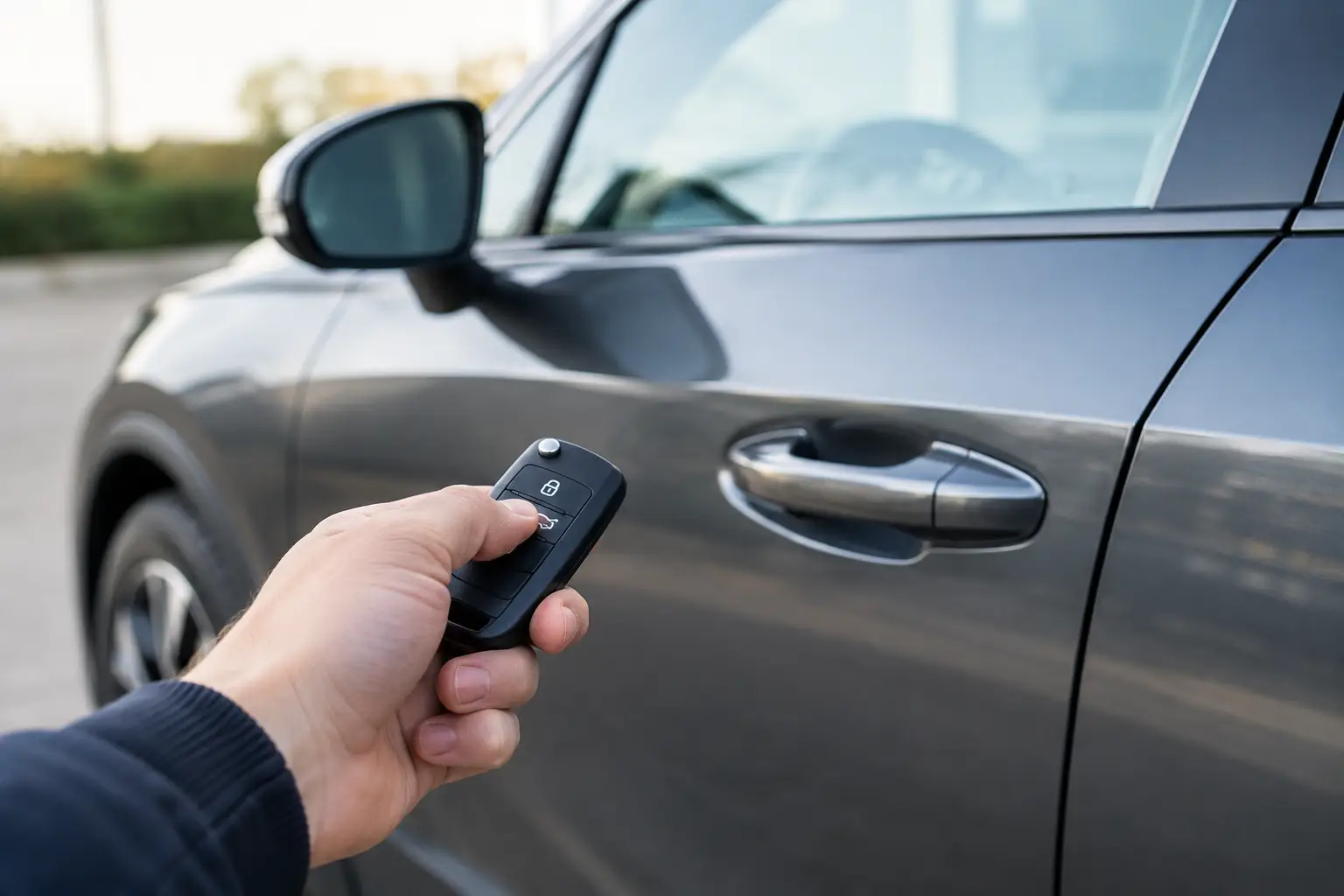
Your key fob worked perfectly yesterday. This morning, it will not open the doors, the car says key not detected, or the buttons only work when you are standing right beside it. This guide to keyless entry faults explains what may have gone wrong, what you can safely check yourself and when it is time to call a specialist.
Keyless entry problems are frustrating because the fault is not always in the key. A weak vehicle battery, damaged door-lock mechanism, radio interference or an immobiliser issue can all look like a failed remote. The quickest way forward is to narrow down the symptoms rather than repeatedly pressing buttons and hoping for a response.
What counts as a keyless entry fault?
Most modern cars use a remote fob, a proximity key or both. Pressing a button sends a coded radio signal to the vehicle. With passive entry systems, the car senses the fob when it is close to a door handle or inside the cabin. The same fob may also communicate with the immobiliser, allowing the engine to start.
A fault can affect one part of that system or all of it. Your remote may stop operating the central locking but still start the car. The doors may respond to the fob, but the dashboard may show a key warning and refuse to start. Or one door may stay locked while the others operate normally.
Those differences matter. They help identify whether the issue is likely to be the fob, the car battery, a single lock, the receiver or the vehicle’s security system.
The most common causes of keyless entry faults
A flat or weak key fob battery
This is the first thing to consider, particularly if the remote range has gradually reduced. You may need to stand closer to the car than usual, press the button more than once or find that the fob works only intermittently.
A fob battery is a simple fix in many cases, but fitting a new one does not guarantee the problem has been solved. A poor battery connection, moisture inside the fob or a cracked circuit board can create exactly the same symptoms. If the new battery makes no difference, do not force the case closed or keep swapping batteries. The fob may need testing and repair.
Physical damage, wear or water ingress
Car keys take plenty of abuse. They get dropped on drives, crushed in pockets, left in damp coats and knocked against tools or other keys. The damage may not be obvious from the outside.
Buttons can wear through, solder joints can break and the internal transponder chip can become damaged. If the key has been through a wash, exposed to heavy rain or dropped hard, treat it as a likely cause even if it still looks intact. Opening a modern fob without the correct tools can also break the casing or damage internal components.
A weak or flat vehicle battery
If the vehicle battery is low, central locking may become slow, unreliable or stop responding altogether. Other signs often appear at the same time: dim interior lights, a sluggish starter motor, warning messages or electrical functions behaving oddly.
This is especially common after the car has been parked for several days, during colder weather or where the battery is nearing the end of its service life. The key fob may be sending a signal correctly, but the car may not have enough power to respond as it should.
A faulty door lock or central locking actuator
When one door will not respond but the rest of the car does, the fob is less likely to be the problem. The fault may sit within that door’s lock mechanism, wiring or actuator.
You might hear a faint click from the affected door without any movement. In some cases, the lock may work from the interior switch but not from the remote, or the reverse may be true. A sticking lock can turn into a full lockout if it is ignored, so it is worth arranging a proper inspection before the door becomes impossible to secure or open.
Radio interference or poor signal reception
Keyless systems use radio frequencies, and strong nearby signals can occasionally interfere with them. This tends to happen in a particular location rather than everywhere – for example, near certain commercial buildings, equipment or busy car parks.
Try moving the vehicle if possible, or use the emergency mechanical key blade to gain access. If the remote works normally once you are elsewhere, interference is a possibility. If it fails in several places, the problem is more likely to be the fob or vehicle.
Lost synchronisation or a programming issue
Some keys can lose synchronisation following a flat battery, electrical work, a damaged fob or an attempted repair. The car may no longer recognise the remote functions, even though the key physically appears fine.
Programming faults require the correct diagnostic equipment and the right procedure for the make and model. Guesswork here can make matters worse, particularly where the key is linked to the immobiliser. A professional auto locksmith can test the key, read relevant fault information and establish whether it needs repair, reprogramming or replacement.
Immobiliser, antenna or control module faults
If the car opens but will not start, the issue may be beyond the remote buttons. The vehicle may not be detecting the transponder inside the key, or there may be a fault with the antenna that reads it, a wiring issue or a security control module problem.
Typical signs include a flashing key or immobiliser warning light, a message saying that no key is detected, or an engine that turns over but will not start. These faults need a methodical diagnosis. Repeatedly trying to start the vehicle is unlikely to help and can drain the battery further.
Safe checks before you call for help
A few basic observations can save time and give the locksmith a much clearer picture of the fault. Do not dismantle the steering column, door trim or dashboard, and do not attempt internet programming methods that are not specific to your car.
Before arranging assistance, check whether you have a spare key and whether it works. Note whether the fault affects access, starting or both. Look for dashboard warnings, listen for any response from the door locks and consider whether the vehicle battery has shown signs of weakness.
If you have recently changed the fob battery, make sure it is the correct type and fitted the right way round. Avoid touching the battery surfaces more than necessary, and check that the battery contacts have not been bent. If the fob case is cracked, wet or loose, stop using it until it can be assessed.
When a spare key changes the diagnosis
A working spare is one of the most useful clues. If the spare key operates the doors and starts the car, the vehicle is probably receiving signals correctly. That points towards damage, battery failure or a programming problem with the main fob.
If neither key works, the fault is more likely to involve the car itself, such as its battery, receiver, door locking system or immobiliser equipment. There are exceptions, of course. Two keys stored together can both suffer damage, and an old spare may have a flat battery of its own. But as a general rule, testing both keys quickly narrows the options.
What to do if the keyless entry fault leaves you stranded
First, stay with the vehicle in a safe place if you can. If you are unable to access the car, check whether your fob has an emergency key blade hidden inside it. Many proximity keys do, although the mechanical lock is sometimes concealed behind a cover on the door handle.
Use the blade carefully and avoid forcing the lock. An alarm sounding after manual entry can be normal on some vehicles until the key is recognised or the engine is started. If the car will not recognise the key, do not keep attempting to force entry or start it.
For drivers across the West Midlands and Warwickshire, a mobile auto locksmith can come to the vehicle, test the key and vehicle systems on site, and deal with many remote, key programming and access problems without the need to recover the car. Car Key Maker focuses on finding the actual fault first, whether that is a failed fob, an all-keys-lost situation or a deeper issue affecting the ignition or immobiliser.
Preventing the next keyless entry problem
You cannot prevent every electronic fault, but a little care makes key failure less likely. Keep keys away from water and heavy impact, replace a weakening fob battery before it dies completely, and avoid carrying the fob loose with coins, tools or other hard objects. If a button becomes intermittent or the range drops suddenly, have it checked early rather than waiting for a complete failure.
Most importantly, keep a working spare key in a safe place away from the vehicle. It is a small precaution that can turn a stressful roadside problem into a straightforward repair. When your keyless entry starts behaving differently, act while the car is still accessible – fast attention is usually far easier than dealing with a vehicle that will not open or start at all.