
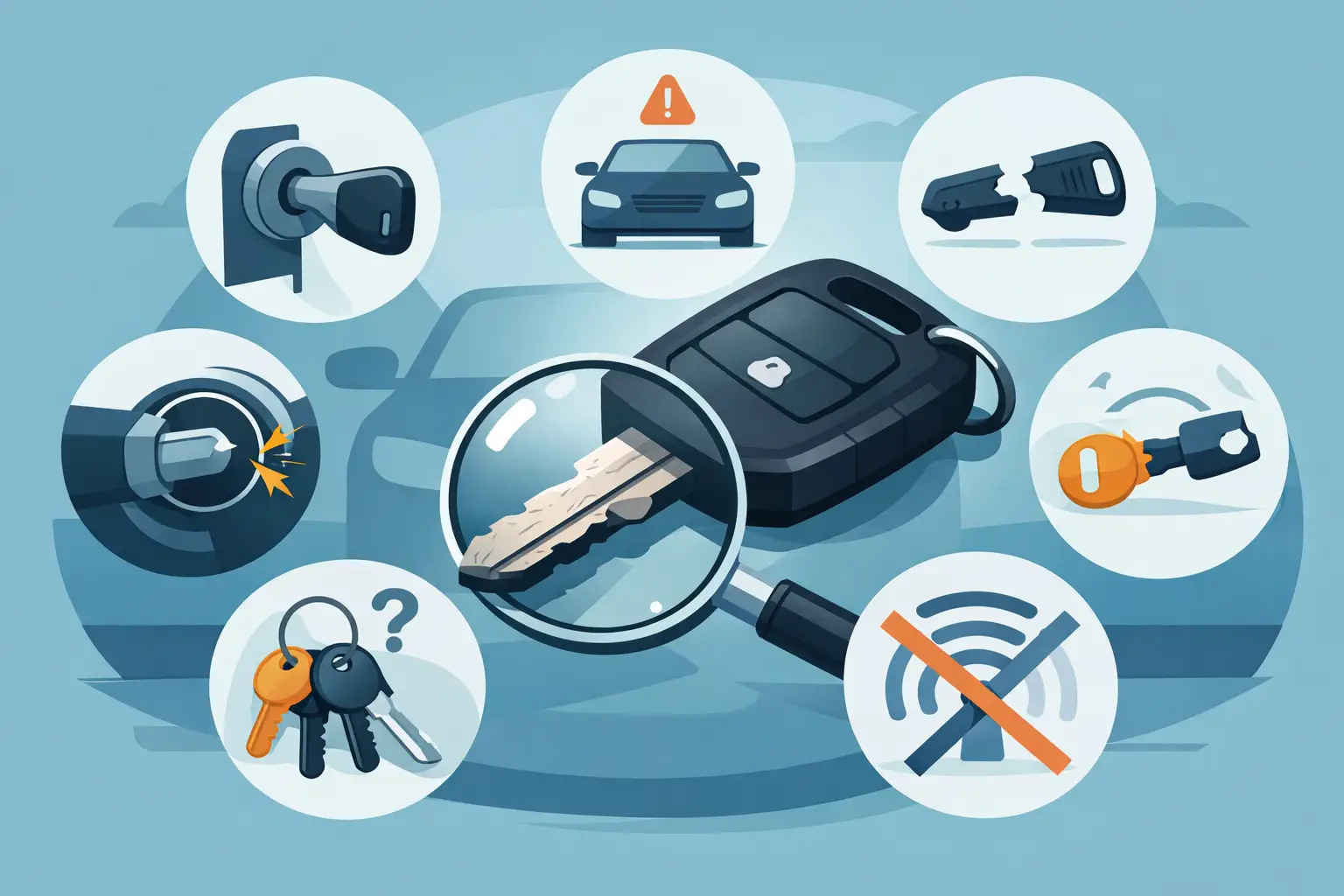
A car key rarely fails without warning. It may need a second turn in the ignition, feel loose in the lock, or only work when you hold it at a certain angle. Understanding what causes car key wear can help you deal with the problem before you are stuck outside your car, late for work, or unable to start the engine.
Wear affects more than the metal blade. Modern vehicle keys can have a remote, transponder chip, battery, buttons, and folding mechanism, all of which can deteriorate through daily use. The right repair depends on which part is failing. Sometimes a fresh key solves the issue. In other cases, the ignition or door lock is the real problem.
What Causes Car Key Wear Over Time?
The simplest answer is repeated friction. Every time you put a traditional key into a door lock or ignition, the blade moves against tiny pins inside the lock. Over years of use, the sharp cuts on the key blade can become rounded, shallow, or uneven. Once that happens, the key may no longer lift the lock pins into the exact position needed to turn.
How quickly this happens depends on the vehicle, the key material, and how the key is used. A car driven several times a day will naturally put more wear on its key and ignition than a vehicle used only at weekends. Older keys are also more likely to have been copied from an already worn original, which can gradually make the cutting less accurate with every duplicate.
A worn key can damage an ignition barrel too. If you regularly have to wiggle, force, or twist the key to get the car started, the internal components are under strain. That can turn a straightforward key replacement into a key and ignition repair job.
Heavy key rings put pressure on the ignition
A large key ring can be convenient, but it adds weight that hangs from the key while the vehicle is moving. Over time, that weight can pull against the ignition barrel, particularly on older vehicles where the key stays in a fixed position while driving.
The problem is not usually one heavy day. It is months or years of vibration, movement, and pressure. If your ignition feels loose, sticks when turning, or allows the key to move more than it used to, reduce the weight on the key ring and have the fault checked before it worsens.
Dirt, grit, and moisture affect both keys and locks
Keys live hard lives. They are dropped on driveways, left in coat pockets, carried on building sites, and exposed to rain. Fine grit can settle in the cuts of a key blade or get inside the door lock and ignition. When you insert the key, that dirt creates extra friction and can interfere with the lock pins.
Moisture brings a different risk. It can lead to corrosion on metal keys and inside lock components. Surface discoloration may look minor, but pitting or rust can make the key rougher and less precise. Never force a corroded key into the ignition. It can snap, leaving part of the blade trapped inside.
Poor copies can wear faster or work badly from day one
Not every duplicate is cut to the same standard. A key copied from a worn original may reproduce the wear rather than restore the correct profile. A low-quality blank can also be made from softer metal that wears down sooner, bends more easily, or breaks at the shoulder near the key head.
This is especially relevant when a spare key has started working better than your everyday key. That is a strong sign the main key blade is worn. Use the working spare carefully, rather than waiting until it is your only option, and arrange for an accurately cut replacement.
Forcing a sticking key causes more damage
A key should turn with controlled, normal pressure. If it will not, forcing it can bend the blade, wear the cuts, or damage the ignition wafers. Drivers often do this when they are in a rush, but one hard twist can be enough to create a bigger problem.
Sometimes the steering wheel lock is putting pressure on the ignition, rather than the key being faulty. Gently move the steering wheel left and right while applying light turning pressure to the key. If that does not help, stop. Repeatedly jamming or twisting the key is not a fix.
Worn locks can make a good key look faulty
It is easy to blame the key when the ignition barrel is actually worn. Internal lock pins, springs, and wafers can become damaged after years of use. In that situation, even a properly cut key may feel stiff, catch during turning, or occasionally refuse to release.
A useful clue is where the fault happens. If the key works smoothly in the door but sticks in the ignition, the ignition needs attention. If it struggles in every lock, the blade may be worn. If the key turns normally but the car will not start, the issue may involve the transponder chip or immobilizer rather than mechanical wear.
Remote key use creates separate wear issues
A remote or smart key does not have to enter an ignition every day, but it still wears. Buttons can split or sink into the case, rubber pads can lose responsiveness, and the plastic shell can crack around the key blade or battery compartment. A weak battery can cause an intermittent remote response that looks like a faulty key.
There is also a difference between remote locking and starting authorization. If the remote buttons stop working but the car still starts when the key is in the ignition, the transponder chip may be fine. If the key turns but the vehicle displays an immobilizer warning or will not start, it needs proper diagnosis and programming support, not just a new battery.
Signs Your Car Key Is Reaching the End
Car key wear is usually gradual, which makes the early signs easy to ignore. Pay attention if you notice any of the following four changes:
- The key needs wiggling, lifting, or repeated attempts before it turns.
- The metal blade looks smooth, thin, bent, cracked, or visibly uneven.
- The key comes out of the ignition with difficulty or the ignition feels loose.
- Your spare key works better than the one you use every day.
Do not wait for the key to snap before acting. A broken blade in an ignition can leave the car immobilized and may require extraction work before a replacement key can be made. Acting while you still have a working key is normally quicker, simpler, and less disruptive.
How to Make Your Car Key Last Longer
A little care can prevent avoidable wear. Keep the key on a lighter ring, especially if you use an older ignition-operated vehicle. Avoid using the blade to open packages, scrape surfaces, or pry anything loose. Even a small bend can change how accurately it enters the lock.
Keep the blade clean with a dry, soft cloth if it has been dropped in dirt or exposed to moisture. Do not spray household lubricants into the ignition. The wrong product can attract dust, leave residue, or interfere with internal lock parts. If a lock is sticking, it is better to have it inspected than to keep adding lubricant and hoping the problem disappears.
It also pays to use your spare key occasionally. This confirms that it works, keeps you familiar with where it is, and gives you a clear comparison if the daily key begins to fail. Store the spare somewhere safe away from the vehicle, not in the glove box.
When to Call a Car Key Specialist
If your key is worn but still working, arranging a replacement now can prevent an emergency later. A specialist can assess whether the issue is the blade, remote casing, transponder, lock, or ignition barrel and provide the appropriate solution on site.
Call for help promptly if the key is bent, cracked, stuck, broken in the ignition, or no longer starts the car. The same applies if a key turns but the vehicle will not recognize it. These faults can leave you stranded without much notice, and guessing at the cause can make the damage worse.
For drivers across the West Midlands and Warwickshire, Car Key Maker can inspect the fault and carry out practical key, remote, lock, or ignition work without the delay of a dealership visit. The most helpful move is simple: address a sticking or worn key while the car still starts, rather than waiting for the day it does not.